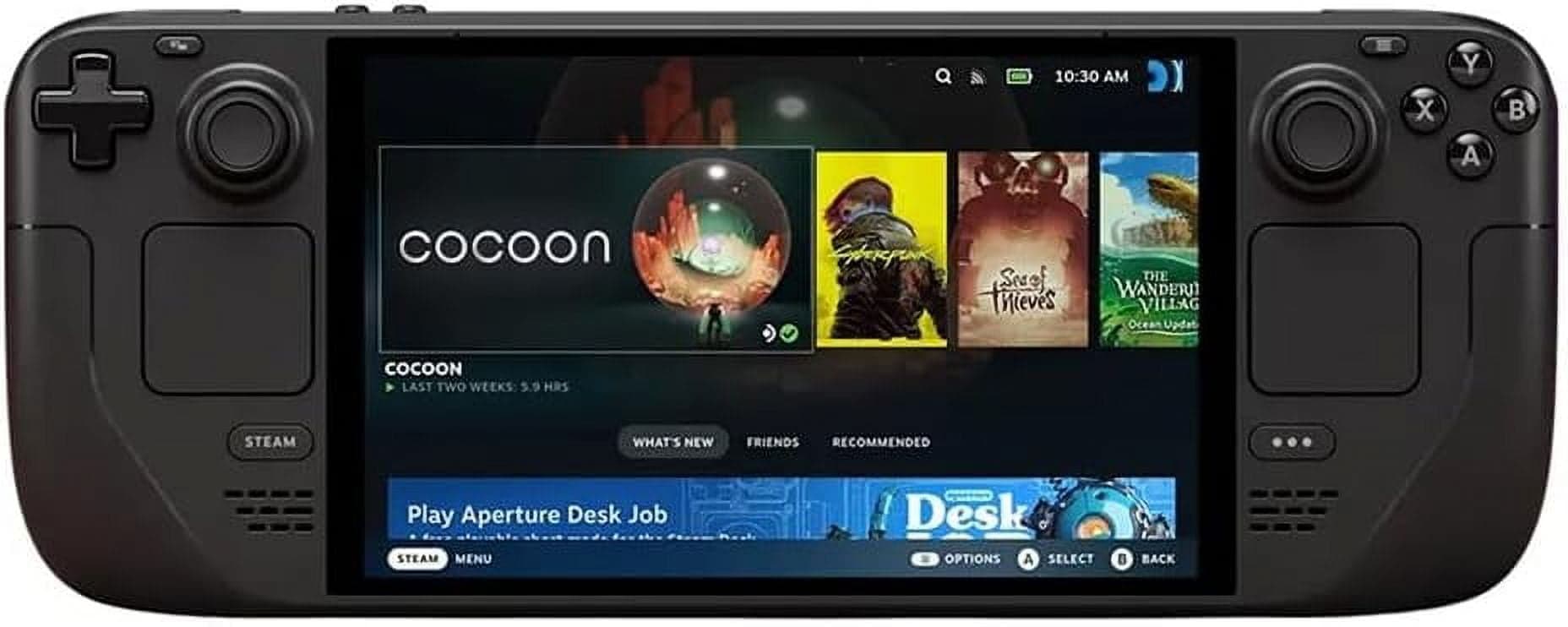
Steam Deck sparked a handheld PC gaming boom
A $399 Steam Deck turned portable PC gaming into a mass-market idea. Two years later, pricier OLED refreshes and rival Windows handhelds pushed the category upmarket.

Valve turned handheld PC gaming from a niche idea into a $399 proposition that could run real PC blockbusters on the go. The original Steam Deck LCD model first shipped on February 25, 2022, after material shortages and supply-chain problems delayed the rollout, and Valve later said it had cleared its reservation queue and opened purchases without reservation. For a brief stretch, the device made high-end portable play feel attainable rather than aspirational.
That opening changed the market. Players were suddenly carrying around games like Elden Ring on a machine that fit in two hands, and hardware makers moved fast. Asus launched the ROG Ally in 2023 as a Windows 11 gaming handheld built around AMD’s Ryzen Z1 Extreme and a 120Hz display. Lenovo followed on September 1, 2023, unveiling the Legion Go as its first Windows gaming handheld. The handheld-PC race that followed Steam Deck’s debut was no longer about proving the category existed. It was about which company could justify a more expensive version of it.
Valve’s own answer made the shift harder to miss. In November 2023, it introduced the Steam Deck OLED with an HDR OLED display, better battery life and faster Wi-Fi, but the price moved upward with the hardware: $549 for the 512GB model and $649 for the 1TB model. Valve later added a Limited Edition White model at $679. The upgrades were real, but so was the signal. The cheap path into handheld PC gaming was narrowing as the category matured into something closer to a premium electronics market.
Nintendo still controls the broad portable-gaming audience, and its numbers show how large the gap remains between mainstream handhelds and the PC segment. On January 16, 2025, Nintendo said Switch 2 would arrive in 2025, then set the U.S. launch for June 5, 2025 at $449.99. As of March 31, 2026, Nintendo reported 155.92 million lifetime Switch hardware sales worldwide and 19.86 million Switch 2 hardware sales. That scale underscores the economics at work: mass-market portability still belongs to Nintendo, while handheld PCs have drifted toward higher-priced, higher-spec buyers.

What readers lose if portable gaming becomes premium again is simple: the window where a capable handheld could be an impulse buy rather than a luxury purchase. The Steam Deck proved there was demand for a reasonably priced machine that could carry a full PC library. Whether that remains true will depend on which companies are willing to hold the line on price, accept thinner margins, and resist the industry’s pull toward brighter screens, bigger batteries, faster wireless chips and ever more expensive positioning.
This article was produced by Prism’s automated news system from verified source data, official records, and press releases, then run through automated quality and moderation checks before publishing. The system is built and supervised by the people who set the standards it runs under. Read our full AI policy.
Did this article answer your question?