Stephen Lewis, Canadian Political Icon and Humanitarian, Dies at 88
Stephen Lewis died two days after his son Avi was elected federal NDP leader, completing a four-generation dynasty spanning a century of Canadian left politics.

Stephen Lewis, who transformed Canadian progressive politics and spent decades fighting AIDS in Africa as one of the UN's most consequential humanitarian voices, died March 31, 2026, in hospice care in Toronto. He was 88.
His family confirmed he had battled stomach cancer for approximately eight years, facing it "with the same indomitable energy he brought to his lifelong work: the unending struggle for justice and dignity for every human life." He died just two days after his son Avi was elected leader of the federal New Democratic Party, completing a four-generation dynasty of Canadian left-wing leadership stretching from grandfather Moishe Lewis, a Jewish Bund activist in Montreal, through his father David Lewis, the federal NDP leader from 1971 to 1975, to Stephen himself.
Born in Ottawa on November 11, 1937, Lewis was given the Hebrew name Sholem, meaning peace, because his birth fell on Armistice Day. He was first elected to the Ontario Legislature in 1963 at age 26 at the instigation of CCF founding figure Tommy Douglas. He led the Ontario NDP from 1970 to 1978, representing Scarborough West, and in the 1975 provincial election brought the party to Official Opposition status for the first time in more than 25 years, earning credit for rent control and the Occupational Health and Safety Act and the retrospective title "the greatest premier Ontario never had."
His diplomatic career began in 1984 when Conservative Prime Minister Brian Mulroney appointed him Canada's UN ambassador, a post he held until 1988. He went on to work on the 1993 Graça Machel study on children in armed conflict, serve as Deputy Executive Director of UNICEF from 1995 to 1999, and was appointed by the Organisation of African Unity in 1997 to investigate the Rwandan genocide, producing the report "Rwanda: The Preventable Genocide" in June 2000.
The work that defined his final decades came in 2001, when UN Secretary-General Kofi Annan named him the inaugural Special Envoy for HIV/AIDS in Africa. Lewis held the post until 2006, making repeated visits to Malawi, Zambia, and Lesotho. He later described the shock of what he encountered: "I had a sense that things were bad in Africa, but I did not at the time have a sense of the carnage on the ground, and particularly amongst women." That urgency led him to found the Stephen Lewis Foundation in 2003 with daughter Ilana Landsberg-Lewis. The foundation eventually raised $10 million annually, and its Grandmothers to Grandmothers Campaign, launched after a Toronto gathering of 300 Canadian and African grandmothers in August 2006, had raised $40 million by 2021.
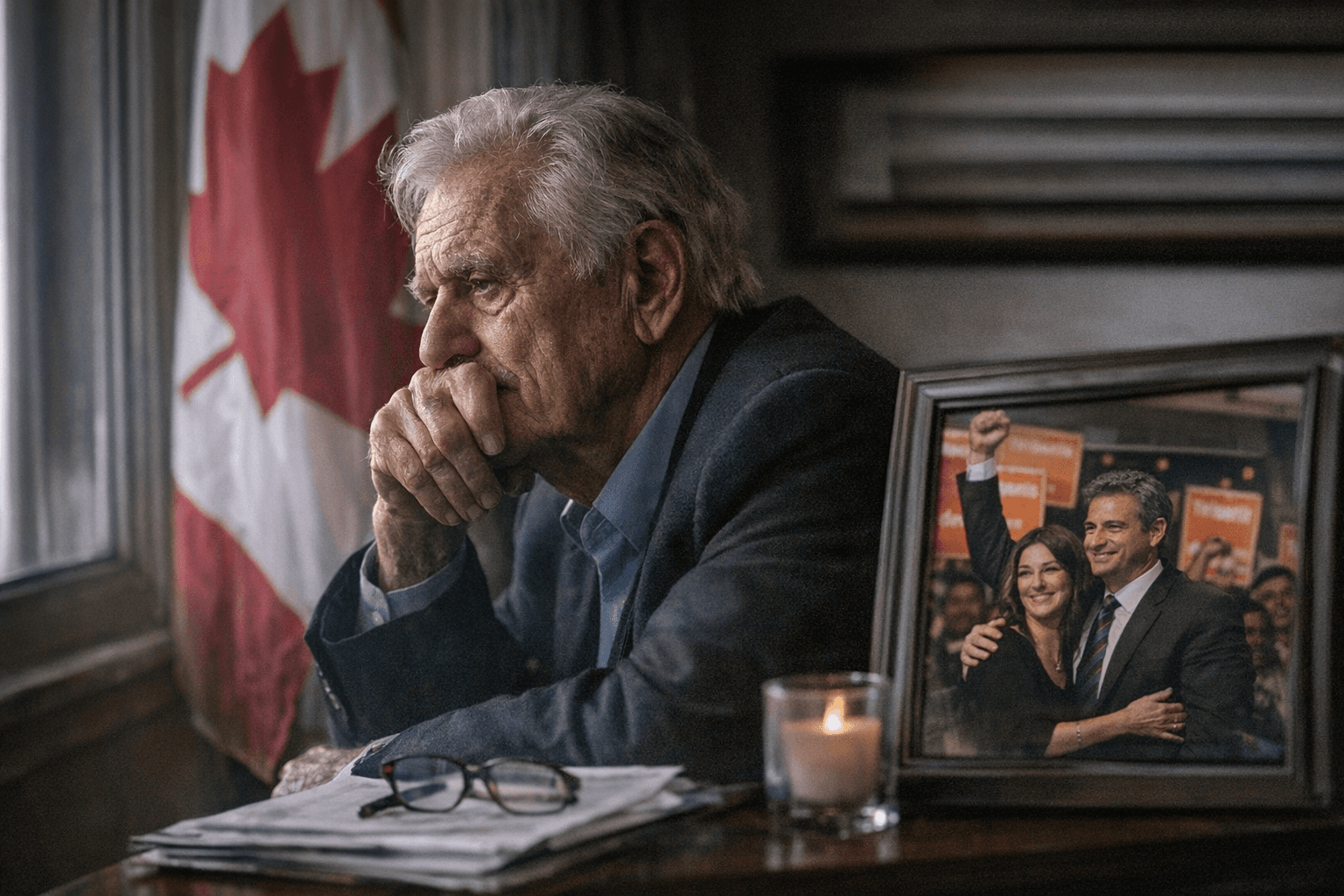
His honors included Companion of the Order of Canada, Maclean's Canadian of the Year in 2003, the Pearson Peace Medal in 2004, and a place on Time magazine's 100 Most Influential People in the World in 2005. He published Race Against Time that year, drawn from his CBC Massey Lectures.
Prime Minister Mark Carney called Lewis "a pillar of compassionate leadership in Canadian democracy and a renowned global champion for human rights and multilateralism." Alberta NDP Leader Naheed Nenshi said it was "no exaggeration to say that his work as the United Nations' Special Envoy for HIV/AIDS saved millions of lives." Environmentalist David Suzuki, who held Lewis's hand in his final days, told CBC: "To me, he was my great hero." South African health activist Mark Heywood wrote that Lewis's AIDS advocacy was "game-changing and without doubt helped save millions of lives."
Lewis is survived by his wife of more than 60 years, journalist and author Michele Landsberg; son Avi Lewis; and daughters Ilana Landsberg-Lewis and Jenny Lewis, a casting director.
This article was produced by Prism’s automated news system from verified source data, official records, and press releases, then run through automated quality and moderation checks before publishing. The system is built and supervised by the people who set the standards it runs under. Read our full AI policy.
Did this article answer your question?

