STMicro targets over $3 billion from booming satellite chip business by 2028
STMicroelectronics said its satellite-chip business could top $3 billion in revenue by 2028 as low-Earth-orbit demand swells. Starlink and rival constellations are turning space from a niche into an industrial market.
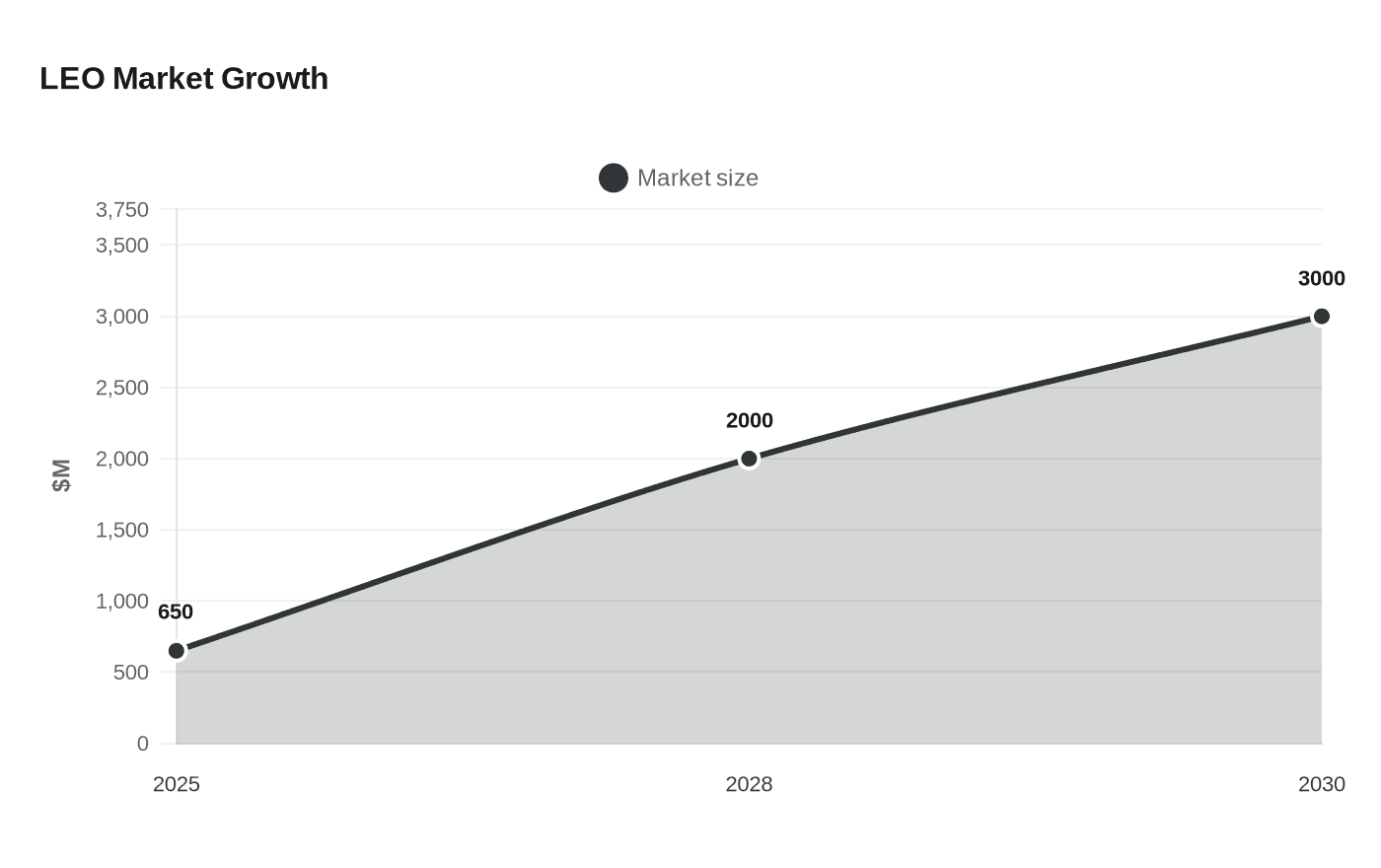
STMicroelectronics is aiming for well above $3 billion in cumulative revenue from its semiconductor space business between 2026 and 2028, a target that shows how quickly low-Earth-orbit satellites are becoming a serious industrial market rather than a narrow aerospace niche. The Franco-Italian chipmaker said the serviceable market for low-Earth-orbit broadband electronics was about $650 million in 2025 and could grow to about $2 billion in 2028 and nearly $3 billion by 2030, as satellite communications move toward mass-market broadband, direct-to-cell service and, eventually, orbital data centers.
The numbers also show how fast STMicroelectronics has moved into the center of that build-out. The company said low-Earth-orbit-related revenue rose to about $600 million in 2025 from roughly $175 million in 2021, and is now approaching $1 billion in 2026. STMicroelectronics said its long-standing supply relationship with Starlink gives it a strong position as more competitors enter the market, with executives suggesting the company could preserve close to a 90% share in this part of the business.
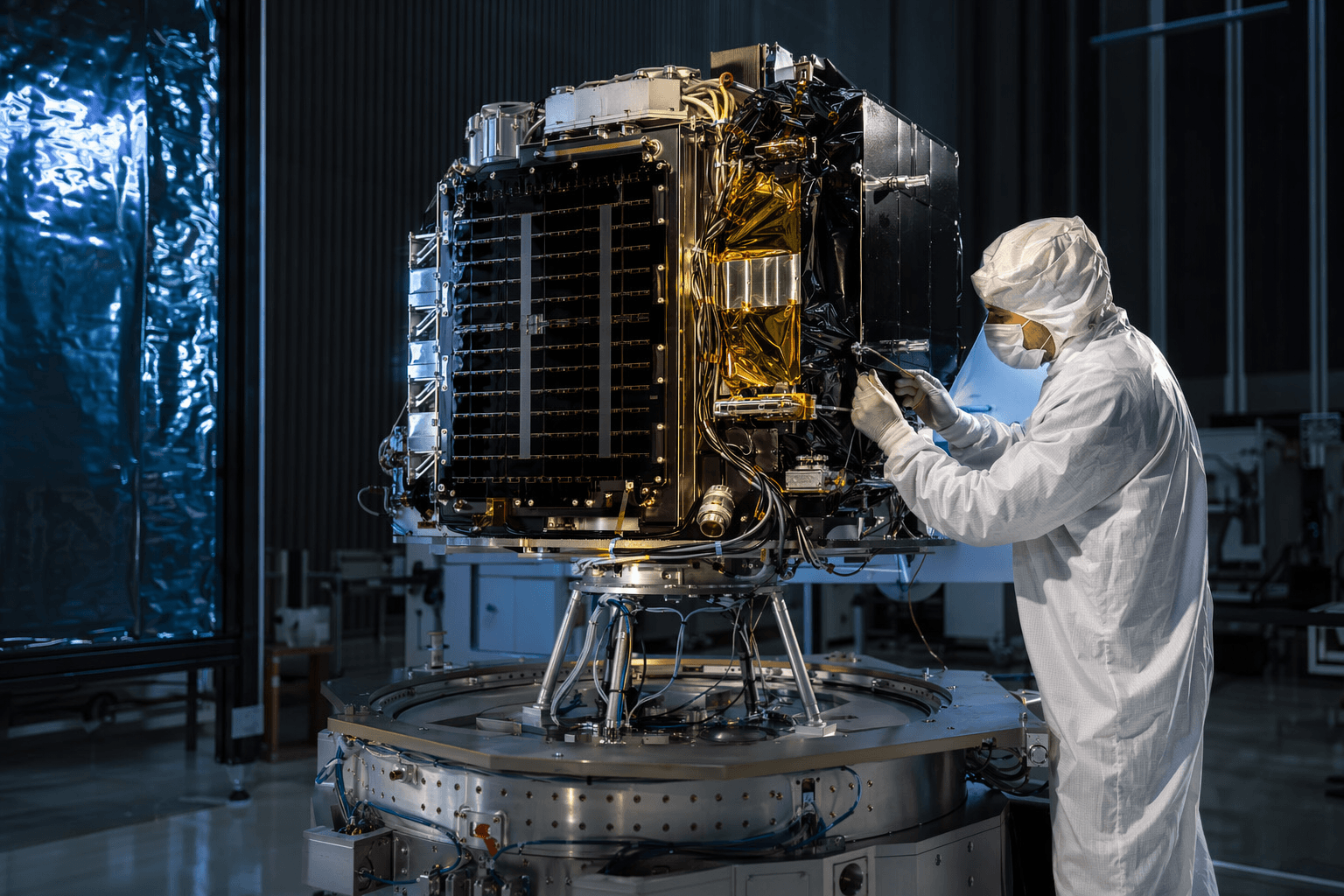
That relationship matters because the demand is not coming from launch vehicles alone. It is coming from the electronics that sit inside satellites and user terminals, the components that make constellations work at scale. STMicroelectronics pointed to customers and potential customers including Starlink, AST SpaceMobile and Amazon Leo, all of which are pushing space infrastructure toward higher-volume communications networks. The company also said orbital data centers may become relevant in a few years, though they were not included in the current revenue target.
STMicroelectronics underscored the opportunity with a dedicated investor webcast on the low-Earth-orbit business on May 4, led by Remi El-Ouazzane, president of the company’s Microcontrollers, Digital ICs and RF Products group. The timing followed first-quarter 2026 results released on April 23, when STMicroelectronics reported net revenues of $3.10 billion, gross margin of 33.8%, operating income of $70 million and net income of $37 million. It also reported total liquidity of $4.57 billion after the cash-out tied to its acquisition of NXP Semiconductors’ MEMS sensor business.
China remains a constraint on that growth story. STMicroelectronics said export controls prevent it from participating in Chinese satellite technology, even as it sees opportunity in Chinese user terminals. That split leaves the company exposed to one of the fastest-growing communications markets, while limiting its role in the most strategic part of the chain. For Europe, the implication is larger than one chipmaker: the race for space infrastructure is increasingly a race for semiconductor relevance.
This article was produced by Prism’s automated news system from verified source data, official records, and press releases, then run through automated quality and moderation checks before publishing. The system is built and supervised by the people who set the standards it runs under. Read our full AI policy.
Did this article answer your question?