Stock futures fall as traders await inflation data, monitor Iran tensions
Higher oil from Iran tensions and a looming CPI reading pushed futures lower, as traders weighed whether inflation would delay Fed cuts.
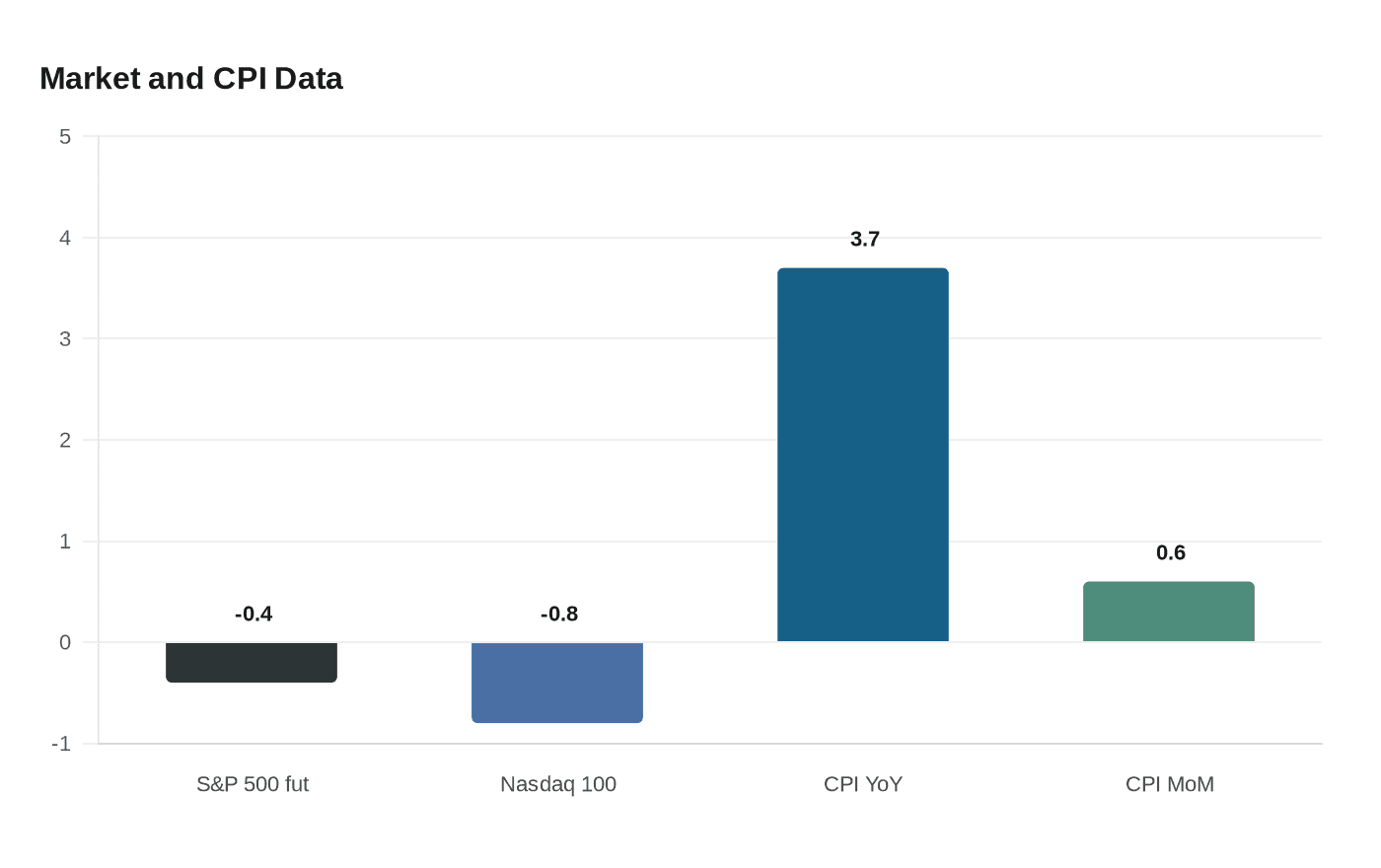
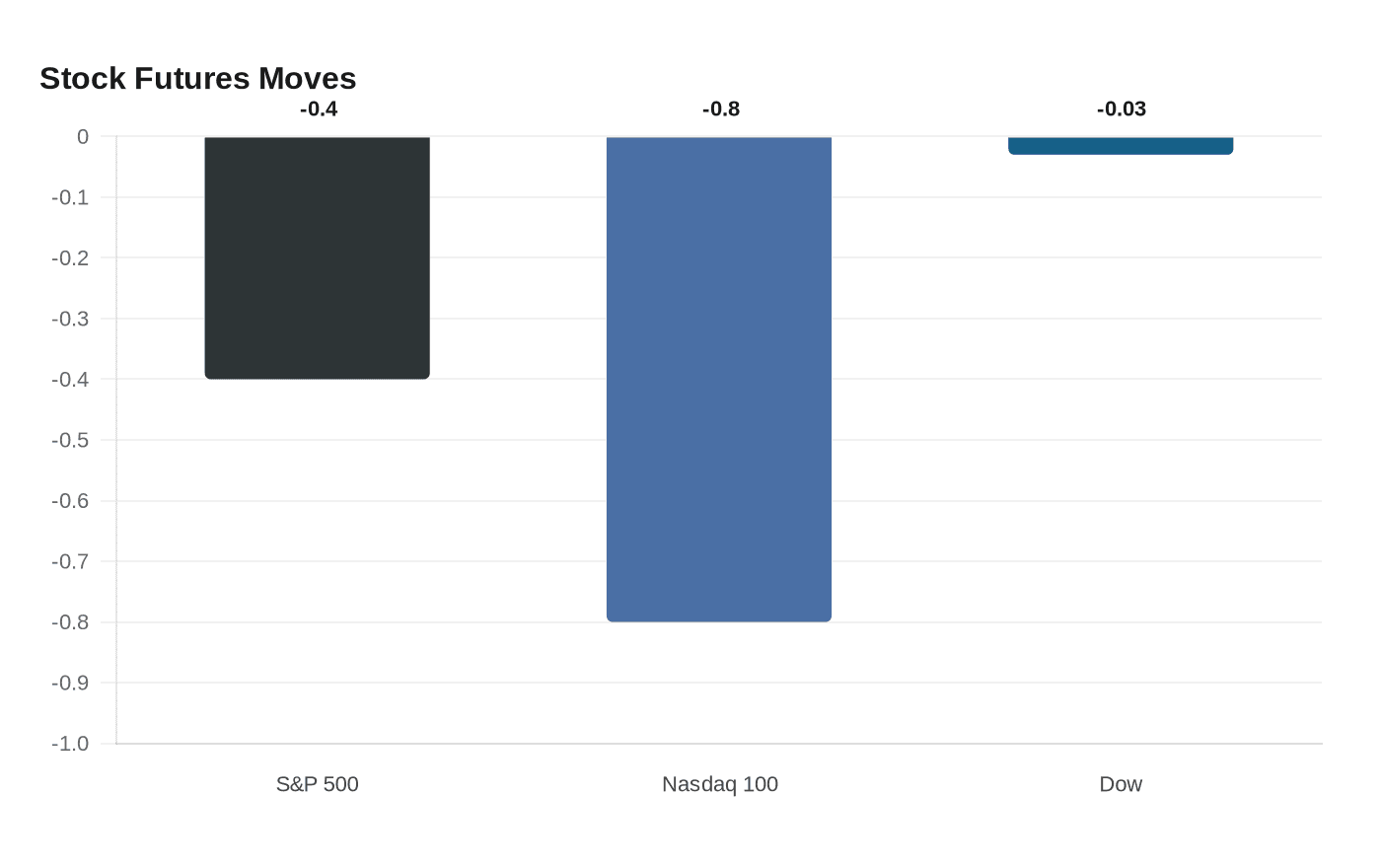
Traders hit pause on a stock rally as two forces collided at once: higher oil prices from renewed Iran tensions and an inflation report that could reshape the Federal Reserve’s path. S&P 500 futures fell 0.4%, Nasdaq 100 futures dropped 0.8%, and Dow futures slipped 17 points, or 0.03%, as West Texas Intermediate crude rose more than 3% above $101 a barrel and Brent climbed more than 3% above $107.
The immediate stress test for markets is straightforward. If war risk keeps pushing energy prices higher, gasoline, shipping and transportation costs can feed through to consumer prices. That matters because the April consumer price index was scheduled for 8:30 a.m. ET on May 12, 2026, and economists polled by Dow Jones expected headline CPI to rise 3.7% from a year earlier and 0.6% from March. Reuters said that would mark the largest annual inflation increase in more than 2-1/2 years. A hotter reading would reinforce the idea that the Federal Reserve can keep rates unchanged longer, which would ripple through mortgage costs, credit card rates and borrowing expenses for businesses.
The Iran situation has become part of the inflation equation. Donald Trump said the month-old ceasefire between the United States and Iran was “unbelievably weak” and “on massive life support” after rejecting Tehran’s counterproposal. CNBC reported that Iran’s demands included war reparations, full sovereignty over the Strait of Hormuz, the release of frozen Iranian assets and an end to sanctions. With the Strait of Hormuz carrying a major share of global oil flows, any escalation raises the odds of further energy-price spikes, exactly the kind of input that can spill into CPI.
The market backdrop was otherwise constructive before the latest pullback. CNBC said the S&P 500 and Nasdaq Composite had hit fresh record highs in the prior session, extending a rally powered by solid earnings and strong corporate spending. Marci McGregor of Merrill and Bank of America Private Bank said she would view weakness as a buying opportunity, pointing to corporate profits, capital spending and a sturdy labor market.
That optimism now runs into a difficult near-term test. CME Group’s FedWatch tool tracks rate-move probabilities using 30-day fed funds futures prices, and those expectations can move sharply if inflation and oil both run hot at the same time. For retirement accounts, that can mean another bout of market volatility; for borrowers, it can mean a longer wait for cheaper credit.
This article was produced by Prism’s automated news system from verified source data, official records, and press releases, then run through automated quality and moderation checks before publishing. The system is built and supervised by the people who set the standards it runs under. Read our full AI policy.
Did this article answer your question?