Stock futures rise as oil climbs on renewed Iran tensions
Stock futures rose even as oil climbed, a sign traders still see Iran risk as contained. But Hormuz remains one headline away from a broader shock.
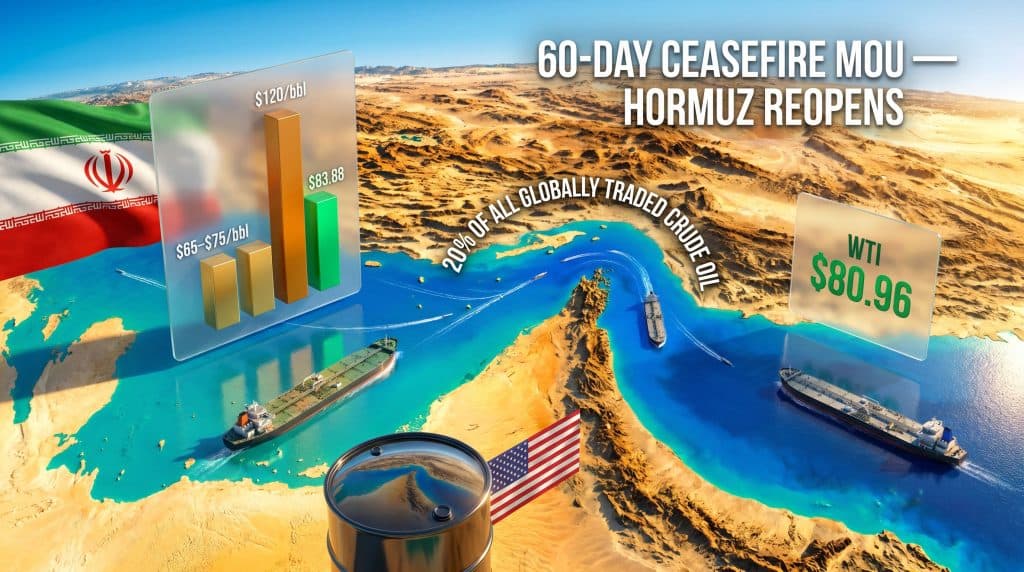
Stock futures edged higher even as crude prices climbed, suggesting traders were still betting the latest U.S.-Iran confrontation would stay limited to shipping lanes and headlines rather than spread into a broader market shock. The week was also holiday-shortened, with U.S. markets set to close Friday for the July 4 holiday, a setup that can magnify small moves when liquidity thins.
The immediate focus remained the Strait of Hormuz, the narrow waterway through which oil from Saudi Arabia, the United Arab Emirates, Kuwait, Qatar, Iraq, Bahrain and Iran moves to global markets. On June 25, WTI rose more than 2% to $71.92 a barrel and Brent climbed 2.1% to $75.26 after Iran attacked a vessel in the strait. By June 26, WTI had fallen to $69.23 and Brent had settled at $71.99 as more tankers exited the waterway, a reminder that crude has been trading less on steady supply-demand trends than on whether shipping looks safe enough to normalize.

That pattern has kept oil pinned to every sign of escalation or restraint. The United Nations International Maritime Organization paused escort operations through the Strait of Hormuz after the attack, while several tankers used a new route the agency promoted. The U.S. military struck Iran after an Iranian drone strike on a cargo ship in the strait, and the exchange left traders parsing whether the conflict was still contained enough to avoid a sustained supply disruption.

For oil markets, the stakes are unusually high. The International Energy Agency says a prolonged shutdown in Hormuz could cut off access to most of the world’s spare production capacity, much of it held by Saudi Arabia. The U.S. Energy Information Administration said in June that the world was already consuming about 1 million fewer barrels a day than a year earlier, and it assumed Hormuz flows would remain effectively closed into early summer before beginning to resume in the third quarter of 2026.

That backdrop helps explain why stocks have held up better than crude. Goldman Sachs has said oil prices should fall after the U.S.-Iran deal, but not necessarily back to prewar levels quickly, which is the market’s way of saying geopolitical risk has not gone away even if the immediate supply shock has eased. Wall Street is still pricing containment, but every tanker rerouted through Hormuz keeps the possibility of a wider war, and a sharper repricing, alive.
This article was produced by Prism’s automated news system from verified source data, official records, and press releases, then run through automated quality and moderation checks before publishing. The system is built and supervised by the people who set the standards it runs under. Read our full AI policy.
Did this article answer your question?

