Stocks Fall as Trump's Wednesday Speech Rattles Nervous Investors
Wall Street reversed a two-day rally Thursday after Trump pledged to bomb Iran "back to the stone ages," briefly sending the Dow down more than 600 points.
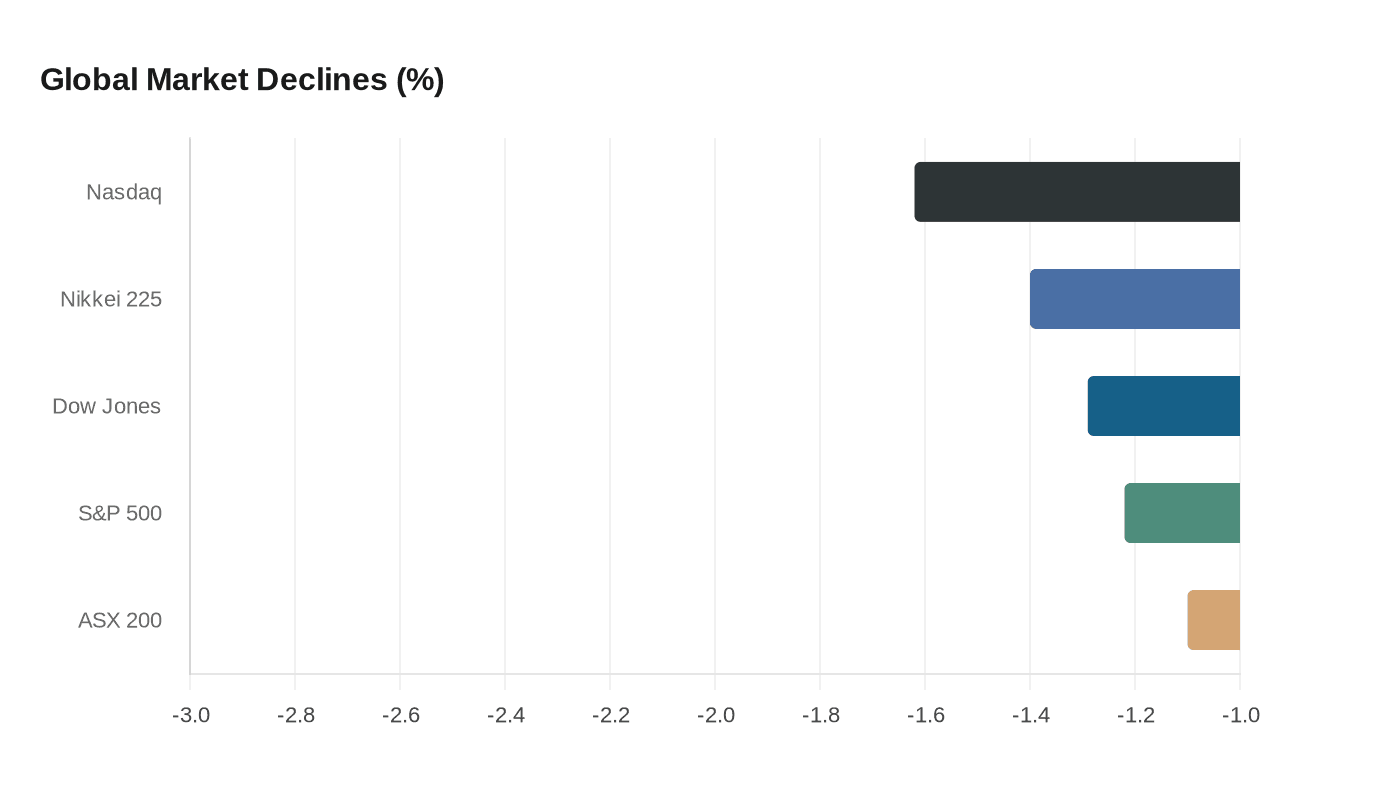
Wall Street erased two days of optimism in a single session Thursday after President Trump's Wednesday night national address on the Iran war delivered escalation instead of the exit strategy investors had been desperately waiting for. The Dow Jones Industrial Average plunged more than 600 points at its intraday low before paring losses to close down 1.29%. The S&P 500 fell 1.22% and the Nasdaq dropped 1.62% by the end of the shortened holiday week, reversing what had been the market's best single session since last spring just two days earlier.
Speaking from the Cross Hall of the White House on Tuesday evening, Trump declared that the U.S. military had "nearly completed" its goals in Iran and that the conflict would "soon be ending." But the reassuring framing was undercut by the substance: the president pledged to "hit them extremely hard over the next two to three weeks" and vowed to bring Iran "back to the stone ages, where they belong." He also offered no plan for reopening the Strait of Hormuz, the critical waterway that has been effectively closed since the war began five weeks ago and through which one-fifth of global oil supply normally flows.
On the question investors cared most about, Trump was unambiguous in the wrong direction. "The United States imports almost no oil through the Hormuz Strait and won't be taking any in the future. We don't need it," he said. He added that clearing the passage would be the responsibility of "those countries that can't get fuel," leaving allies without a clear American commitment. On Truth Social after the address, Trump said the U.S. would "consider" Iran's request for a ceasefire only once the Strait is "open, free, and clear," fueling expectations that the war could drag on longer.
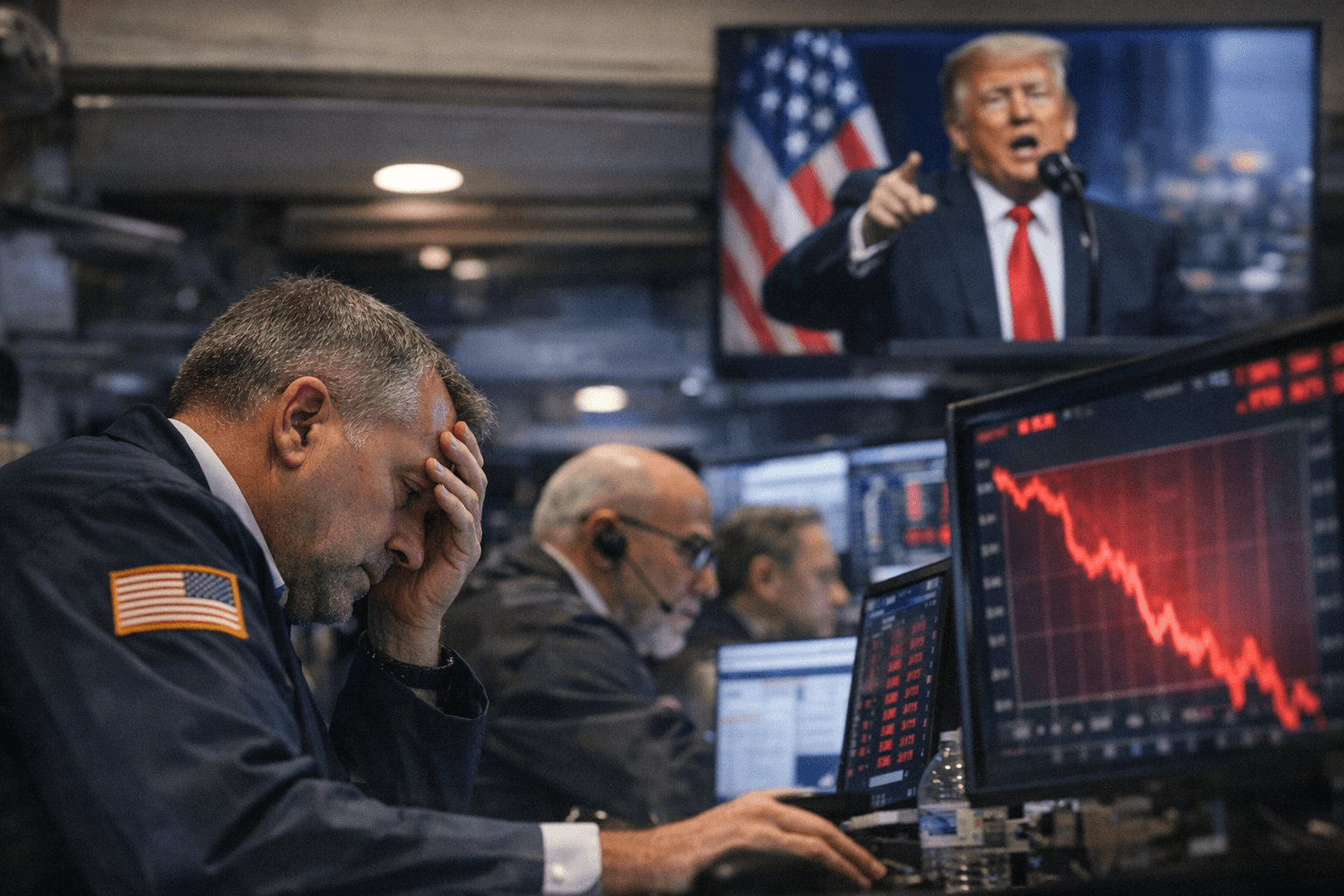
Oil markets moved sharply in the opposite direction of equities. U.S. benchmark West Texas Intermediate crude rose 10% to trade above $110 a barrel, while Brent jumped 6% to also trade above that threshold. The surge underscored the core anxiety gripping global markets: that an unresolved Strait of Hormuz closure translates directly into sustained inflation and slower growth. Bank of America economists warned the result will be slower growth, higher inflation, and oil at $100 per barrel through the rest of 2026.
The damage spread well beyond New York. Japan's Nikkei 225 fell 1.4% after Trump's address, while Australia's S&P/ASX 200 dropped 1.1%. In Europe, the pan-European Stoxx 600 shed more than 1%, with regional banking, mining, and technology stocks particularly hard hit, and Germany's DAX among the worst performers.
Analysts were blunt in their assessments. "The market has shown disappointment because the speech President Trump made was far less than what the market expected," said Takashi Hiroki, chief strategist at Monex in Tokyo. "There were no concrete details." Matt Simpson, senior market analyst at StoneX in Brisbane, was sharper: "Trump sounded pretty miserable for a man who has had so much winning in this war. With no plans to reopen the Strait of Hormuz that he effectively closed, oil prices are to remain high indefinitely." Chetan Seth, APAC equity strategist at Nomura, summed up the situation with a warning: "Remember — the longer this war lasts, the longer the energy disruption from the Strait of Hormuz continues and the greater the risk of elevated energy prices."
The selloff was briefly interrupted midday after Iran's state-run media reported that Iran and Oman are drafting a protocol that could potentially reopen the Strait of Hormuz, allowing the three major indexes to briefly claw back into positive territory before retreating again into the close. That diplomatic thread, thin as it is, may represent the clearest near-term path back to calmer markets — one that Trump's speech did nothing to accelerate.
This article was produced by Prism’s automated news system from verified source data, official records, and press releases, then run through automated quality and moderation checks before publishing. The system is built and supervised by the people who set the standards it runs under. Read our full AI policy.
Did this article answer your question?

