Stocks Rise, Oil Rebounds as Iran Ceasefire Talks and CPI Data Loom
Markets rose and oil partially rebounded as a fragile U.S.-Iran ceasefire opened the door to Hormuz shipping talks, with March CPI data due to test the rally.

Wall Street extended its winning streak and oil prices climbed back from their post-ceasefire lows as traders on Thursday weighed the precarious state of U.S.-Iran diplomatic talks against a March inflation report that threatened to confirm the energy shock already baked into consumer prices.
The Dow Jones Industrial Average added nearly 276 points, pushing the blue-chip index into positive territory for 2026, while the S&P 500 rose 0.6% and the Nasdaq Composite climbed 0.8%. The gains came even as the ceasefire showed immediate strain: Iranian Foreign Minister Abbas Araghchi said that "safe passage through the Strait of Hormuz will be possible via coordination with Iran's Armed Forces," a condition that stopped well short of the unconditional reopening President Trump had demanded.
The Strait of Hormuz is the world's most consequential oil chokepoint, and its recent disruption explains directly why oil futures move on every diplomatic headline out of Tehran. The IEA estimates that only 3.5 to 5.5 million barrels per day can be redirected through Saudi and Emirati pipelines outside Hormuz, leaving an implied net shortfall of roughly 14.5 to 16.5 million barrels per day if normal transit collapses. Analysts have put a precise dollar figure on the uncertainty: March 2026 analyses estimated the geopolitical risk premium embedded in oil prices at between $8 and $14 per barrel. The physical costs of transiting the strait rose sharply as well. War-risk ship insurance premiums increased from 0.125% to between 0.2% and 0.4% of ship insurance value per transit, an increase of roughly a quarter of a million dollars for very large oil tankers.
Those elevated shipping and insurance costs feed directly into U.S. inflation expectations, which is why the March CPI report, due Thursday, carried unusual weight for equity investors. Headline CPI was forecast at 0.9% month-over-month and 3.3% year-over-year, driven by sharply higher gasoline prices, with a 35% jump in gasoline prices expected to add 0.5 to 0.6 percentage points to the reading. A hotter-than-expected print could force the Federal Reserve to hold rates higher for longer: markets had already shifted to pricing in the Fed on hold for the year after partially pricing in a rate hike the prior week.
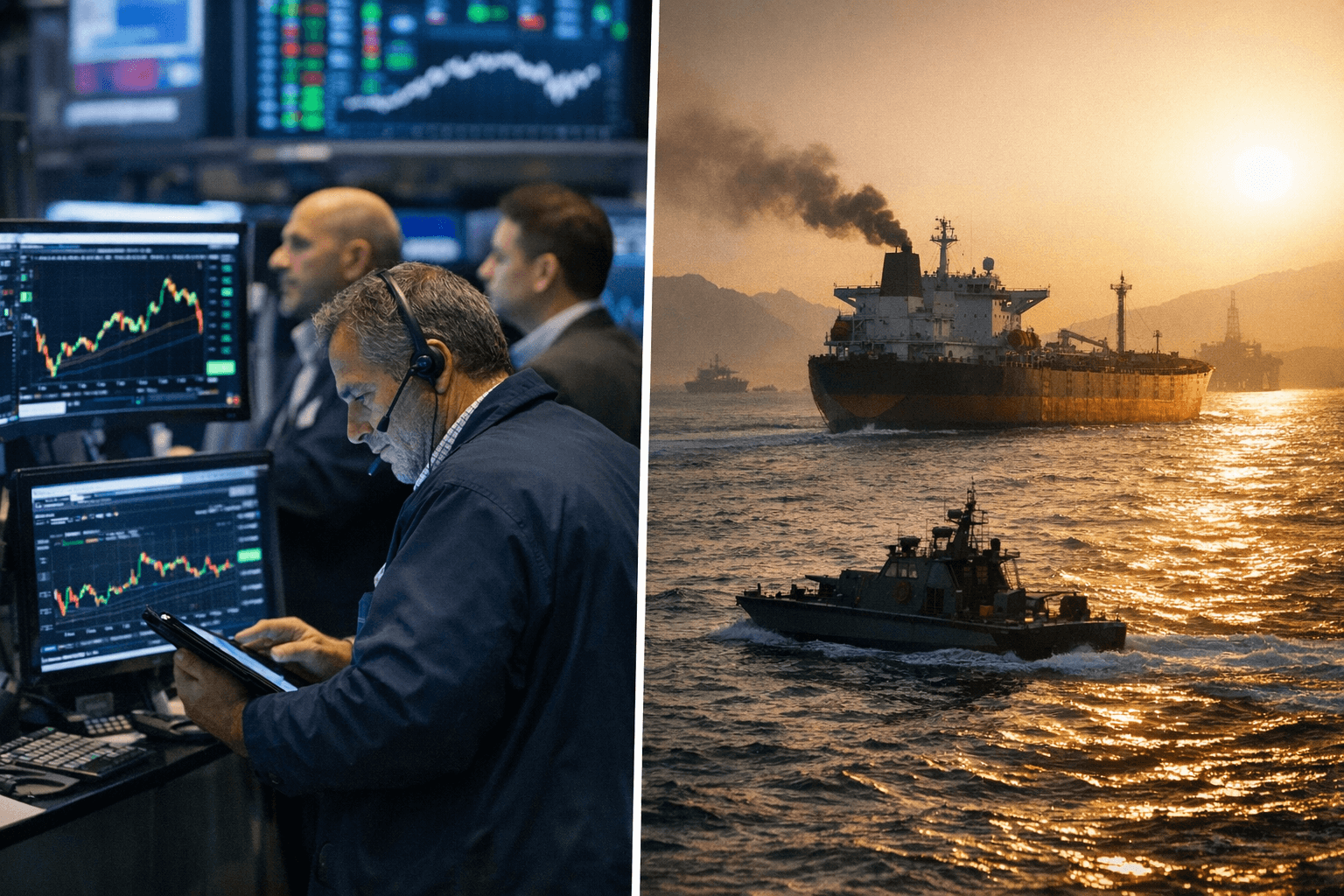
The oil relief rally itself reflected just how much markets had priced in catastrophe. Oil prices had plunged as much as 16% following the initial ceasefire announcement, and Brent crude futures were up 3% on the week to $108, while December futures were down 7% to $78, a structure that signals investors believe a durable deal would unwind the war premium over time but aren't ready to bet on it yet.
For equity investors, the energy uncertainty created a portfolio dilemma between defensive energy positions and the AI growth trade that had fueled the prior rally. Speculative AI stocks were higher, with Nvidia, Meta, Tesla, AMD, and Micron surging as traders rotated back into high-growth tech on any sign that the geopolitical worst-case had passed. Amazon, whose cloud infrastructure business sits at the center of enterprise AI spending, remained a bellwether for that trade given AWS revenue growth that analysts cited as confirmation of the company's position as a structural AI beneficiary.
The conflict has been described as the largest disruption to the energy supply since the 1970s oil crises, and that context explains why every ceasefire headline carries outsized market weight. If the March CPI confirms that energy costs have already migrated into broader price indices, the Fed's ability to provide relief to rate-sensitive tech stocks narrows considerably, making the outcome of this week's Hormuz negotiations as consequential for growth investors as for energy traders.
This article was produced by Prism’s automated news system from verified source data, official records, and press releases, then run through automated quality and moderation checks before publishing. The system is built and supervised by the people who set the standards it runs under. Read our full AI policy.
Did this article answer your question?

