Strait of Hormuz standoff could spark global invasive species spread
An estimated 1,500 stranded ships in the Persian/Arabian Gulf could spread invasive species worldwide if traffic through Hormuz resumes.
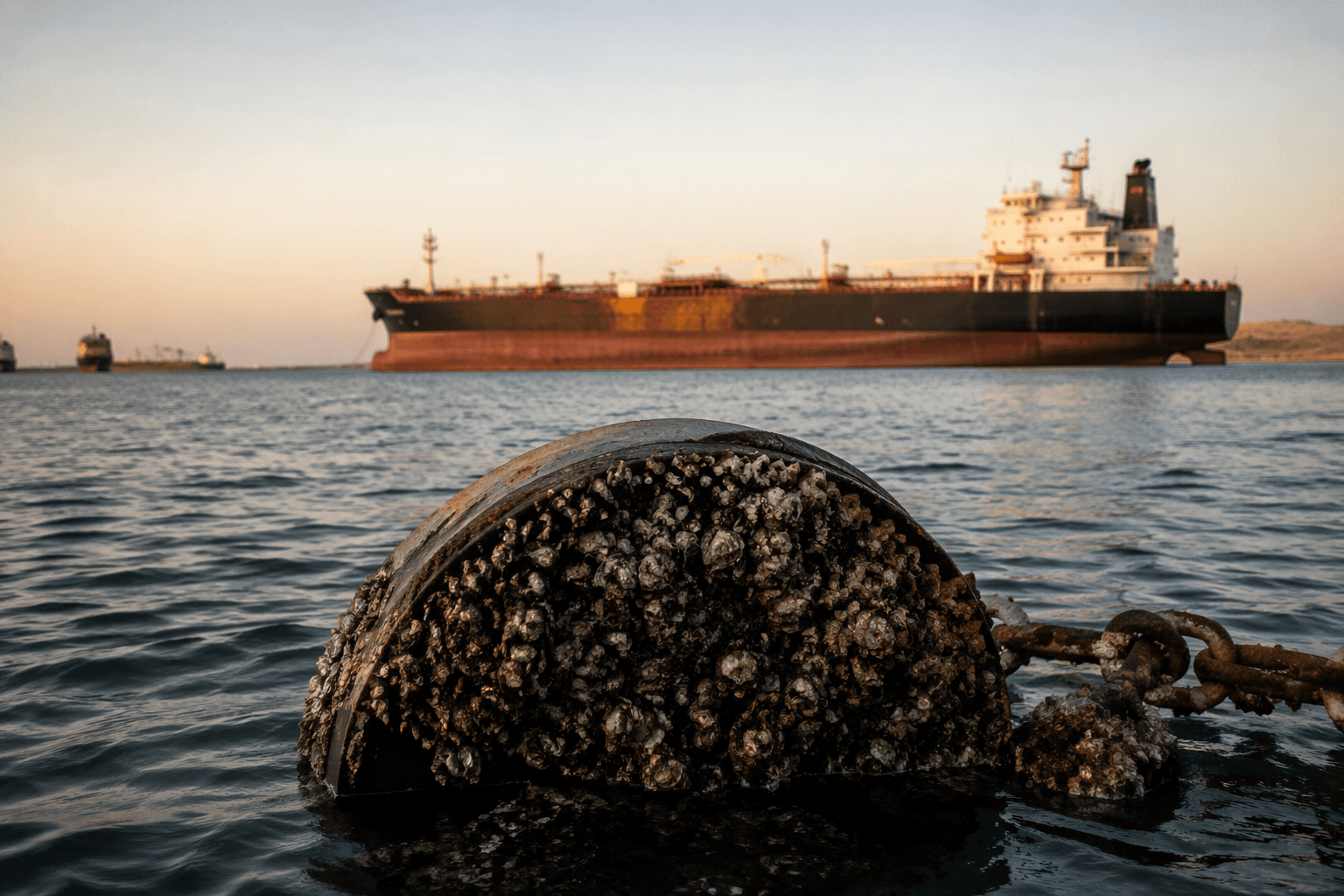
The closure of the Strait of Hormuz on Feb. 28 left an estimated 1,500 ships stranded in the Persian/Arabian Gulf, and scientists say the backlog could become a bioinvasion super-spreader event when vessels start moving again. A July 22 paper in Biological Invasions warned that months of idling can allow dense layers of marine organisms to build up on hulls, creating a hidden ecological risk inside a geopolitical standoff.
The mechanism is biofouling, the accumulation of marine life on a ship’s hull during prolonged inactivity. Once a vessel finally leaves port, that growth can travel with it to the next harbor, carrying invasive species into waters that have never seen them before. The concern is not limited to hulls alone, because organisms can also move in associated water, widening the chance of release when trade restarts.
Woods Hole Oceanographic Institution said the danger is global because the ships are not stuck in one place forever. When they resume voyages, fouled hulls can transport marine organisms to new ports across multiple trade routes. The University of Maryland Center for Environmental Science issued a similar warning, saying that biofouling growth on ships stranded in the Persian/Arabian Gulf region could trigger a marine invasive species super-spreader event.
The Strait of Hormuz is one of the world’s narrowest and most consequential shipping chokepoints, so any shutdown hits energy and trade flows immediately while also reshaping how species move across oceans. By April 29, shipping traffic through Hormuz remained at a trickle amid the U.S.-Iran deadlock, underscoring how longer disruption can increase the biological hazard as well as the commercial one.
The likely fallout would not stop at the Gulf. Scientists say invasive species carried on hulls or in water could threaten fisheries, ports and marine ecosystems far beyond the region, turning a transport crisis into a long-term environmental burden that could follow ships to distant coasts.
This article was produced by Prism’s automated news system from verified source data, official records, and press releases, then run through automated quality and moderation checks before publishing. The system is built and supervised by the people who set the standards it runs under. Read our full AI policy.
Did this article answer your question?