Strait of Hormuz threat raises global oil market alarm
Iran’s Hormuz threat still jolts oil prices, but repeated use is drawing faster market, shipping and military defenses that blunt its leverage.
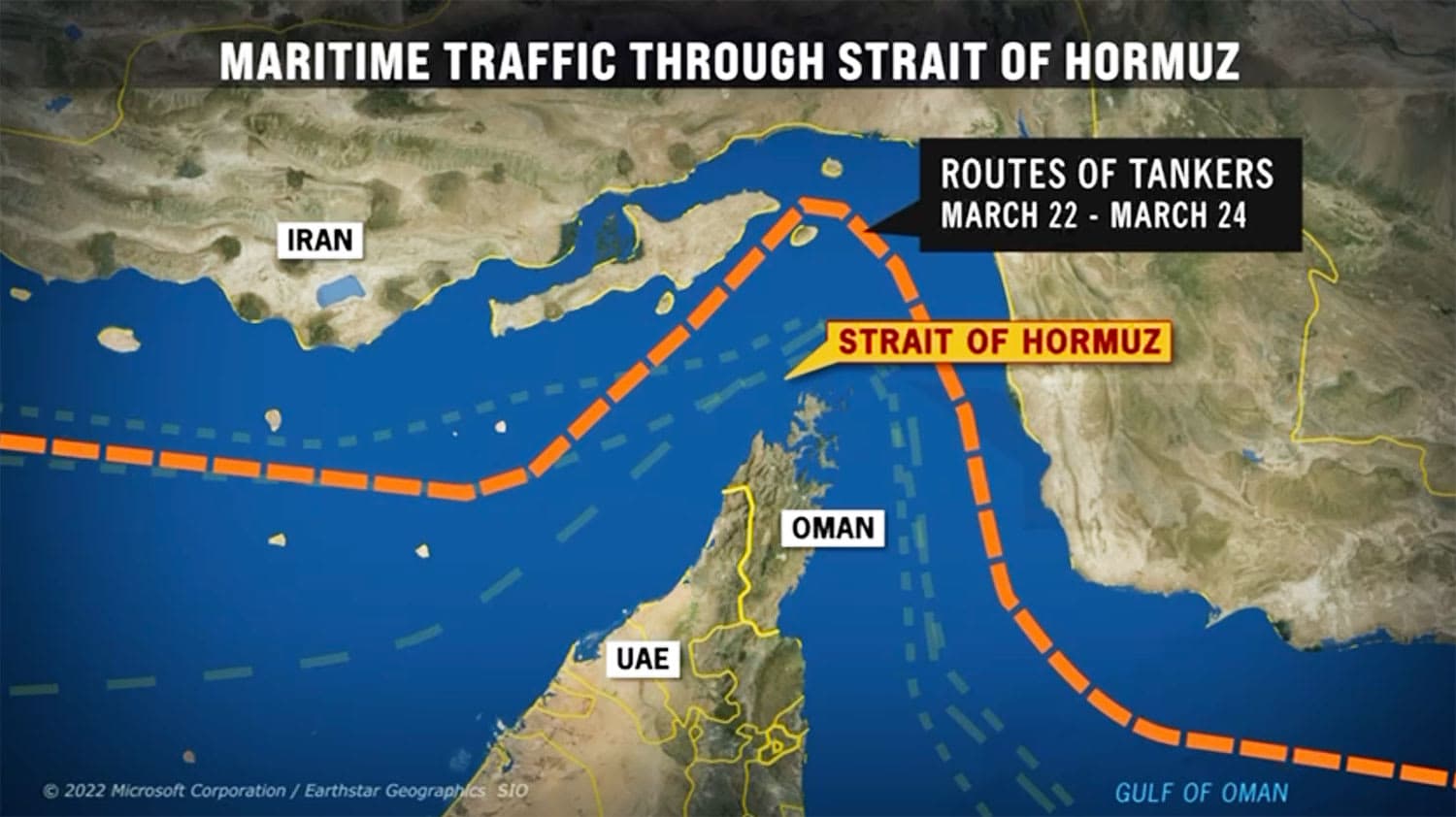
In 2025, an average of 20 million barrels per day of crude oil and oil products moved through the Strait of Hormuz, about 25% of global seaborne oil trade. Roughly 20% of the world’s LNG supply also crossed the narrow waterway between the Persian Gulf and the Gulf of Oman.
Why Hormuz matters more than almost any other chokepoint
The geometry of the strait leaves very little room for error. At its narrowest point, Hormuz is only 29 nautical miles wide, with two-mile-wide shipping channels and a two-mile buffer zone that force dense traffic into a tightly managed corridor. When a route that narrow carries so much crude and LNG, even the hint of disruption can move prices, insurance costs and carrier behavior long before any vessel is actually stopped.
Hormuz has long been one of Tehran’s most potent pressure points. A threat to disrupt the passage does not need to produce a full shutdown to have effect. It only needs to convince buyers, shippers and governments that a risk premium belongs on every barrel and every cargo moving through the channel.
The 2026 shock showed the size of the market response
The International Energy Agency called the Middle East conflict the largest supply disruption in the history of the global oil market. In March, April and May of 2026, flows through Hormuz fell to an average of 2.7 million barrels per day, a steep drop from the 2025 average, and cumulative oil supply losses from producers in the Middle East exceeded 1.3 billion barrels. During that disruption, oil prices moved above $100 per barrel.
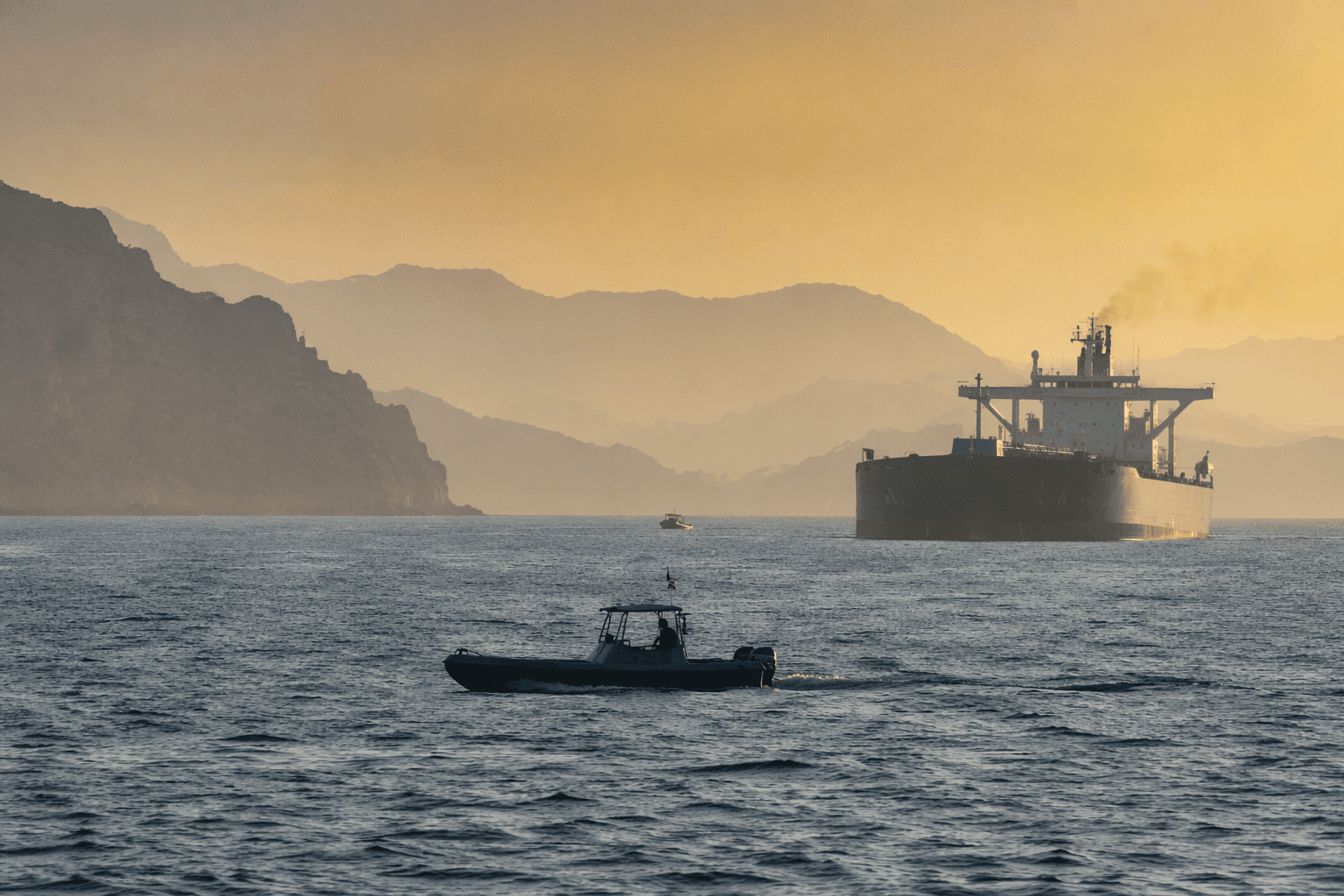
The IEA called restoring transit through Hormuz essential to stabilizing global energy markets. The agency also moved to coordinate member-country stock releases.
Iran’s leverage rests on legal claims and military pressure
Tehran’s threat is not just rhetorical. A U.S. Department of Defense freedom-of-navigation report documents Iran’s long-running assertions that it can restrict transit passage through Hormuz and that foreign military activities in its exclusive economic zone are prohibited.
The Iranian joint military command has added direct pressure to that backdrop. It warned tankers to use routes it approves or face a “forceful response,” a formulation meant to push commercial operators into compliance without firing a shot. That kind of warning can be effective in the short term because ship captains, insurers and charterers do not need a missile strike to change behavior, only a credible chance of one.
The costs of a repeated threat are rising
The more often Hormuz is used as leverage, the more quickly the rest of the market adapts. The effective closure of the strait has already disrupted air and sea shipments, while carriers responded by adding emergency surcharges and rejecting some cargo bookings.
That adaptation weakens the long-term bargaining value of the threat. If emergency stock releases, surcharges and booking refusals become predictable, then the threat still hurts, but it hurts in a way that others can partially absorb or plan around.
What deterrence now has to cover
Military deterrence around Hormuz now has to account for both commerce and escalation. The U.S. military, allied navies and commercial shipping operators all have stronger incentives to prepare for disruption because the stakes are visible in the IEA’s 2026 figures and in the emergency steps taken by carriers. Once transit through a strait has already been threatened and partially disrupted, the next crisis is less likely to surprise the system.
That does not mean the threat is empty. It still has the power to move prices above $100 per barrel, to trigger stock releases and to tighten shipping routes in a matter of days.
This article was produced by Prism’s automated news system from verified source data, official records, and press releases, then run through automated quality and moderation checks before publishing. The system is built and supervised by the people who set the standards it runs under. Read our full AI policy.
Did this article answer your question?