Stranded humpback whale dragged ashore in Denmark for examination
A humpback whale nicknamed Timmy was dragged ashore in Denmark after weeks adrift, and scientists will now examine it for clues to its death.

The carcass of a humpback whale that had drifted far outside its normal range was dragged onto a Danish beach on Saturday, setting up an examination next week that could help explain why the animal died after weeks of worsening condition in the Baltic Sea.
The whale, nicknamed Timmy and Hope by German media, was first spotted on March 3 off Timmendorfer Strand on Germany’s coast, far from the Atlantic waters where humpbacks normally live. Over the following weeks it became a minor public spectacle, repeatedly stranding in shallow Baltic waters as its condition deteriorated and rescue efforts grew more controversial.
Authorities tried to move the whale on May 2, transporting it on a barge toward the North Sea and releasing it about 70 kilometers north of Skagen, Denmark. The animal was found dead on May 14 in shallow water off Anholt in the Kattegat, and Danish officials later confirmed it was the same whale by retrieving a tracking device still attached to its back.
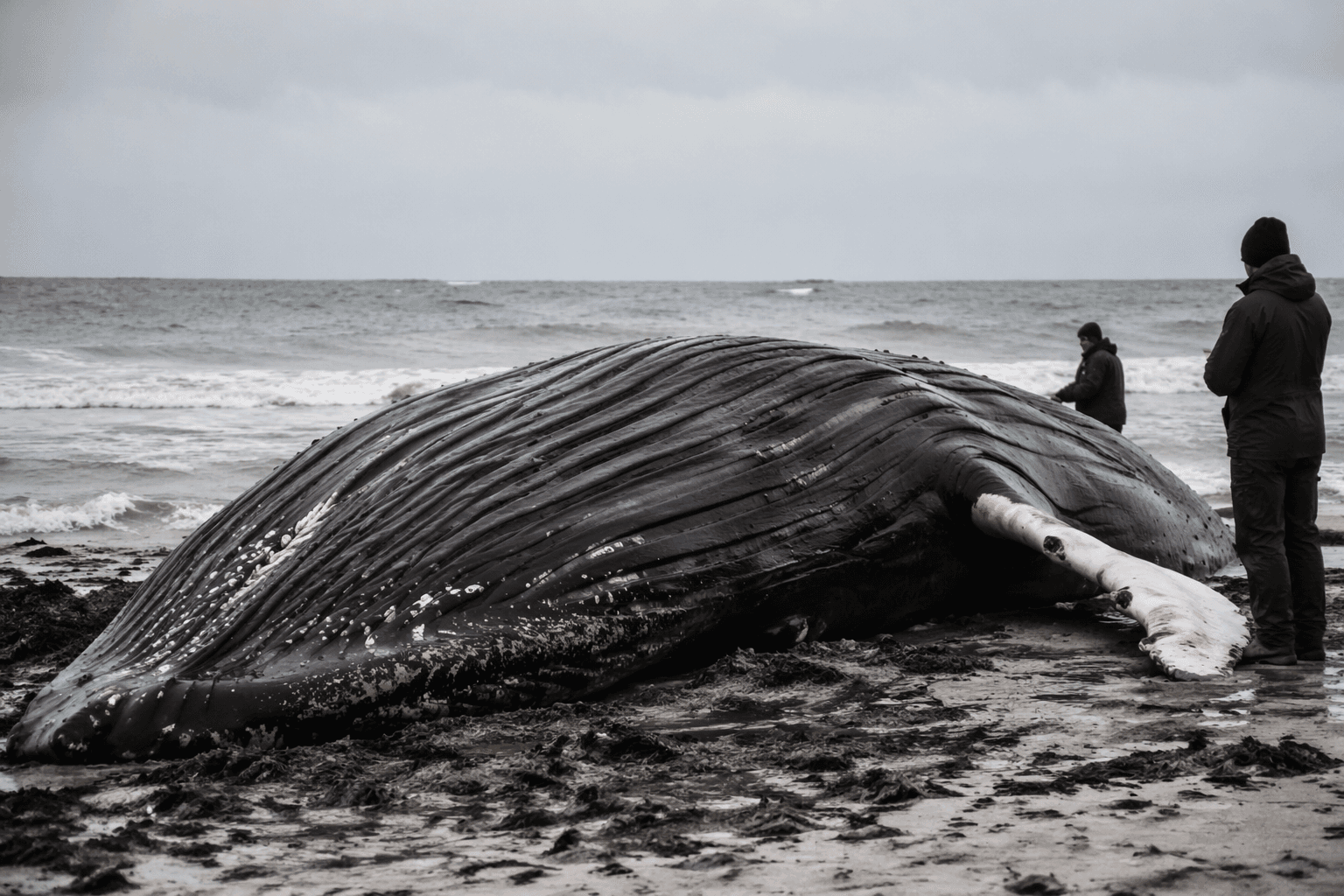
The Danish Environmental Protection Agency said the carcass will be examined next week to determine the cause of death. Danish officials had already collected tissue samples, while earlier reporting said the body was being moved because it caused significant disturbance near the beach. The remains were also to be taken to Grenaa for further work.
Scientists said the whale may simply have lost its way while following prey such as herring or during migration, but no one has confirmed why it entered the Baltic Sea in the first place. Some researchers warned that the rescue effort may have put too much stress on an animal already weakened by nearly two months in shallow water, while others argued that leaving it stranded would have been inhumane.
The case has become a stark example of how a single stranding can pull together questions about habitat disruption, animal health and the limits of intervention. What began as a dramatic attempt to save a young whale, believed to be about 12 meters long and 4 to 6 years old, ended in a cleanup operation and a necropsy that may offer the clearest answer yet about why it wandered so far from home.
This article was produced by Prism’s automated news system from verified source data, official records, and press releases, then run through automated quality and moderation checks before publishing. The system is built and supervised by the people who set the standards it runs under. Read our full AI policy.
Know something we missed? Have a correction or additional information?
Submit a Tip