Students boo AI cheerleaders at graduation ceremonies nationwide
Graduates booed AI praise at UCF and Arizona, turning commencement into a warning about jobs, authorship and shrinking entry-level work.
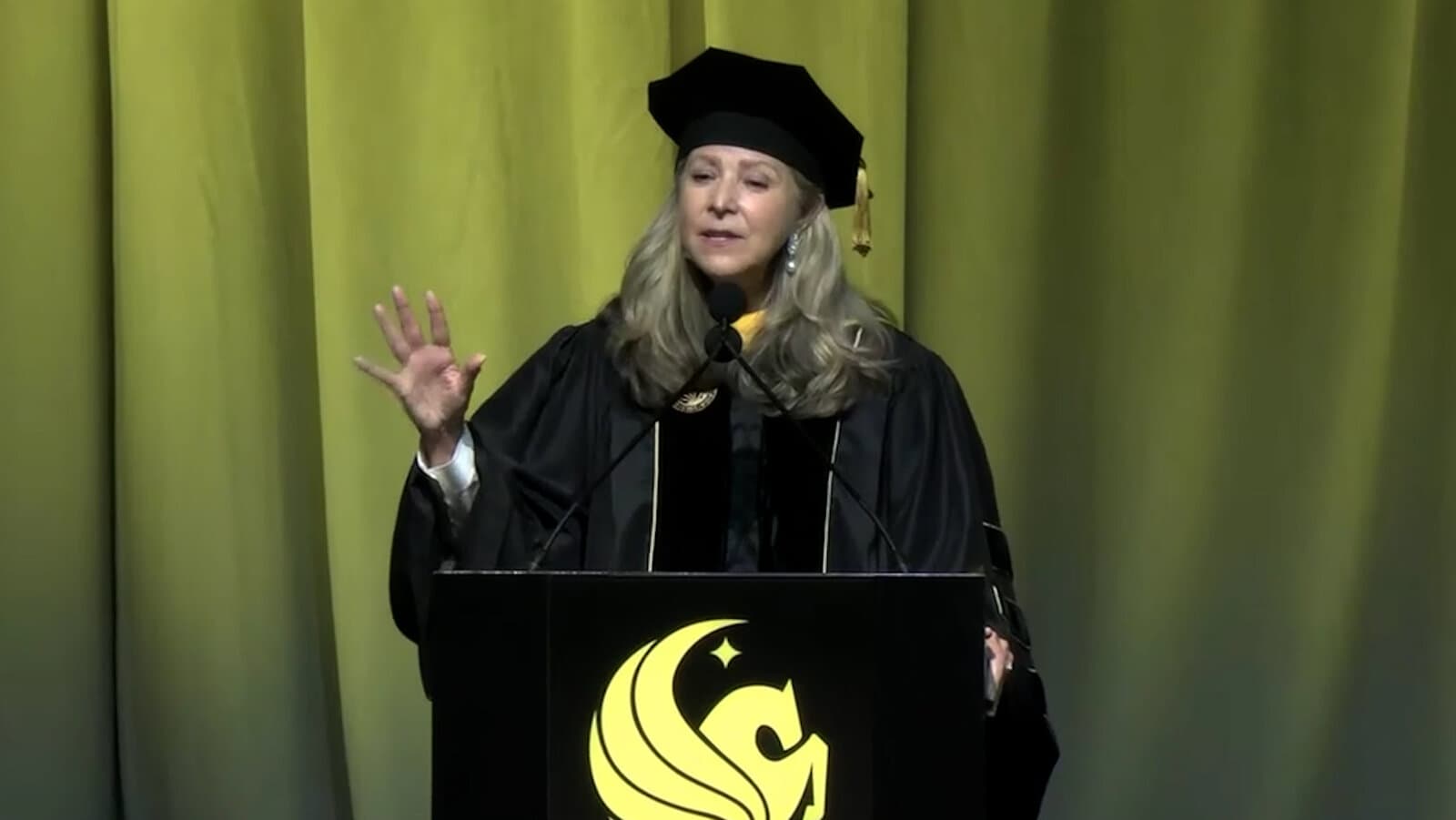
Commencement season turned into a public referendum on artificial intelligence as graduates at two major universities booed speakers who framed AI as an opportunity rather than a threat. At the University of Central Florida on May 8, Gloria Caulfield, vice president of strategic alliances at Tavistock Development Company and president of the Lake Nona Institute, was jeered after telling graduates that “The rise of artificial intelligence is the next industrial revolution.” A week later at the University of Arizona, former Google chief executive Eric Schmidt drew boos of his own while urging students to help shape AI.
The reaction at UCF was especially sharp because Caulfield was speaking to graduates in arts, humanities, writing, journalism, design, art and media, fields many students believe are most exposed to automation. Madison Fuentes, who graduated with a degree in English creative writing, said students were worried AI was “taking away job opportunities” in creative fields. The discontent was not aimed only at the technology itself. It reflected a deeper fear that the first rung into professional work is disappearing before graduates can even step onto it.

That anxiety is spreading well beyond campus stages. A Gallup poll cited by TechCrunch found that only 43% of Americans ages 15 to 34 said it was a good time to find a job locally, down from 75% in 2022. In a ZipRecruiter survey of 1,500 recent graduates and 1,500 rising graduates conducted from January 30 to March 16, 2026, 47% of recent graduates said AI had already affected hiring in their fields, while 51% of rising graduates expected fewer entry-level positions because of AI. Only 23% of recent graduates and 29% of rising graduates said their college education provided extensive AI training relevant to their careers.
At Arizona, Schmidt’s appearance carried an added layer of controversy. Student groups had criticized his selection before the ceremony because of a sexual-assault lawsuit filed by a former girlfriend and business partner; Schmidt has denied the allegations. The university said Schmidt was its 2026 commencement speaker, and the ceremony was part of a larger event expected to confer about 10,000 degrees and draw more than 30,000 guests.
The backlash has not been universal. Jensen Huang, chief executive of Nvidia, faced no audible resistance at Carnegie Mellon University when he said AI had “reinvented computing.” But at graduation ceremonies in Orlando and Tucson, students made clear that their welcome for AI depends on whether they see it as a tool for human work or a force that is eroding the value of their own degrees.
Know something we missed? Have a correction or additional information?
Submit a Tip

