Study Finds Domesticated Dogs Reached Western Eurasia at Least 14,000 Years Ago
A 14,200-year-old dog from a Swiss cave just pushed the genetic record for domesticated dogs back by 5,000 years, with two new Nature studies showing canines spanned western Eurasia long before farming.
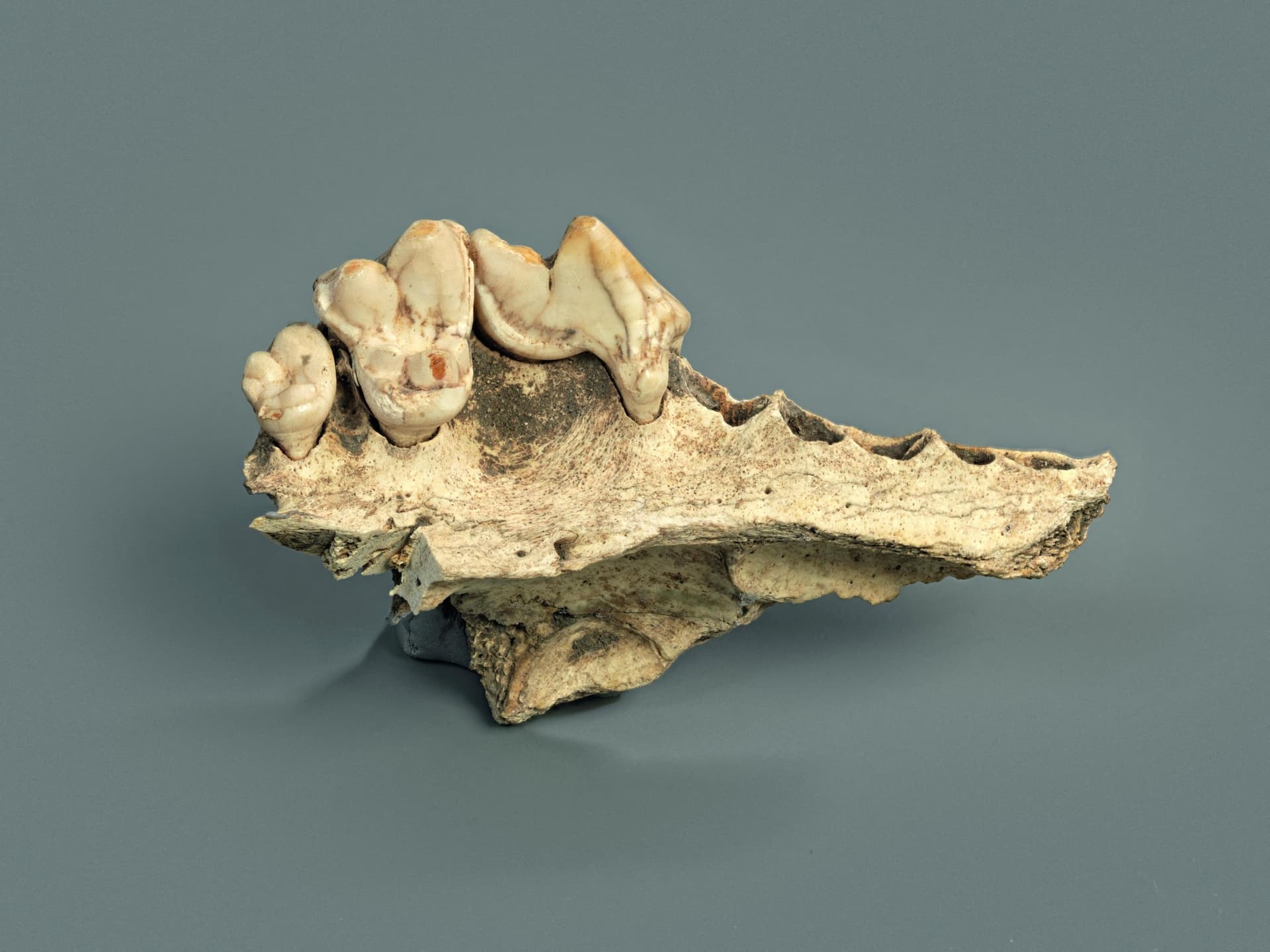
A jawbone fragment pulled from Kesslerloch cave in Switzerland has rewritten the timeline of humanity's oldest animal partnership. An international team of researchers led by the Francis Crick Institute, the University of East Anglia, and the Max Planck Institute for Evolutionary Anthropology found that dogs were domesticated more than 14,000 years ago and that dogs living in pre-agricultural Europe contributed substantially to the genetics of dogs living after agriculture and in the present day. The findings appear in Nature.
The remains, from the United Kingdom, Switzerland, and Turkey, are 14,000 to 16,000 years old and push the genetic record for dogs back by more than 5,000 years, while also identifying an early domestic dog population that spanned western Eurasia and was kept by diverse human hunter-gatherer groups.
Researchers analyzed 216 canid remains, including 181 from Palaeolithic and Mesolithic Europe, developing a genome-wide capture approach that enriched endogenous DNA by 10 to 100-fold and could distinguish dog from wolf ancestry for 141 of those 216 remains. The team confirmed that a previously proposed dog from Kesslerloch cave in Switzerland was genetically a dog; at 14,200 years old, this specimen is the oldest in the study and one of the oldest ever recorded.
A second study within the same issue of Nature extended the findings further. Researchers generated both nuclear and mitochondrial genomes from canid remains at Pinarbasi in Turkey, dated to 15,800 years ago, and Gough's Cave in the United Kingdom, dated to 14,300 years ago, as well as from dogs excavated from two Mesolithic sites in Serbia, and their analyses indicated that a genetically homogeneous dog population was already widely distributed across Europe and Anatolia during the Late Upper Palaeolithic, by at least 14,300 years ago.
Prior to this research, the earliest confirmed genetic record of domestic dogs was dated to approximately 10,900 years ago, and the difficulty in identifying earlier specimens stemmed from the biological realities of the last Ice Age: early dogs and wild wolves were virtually indistinguishable in the fossil record.
The genetic data from Kesslerloch proved particularly revealing about the deep roots of domestication. Because the Kesslerloch dog, at 14,200 years old, was already more similar to later dogs in Europe than those in Asia, dogs must have been domesticated well before this point, giving time for those genetic differences to emerge. The new evidence suggests that European wolves did not contribute detectably to dog evolution and that early European dogs were not domesticated independently from dogs in Asia, as both share the same ancestry profile.

William Marsh, a postdoctoral researcher in the Ancient Genomics Laboratory at the Francis Crick Institute in London and co-lead author of one of the studies, said the DNA evidence suggests dogs were present in various locales in western Eurasia by 18,000 years ago and were already quite different genetically from wolves. "We putatively predict that dog and wolf populations diverged a lot earlier, likely before the last glacial maximum of the Ice Age, so before 24,000 years ago. Although saying that, there is still a great degree of uncertainty," Marsh said.
The Pinarbasi site offered a vivid glimpse of just how intertwined these early relationships were. "At Pinarbasi, we have both human and dog burials, with dogs buried alongside humans," Marsh said, and there was also evidence that the people at Pinarbasi fed their dogs fish.
The animals' genetic signature is still present in dogs today, and while the studies do not pinpoint exactly where, when, and why dogs were first domesticated by humans, some researchers say they narrow down the search, and the studies also show that dogs were exported and exchanged by various human groups, underlying dogs' importance to early communities with different ways of living.
"Dogs have been by our side as humans underwent major lifestyle transitions and complex societies emerged," said geneticist Anders Bergström of the University of East Anglia, lead author of the other study. "Yet, many questions remain: we're still researching where and how dogs spread across Europe after likely domestication somewhere in Asia. Each piece of evidence is a step forward in this journey.
This article was produced by Prism’s automated news system from verified source data, official records, and press releases, then run through automated quality and moderation checks before publishing. The system is built and supervised by the people who set the standards it runs under. Read our full AI policy.
Did this article answer your question?