Study finds imagination and sight share the same brain neurons
Scientists found that imagining a familiar object reactivated many of the same neurons used to see it, tying the brain’s visual code to memory and mental imagery.
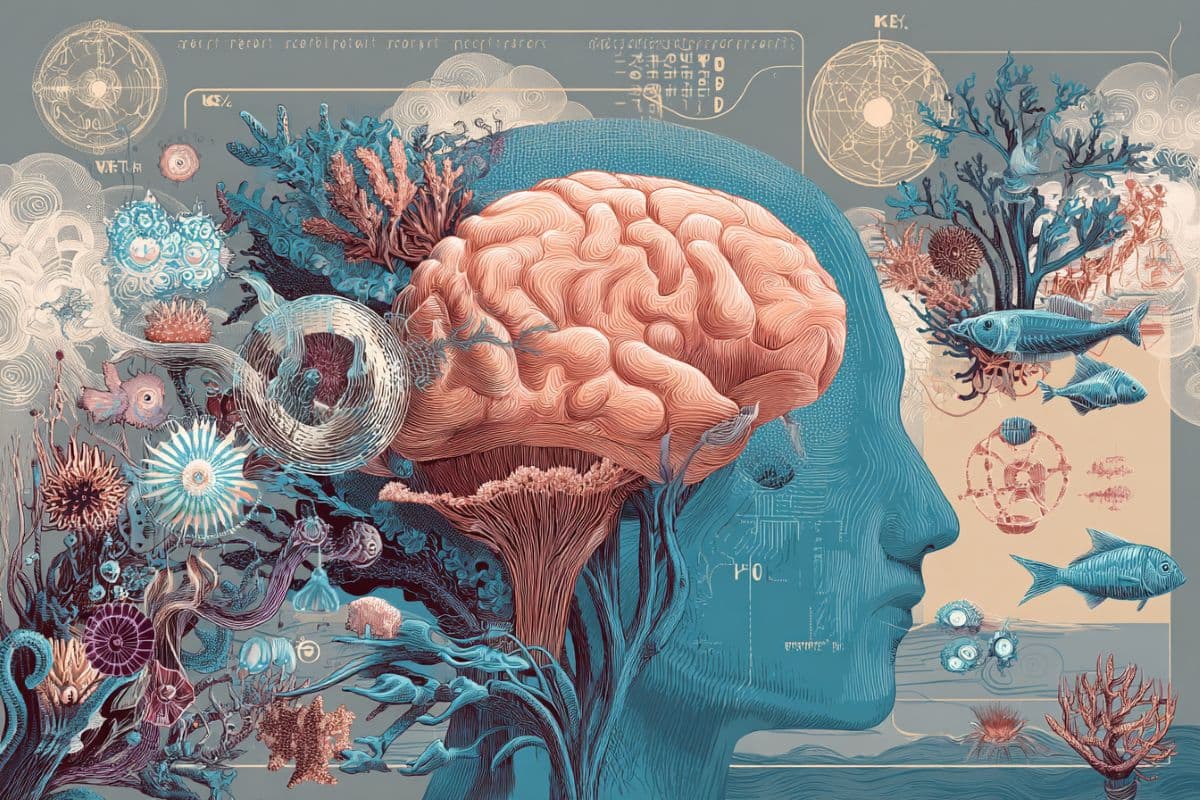
A new study has traced imagination and sight to the same neurons in the brain’s visual system, offering direct evidence that mental images are built from the same neural code used in perception. In work published April 9, 2026, in Science, researchers from Cedars-Sinai, the California Institute of Technology and the University of California, Berkeley recorded activity in the ventral temporal cortex, a region central to visual recognition and memory, and found that the brain reuses the same circuitry when people imagine objects they have already seen.
The team studied 16 adults with epilepsy who already had temporary intracranial electrodes implanted for seizure monitoring. While the participants viewed hundreds of images drawn from five categories, faces, text, plants, animals and everyday objects, the researchers recorded from more than 700 neurons. About 450 of those neurons responded selectively to specific categories, and machine-learning analysis found that roughly 80% of the category-responsive cells were tuned to particular visual features.
The second phase of the experiment pushed the finding beyond simple perception. In a smaller imagery task involving six of the 16 participants, the subjects were asked to imagine objects they had previously viewed. About 40% of the neurons that activated during seeing the objects also reacted when the same objects were recalled from memory, suggesting that the visual system does not merely support imagery from a distance but returns to a familiar state when the mind’s eye is engaged. The paper says the ventral temporal cortex uses a distributed axis code to represent objects, and that same code appears to be shared across perception and imagination.

The work builds on earlier research led by Doris Y. Tsao on how primate brains represent visual objects, and it strengthens fMRI-era hints that perception and imagery overlap. Here, the evidence came from single neurons, not indirect brain signals, giving researchers a much sharper look at how visual experience is stored and replayed. Varun Wadia, now a postdoctoral scholar at Cedars-Sinai after training at Caltech, and Ueli Rutishauser, who directs the Center for Neural Science and Medicine at Cedars-Sinai and is a faculty associate at Caltech, were among the authors.
The implications reach beyond a basic neuroscience milestone. The paper links mental imagery to remembering the past, imagining the future, planning, navigation and creative work, while noting that disruptions in imagery have been tied to anxiety, schizophrenia and posttraumatic stress disorder. Researchers say the findings could eventually inform therapies for Alzheimer’s disease and help inspire more efficient artificial intelligence systems, but the immediate result is narrower and stronger: the brain appears to use the same neural machinery to see an object and to call it back into mind.
This article was produced by Prism’s automated news system from verified source data, official records, and press releases, then run through automated quality and moderation checks before publishing. The system is built and supervised by the people who set the standards it runs under. Read our full AI policy.
Did this article answer your question?


