Study finds people share a quarter of oral and gut microbes at home
Households do not just share meals and bathrooms. A study of 430 people in Italy and Fiji found cohabitants shared 19% of gut strains and 26% of oral strains.
People who live under the same roof share far more than chores and furniture: they also exchange a sizable slice of the microbes in their mouths and intestines. In a study published June 15, 2026, researchers analyzed metagenomic data from 430 people in 207 households in Italy and Fiji and found that cohabitants shared, on average, 19% of gut microbial strains and 26% of oral strains.
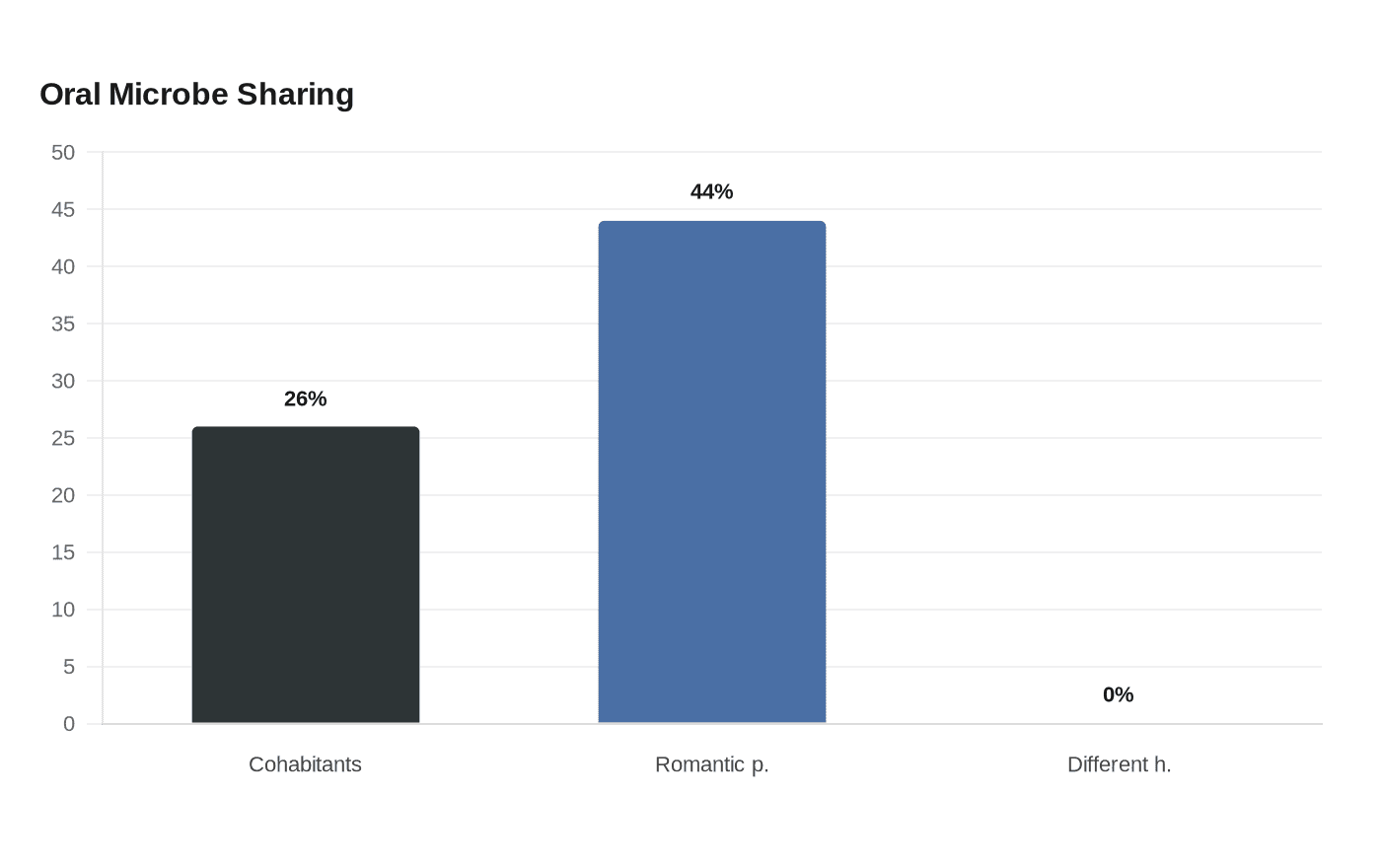
The pattern was strongest among people with the closest daily contact. Romantic partners shared about 44% of oral microbes, a level the researchers linked to kissing. But the effect did not depend on relationship labels alone. Siblings, parents and offspring showed similar levels of microbial overlap when they lived together, suggesting that shared space, shared meals and constant physical proximity matter as much as family ties.
The contrast with people outside the home was sharp. Individuals from different households shared about 6% of gut strains and 0% of oral strains, far less than cohabitants did. The researchers also found that people in the same wider community, even when they did not live together, shared more strains than people from completely different populations, pointing to transmission that may extend beyond the household into public settings and other routine contact.
Some of the most transmissible gut microbes were tied to biomarkers of type 2 diabetes and poor cardiometabolic health, a finding that raises the possibility that household microbial exchange may matter for disease research and for more targeted microbiome therapies. The study does not show that sharing microbes causes illness, but it adds a new layer to how scientists think about risk, exposure and the environment inside a home.
Nicola Segata, Francesco Beghini and Vitor Heidrich of the University of Trento were among the researchers behind the analysis, which draws attention to the microbiome as a social as well as biological system. Earlier work cited by Yale University and the University of South Florida found that couples living together can share up to 30% of gut bacterial strains and up to 38% of the oral microbiome, with skin microbes also showing marked similarity. Taken together, the studies suggest that the microbiome moves with people through ordinary contact, not just through medicine or diet, and that household life leaves a measurable microbial trace.
This article was produced by Prism’s automated news system from verified source data, official records, and press releases, then run through automated quality and moderation checks before publishing. The system is built and supervised by the people who set the standards it runs under. Read our full AI policy.
Know something we missed? Have a correction or additional information?
Submit a Tip