Study links smartphones to falling fertility rates since 2007
A University of Cincinnati paper says smartphones may explain 43% of the U.S. drop in children per adult since 2007, with teen fertility falling fastest.
Smartphones arrived in 2007, and so did the start of a steep fertility slide that now reaches from U.S. teen births to the OECD’s richest countries. A new University of Cincinnati working paper argues that the timing is not just a coincidence: as phones got cheaper and faster, births fell first and fastest in places that gained high-speed mobile connectivity earliest.
The paper, titled Wide and Shallow: Digital Technology and the Post-2007 Fertility Decline, is an early-stage SSRN study co-authored by doctoral candidate Nathan Hudson and economics professor Hernan Moscoso Boedo. It says the OECD median total fertility rate fell from 1.71 in 2007 to 1.44 in 2023, and estimates that freezing the relative price of phones at 2007 levels would explain 43% of the observed U.S. decline in children per adult.
The harder question is causation, and the authors say they tested for it. Their paper uses two terrain-ruggedness instrumental-variable designs to try to separate smartphone exposure from broader social trends. The University of Cincinnati said the study also looked at the rollout of 4G networks in the United States and the United Kingdom, and noted that the first commercial 4G networks launched in Sweden and Norway in late 2009. In the paper’s fertility chart, the June 2007 iPhone launch is marked as the turning point.
Hernan Moscoso Boedo told the Financial Times, “We find that fertility among teens fell the fastest all around the world.” The companion argument is behavioral rather than purely economic: smartphones changed how teens spent time together, sharply reducing in-person socializing and helping drive the collapse in teen fertility. The mechanism, in other words, is not simply that phones were expensive or new, but that they reshaped how young people formed relationships.
The broader U.S. decline has other documented forces as well. Earlier National Bureau of Economic Research work by Melissa Schettini Kearney, Phillip B. Levine and Luke W. Pardue found that the Great Recession explained part of the early drop in births from 2007 to 2020, but that no other economic, policy or social factor could account for much of the rest. That paper pointed instead to shifting priorities in fertility preferences, life aspirations and parenting norms.
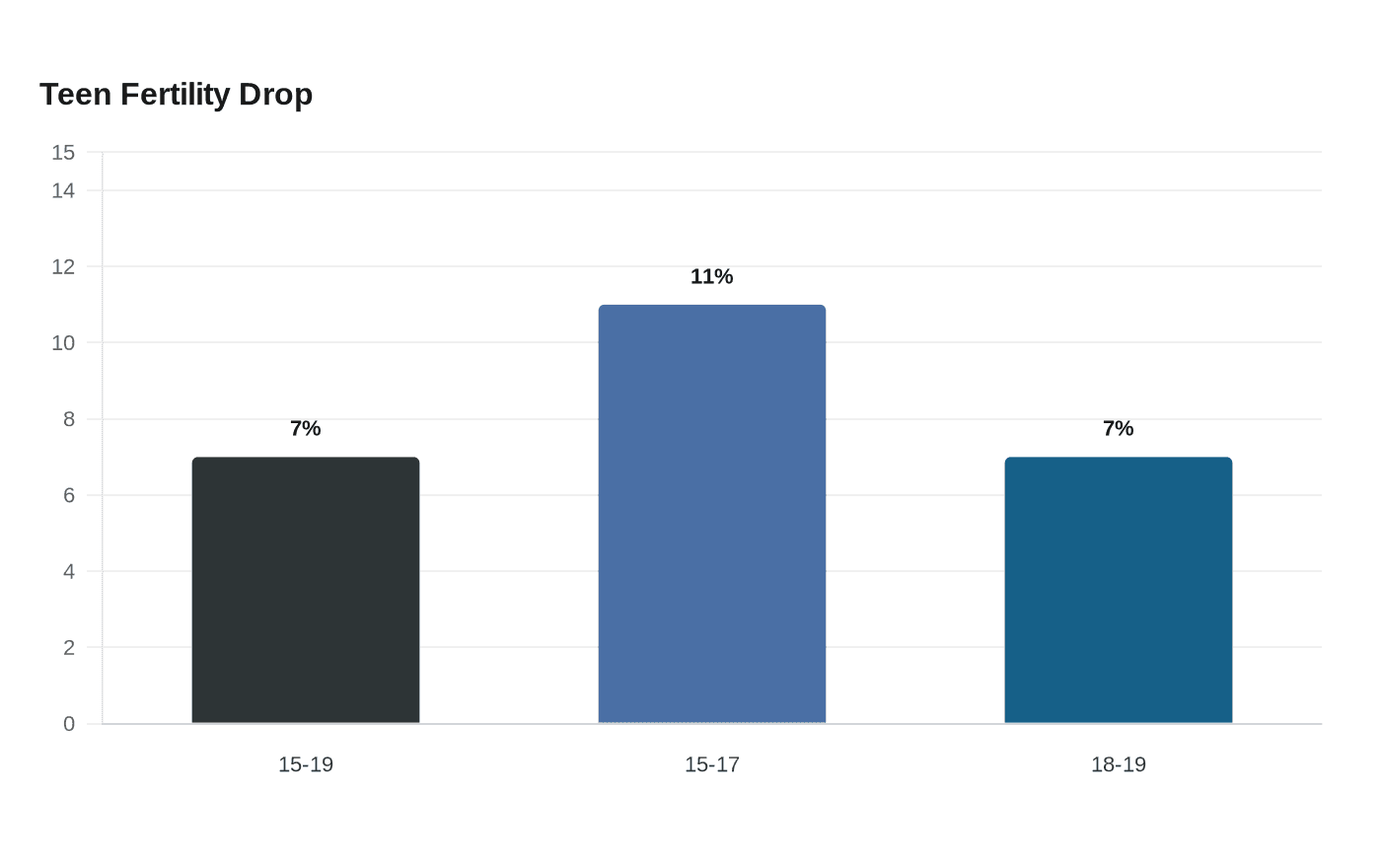
The latest federal data show the decline has not stopped. Centers for Disease Control and Prevention provisional figures released in April 2026 put U.S. births in 2025 at 3,606,400, down 1% from 2024, with a general fertility rate of 53.1 births per 1,000 females ages 15 to 44. Teen fertility fell 7% for ages 15 to 19, 11% for ages 15 to 17 and 7% for ages 18 to 19. Final 2024 data had already put the U.S. total fertility rate at 1,626.5 births per 1,000 women, the lowest on record and below replacement since 2007.
Even so, falling fertility does not automatically mean falling population. Johns Hopkins researchers note that U.S. births still outpace deaths. Globally, the World Bank and Our World in Data show fertility has fallen to about 2.2 to 2.3 births per woman in the early 2020s, and the United Nations says population growth is slowing as projections are revised downward. The smartphone theory is provocative, but the new evidence frames it as an accelerator of an older demographic shift, not a lone cause.
This article was produced by Prism’s automated news system from verified source data, official records, and press releases, then run through automated quality and moderation checks before publishing. The system is built and supervised by the people who set the standards it runs under. Read our full AI policy.
Did this article answer your question?