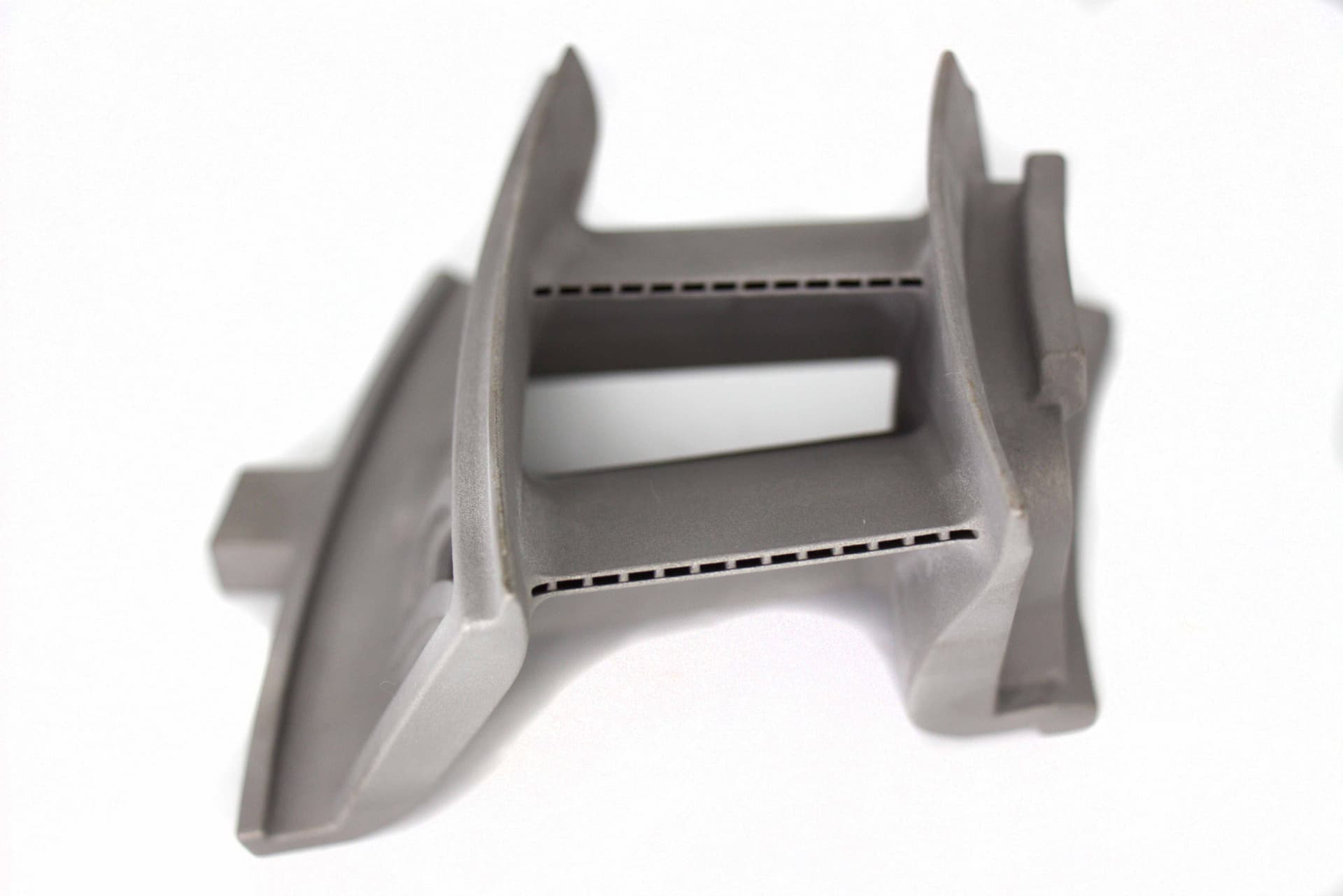
Subaru adopts Stratasys T25 head for faster large-format 3D tooling
Stratasys’ T25 High Speed Head is now in use at Subaru of America, cutting tooling time and costs while nearly doubling print speed on large parts. This signals faster, more in-house tooling workflows for makers.
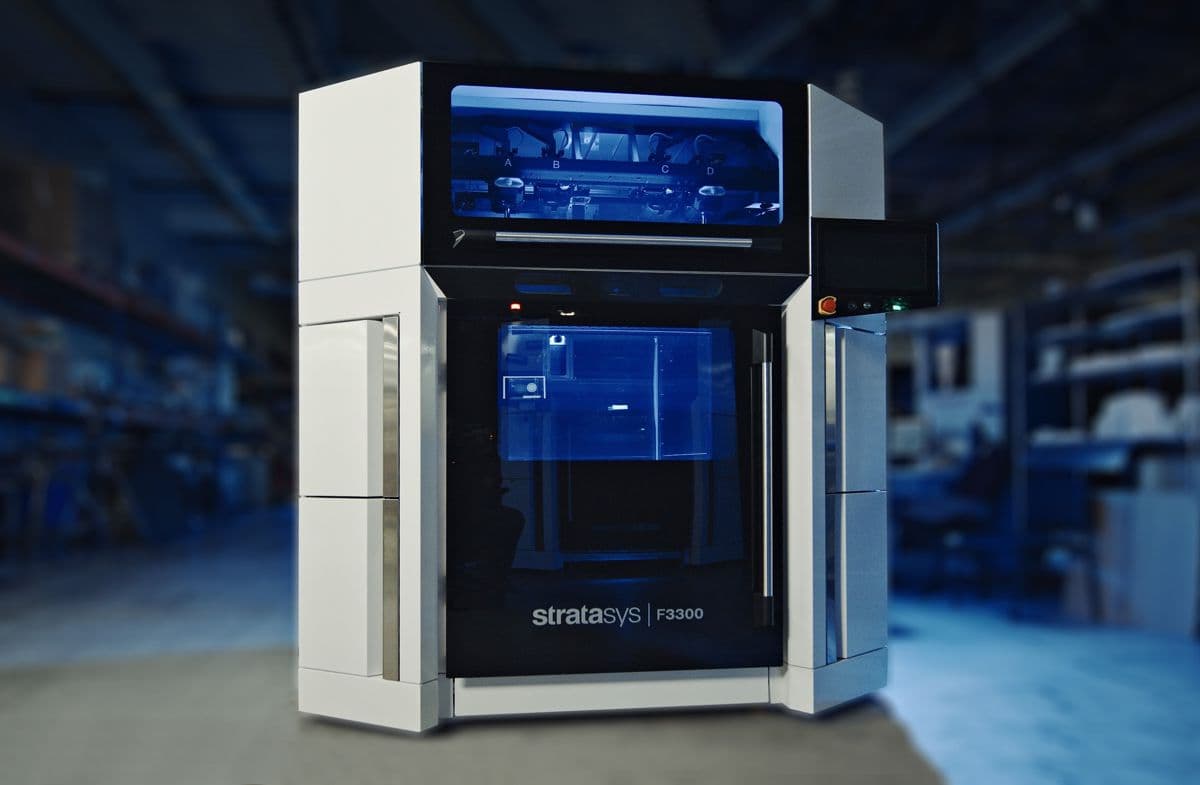
Subaru of America has adopted Stratasys’ new T25 High Speed Head for the large-format Stratasys F770 3D printer, driving big gains in throughput and cost for installation tooling and accessories. The T25 achieved a greater-than-50% reduction in tooling development time and a 70% reduction in overall prototyping and tooling costs in Subaru’s engineering workflows, while a 36-inch tool printed 1.96 times faster than with the standard head. Stratasys positions the T25 as capable of up to about 2.3 times faster print speeds on large parts while maintaining part quality.
Those outcomes matter because they show industrial high-speed print-head technology delivering measurable production benefits, not just faster bench-top prints. Subaru’s results are a concrete example of how faster deposited polymer parts can replace slower, outsourced manufacturing for jigs, fixtures, and accessory tooling. For shops and advanced makers who already run large-format polymer printers, the T25 represents a clear path to consolidating production in-house and shortening lead times versus traditional CNC tooling.
The technical upsides are straightforward: higher deposition rates translate to faster cycle times for big parts, which reduces labor and external supplier spend. The quality takeaway is equally important: speed gains while maintaining part quality keep printed tooling usable for installation and assembly tasks where tolerances matter. The nearly 2× speed figure on a 36-inch tool gives a practical benchmark for what to expect on similar large, low-to-medium complexity parts.
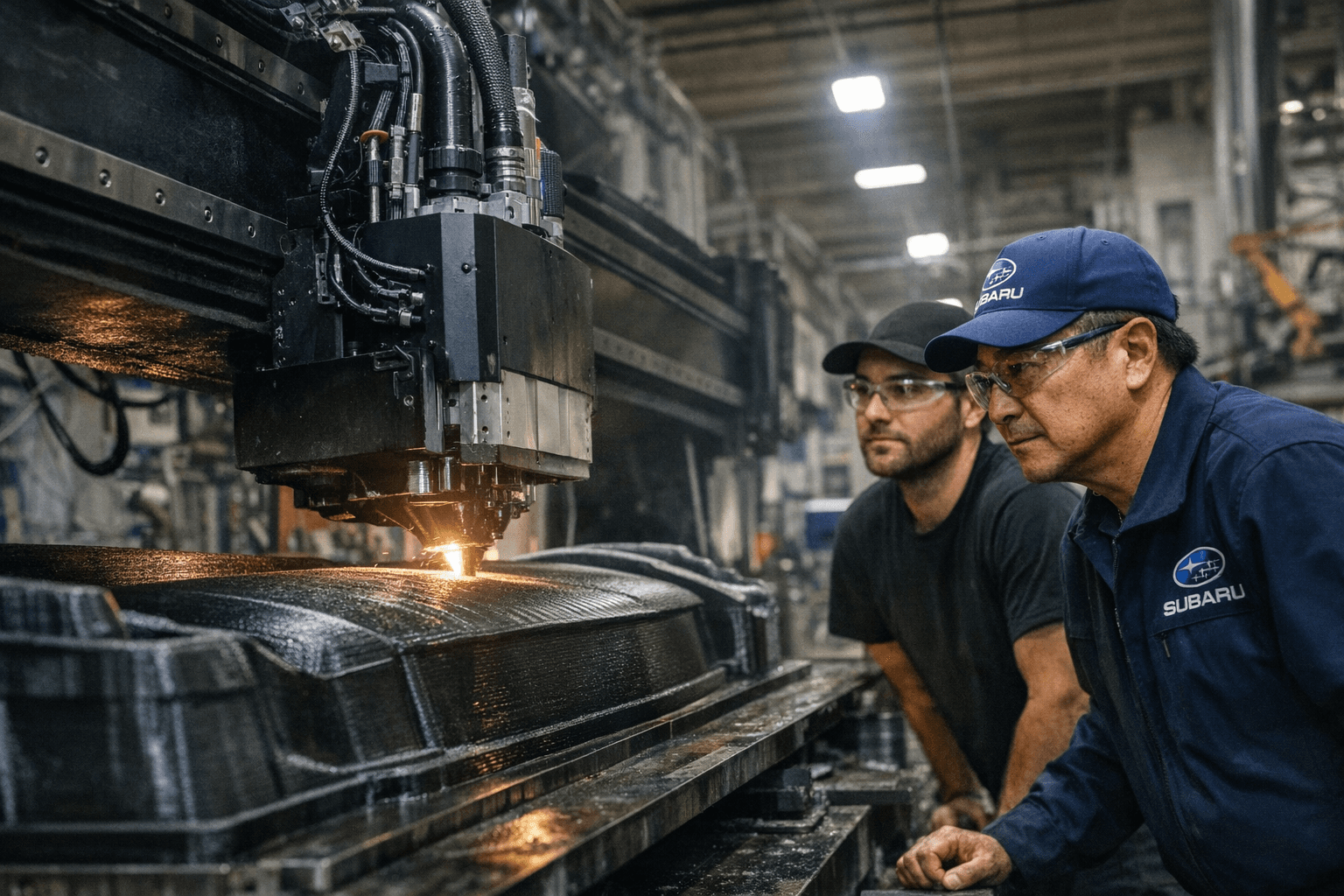
If you’re thinking about following this model, check compatibility and upfront costs before pulling the trigger. Confirm that your large-format platform supports the T25 or comparable high-speed heads, consider filament and material behavior at higher deposition rates, and plan finishing and post-processing steps that preserve functional tolerances. Run a few representative test parts to validate fit, surface finish, and mechanical performance before moving production-critical tooling to a new head.
For smaller shops and makers, the lesson is that investments in faster hardware can pay back quickly on the right workflows. Expect more manufacturers to promote high-speed heads as a way to cut lead times and supplier dependence, and watch the aftermarket for compatible upgrades and retrofit options. Faster large-format printing changes the calculus for when it makes sense to 3D print tooling versus ordering CNC or injection-molded parts, and that shift will affect sourcing, scheduling, and shop floor layouts in the months ahead.
Know something we missed? Have a correction or additional information?
Submit a Tip