Sumatra Residents Loot Shops for Food and Water After Floods
Residents across Sumatra resorted to looting to secure food and water after catastrophic floods and landslides killed hundreds and displaced thousands, underscoring the urgent humanitarian gap as relief struggled to reach cut off communities. The disaster exposed fragile infrastructure, strained logistics and the wider economic risks for supply chains and recovery budgets in a region prone to extreme weather.

Rescue teams and local authorities said chaos unfolded across parts of northern Sumatra after an intense cyclone and record rainfall swept the island on November 30. Landslides and flash flooding damaged roads and bridges, cut many communities off to ground transport and left scores of towns wading through waist deep water. Officials reported hundreds dead and many more missing, and they warned that the confirmed toll was likely to rise as search and recovery continued.
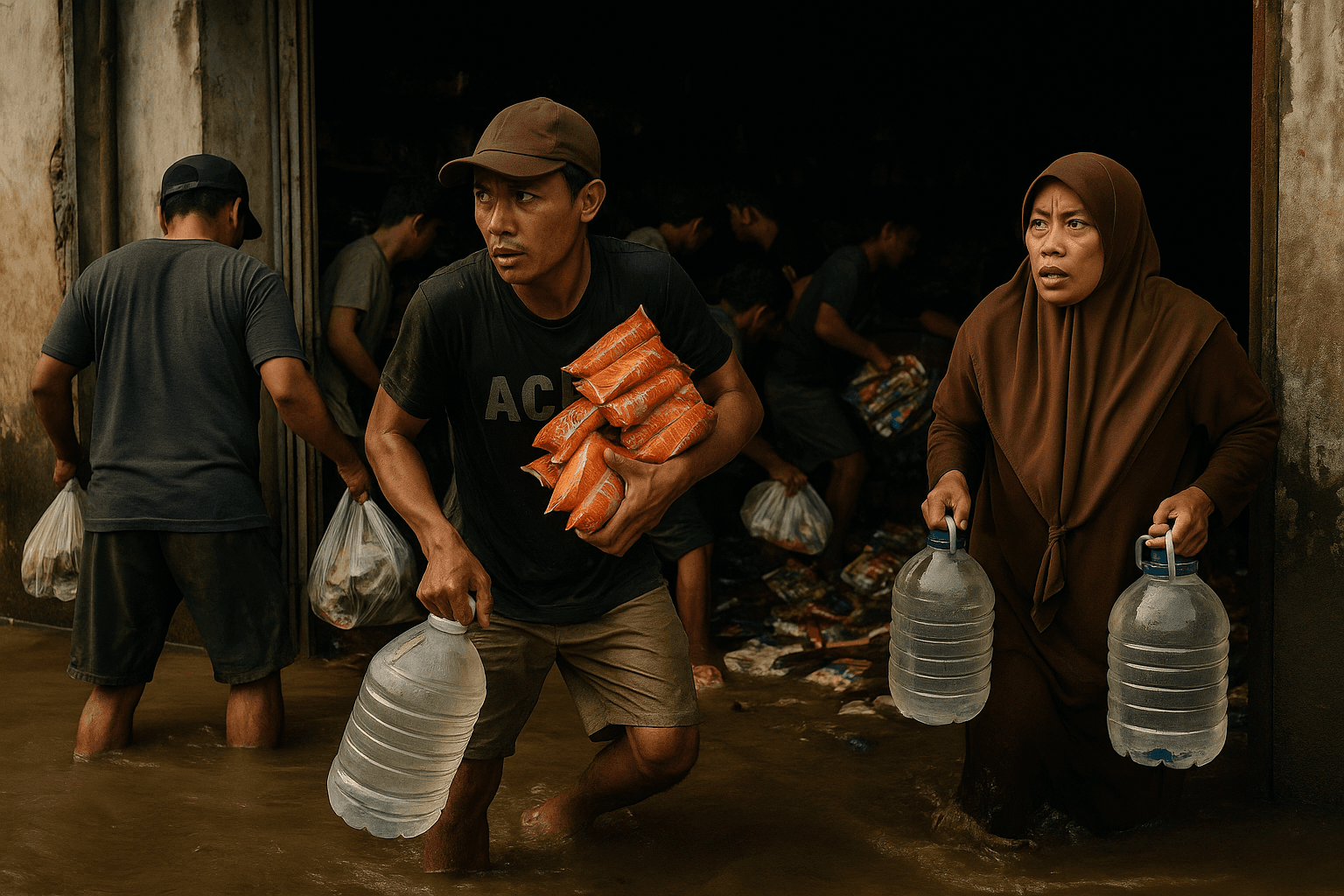
Videos circulating on social media showed residents taking food, medicine and fuel from damaged stores, and wading through floodwaters to reach supplies. Local police said some incidents of looting occurred before aid convoys arrived, and security forces were deployed to restore order in affected areas. Communications disruptions and unstable weather hampered efforts to assess the full scale of the disaster and to locate missing people.
The national disaster agency, known as BNPB, and local governments said they were coordinating logistics while military helicopters and naval vessels were used to air drop and deliver supplies to communities that remained isolated. International and domestic aid agencies began mobilizing emergency assistance, but officials cautioned that unpredictable weather and ongoing landslide risk were slowing progress and complicating delivery routes.
Survivors described widespread destruction, including collapsed bridges, swept away homes and thousands living in temporary shelters. The immediate needs centered on clean water, food and medical care as the humanitarian response shifted from rescue to sustaining survivors through the first critical days. Water contamination and the loss of sanitation infrastructure raised the risk of disease outbreaks in the coming weeks.
The economic implications are likely to be significant even if full damage estimates are not yet available. Disrupted transport links will impede movement of goods and delay reconstruction materials, raising costs for local businesses and households. Sumatra is a major agricultural and commodity producing region, so prolonged isolation of production zones has the potential to ripple into supply chains for food and fuel within Indonesia and for export markets, increasing prices and logistical uncertainties.
Policy challenges revealed by this crisis were immediate and structural. Emergency responders noted gaps in early warning reach and communications redundancy that complicated evacuations and delayed aid. Longer term the disaster highlights the need for investment in resilient infrastructure, including reinforced river banks, landslide mitigation, and road networks designed to remain passable during extreme weather events. Such investments, while costly up front, reduce the recurrent fiscal burden of repeated disaster response and reconstruction.
Climate scientists have warned that warming temperatures are associated with more intense rainfall events, and policymakers will face pressure to accelerate adaptation plans while weighing recovery spending. For now the priority remains getting water, food and medical supplies to cut off communities and completing search operations for the missing. Authorities said the scale of the response will grow as access improves and clearer damage assessments become available.
This article was produced by Prism’s automated news system from verified source data, official records, and press releases, then run through automated quality and moderation checks before publishing. The system is built and supervised by the people who set the standards it runs under. Read our full AI policy.
Did this article answer your question?


