Sunday Morning revisits James Byrd Jr. murder, a hate-crimes milestone
James Byrd Jr. was dragged 3 miles to his death in Jasper, Texas, a killing that helped drive state and federal hate-crimes laws.
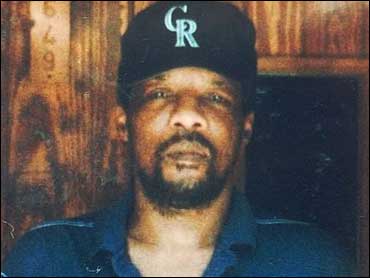
James Byrd Jr.’s death forced the country to confront racist violence in its rawest form. In Jasper, Texas, three white supremacists dragged the 49-year-old behind a pickup truck for 3 miles on June 7, 1998, turning one murder into a national touchstone for hate-crimes law and public memory.
Byrd was born on May 2, 1949, in Beaumont and was raised in Jasper, the East Texas town where he was killed. He had three children. The men convicted in the case, John William King, Lawrence Russell Brewer and Shawn Allen Berry, became the face of a crime that exposed how hate could be carried out with horrifying persistence and then carried into the legal system as a test of whether the nation would respond differently.
That response did change in law. Texas passed the James Byrd Jr. Hate Crimes Act in 2001, putting Byrd’s name on a state measure meant to address bias-motivated offenses with greater force. Eight years later, the federal Matthew Shepard and James Byrd Jr. Hate Crimes Prevention Act was enacted in 2009 and signed by President Barack Obama on October 28, 2009. The law expanded federal hate-crime protections to include sexual orientation, gender identity and disability, widening the government’s reach beyond the categories that had long defined such prosecutions.

The federal measure was enacted as Division E of the National Defense Authorization Act for Fiscal Year 2010, giving Byrd’s case a permanent place in the architecture of federal criminal law. Judy and Dennis Shepard joined Obama at the signing, linking Byrd’s killing with Matthew Shepard’s 1998 murder as twin symbols of the same national failure and the same demand for accountability.
More than two decades later, the anniversary still asks the same hard question: what, exactly, changed after Jasper? The answer is visible in statute books and in the language of federal enforcement, where Byrd’s name remains attached to a law that expanded protections and sharpened the government’s response. What has not changed is the reason those laws were needed in the first place. Byrd’s murder endures as a reminder that commemoration matters only if it leads to consequences strong enough to confront racial terror.
This article was produced by Prism’s automated news system from verified source data, official records, and press releases, then run through automated quality and moderation checks before publishing. The system is built and supervised by the people who set the standards it runs under. Read our full AI policy.
Know something we missed? Have a correction or additional information?
Submit a Tip