Suno Faces Copyright Crisis as Users Exploit Gaps in AI Music Filters
Suno users bypass copyright filters with YouTube cover uploads and phonetic spelling tricks, even as the platform faces up to $150,000 per song in federal damages.
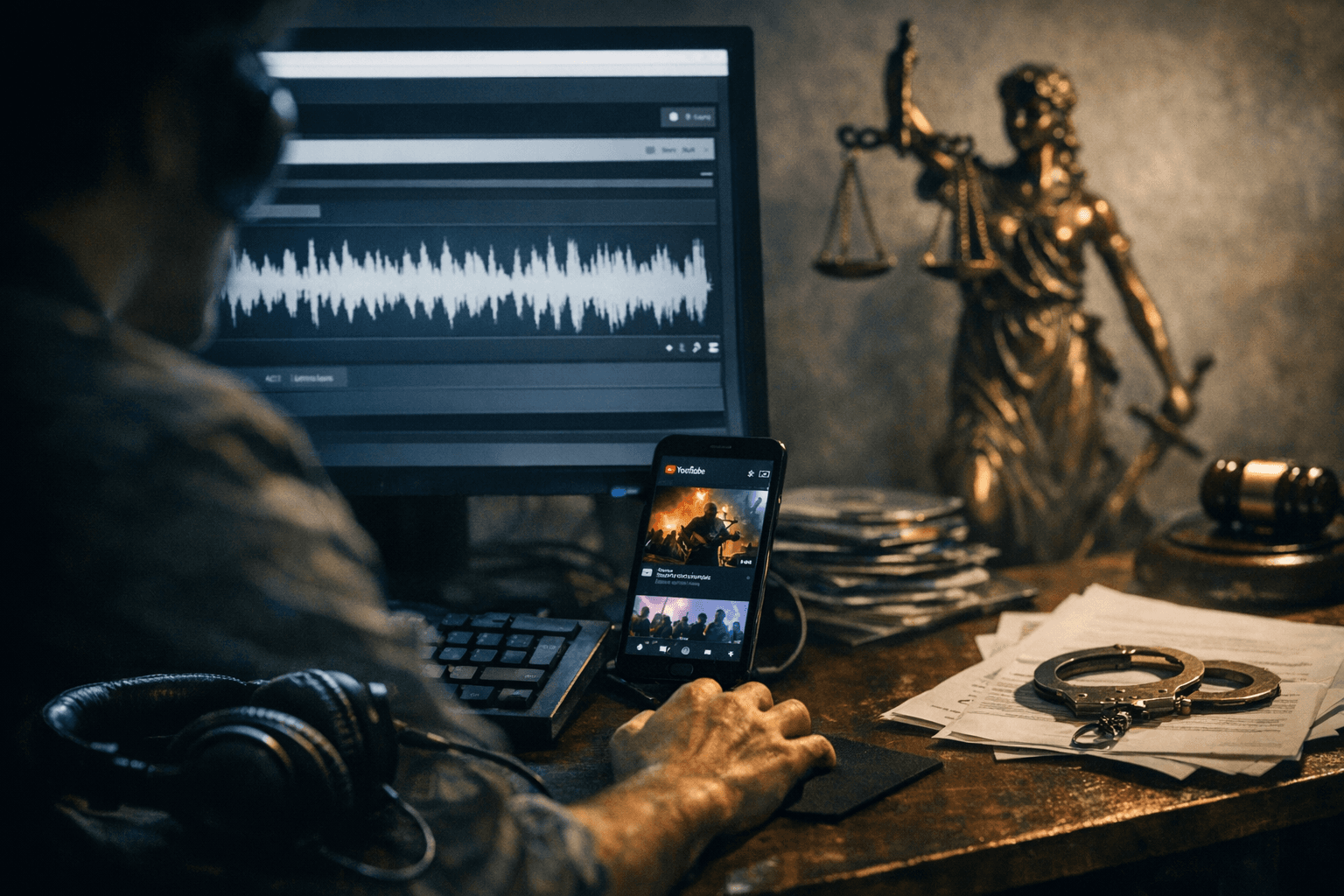
While Suno, Inc. markets itself as a platform where anyone can generate original music from a text prompt, users have documented a straightforward method to circumvent its copyright protections: upload a YouTube cover version of a copyrighted song instead of the original recording, and the platform's detection system fails to flag it. Phonetic spelling and homophone substitutions in lyrics accomplish the same bypass at the text level. For a company already facing up to $150,000 in damages per infringed work in federal court, the filters meant to insulate Suno from liability appear, at best, porous.
The Recording Industry Association of America filed a landmark lawsuit against the Cambridge, Massachusetts-based startup on June 24, 2024, in the US District Court for the District of Massachusetts, on behalf of Universal Music Group, Sony Music Entertainment, and Warner Music Group. A simultaneous parallel case targeted Udio, developed by Uncharted Labs, Inc., a team of former Google DeepMind researchers, in the Southern District of New York. RIAA Chief Legal Officer Ken Doroshow accused Suno of "unlicensed copying of sound recordings on a massive scale" and charged the company with "attempting to hide the full scope of their infringement rather than putting their services on a sound and lawful footing."
The allegations go beyond loose content moderation. The RIAA accused Suno of stream-ripping recordings from YouTube, specifically claiming the company bypassed the platform's encryption systems to harvest training data for its AI model. The lawsuit, assigned to Chief Judge F. Dennis Saylor, IV, seeks up to $150,000 per infringed work and an additional $2,500 for each act of circumventing encryption protections.
In its answer filed August 1, 2024, Suno argued fair use while simultaneously acknowledging that its training data "presumably included recordings whose rights are owned by the Plaintiffs." The company refused to disclose its full training dataset, calling it "confidential business information." That defense took a significant blow in May 2025, when the US Copyright Office released a report concluding that fair use does not excuse unauthorized training on expressive works like music, particularly when those works are used to generate substitution products.
Warner Music Group, one of the original plaintiffs, eventually reached a settlement with Suno and formed an ongoing business partnership with the company. CEO Mikey Shulman described the deal as "a paradigm shift in how music is made, consumed, experienced, and shared," though financial terms were not disclosed. Whether that settlement becomes a template for the broader industry remains uncertain: independent artists filed a separate lawsuit against Suno in the same Massachusetts federal court, with an amended complaint submitted September 22, 2025. Thousands of musicians had already signed an open letter demanding Suno stop training its AI on copyrighted material.
International regulators have moved as well. GEMA, the German music rights collecting society, became the first collecting society in the world to sue a generative AI provider over the use of copyright-protected musical works in AI training. The organization separately sued OpenAI in November 2024 over the reproduction of protected song lyrics.
For the platform's approximately 100 million users, an additional legal exposure lurks beneath the creative promise. Under US copyright law, music generated entirely by AI without meaningful human authorship carries no copyright protection. The US Copyright Office has rejected registration applications where AI was the sole creator, meaning users who generate tracks through prompts alone may hold no legal claim to what they produce, even as Suno markets those outputs as commercially usable to paying subscribers.
With $125 million in funding and a business model dependent on training data the labels call stolen, Suno's path to legal legitimacy runs directly through courtrooms it did not choose to enter.
This article was produced by Prism’s automated news system from verified source data, official records, and press releases, then run through automated quality and moderation checks before publishing. The system is built and supervised by the people who set the standards it runs under. Read our full AI policy.
Know something we missed? Have a correction or additional information?
Submit a Tip