Supreme Court Considers Trump Backed Challenge Over Late Mail Ballots
The Supreme Court will decide whether states can refuse to count late arriving mailed ballots, a contest backed by former President Trump that could reshape absentee voting rules across the country. The ruling, expected by late June, may determine how ballots from overseas service members and other voters are treated in the 2026 midterm elections.
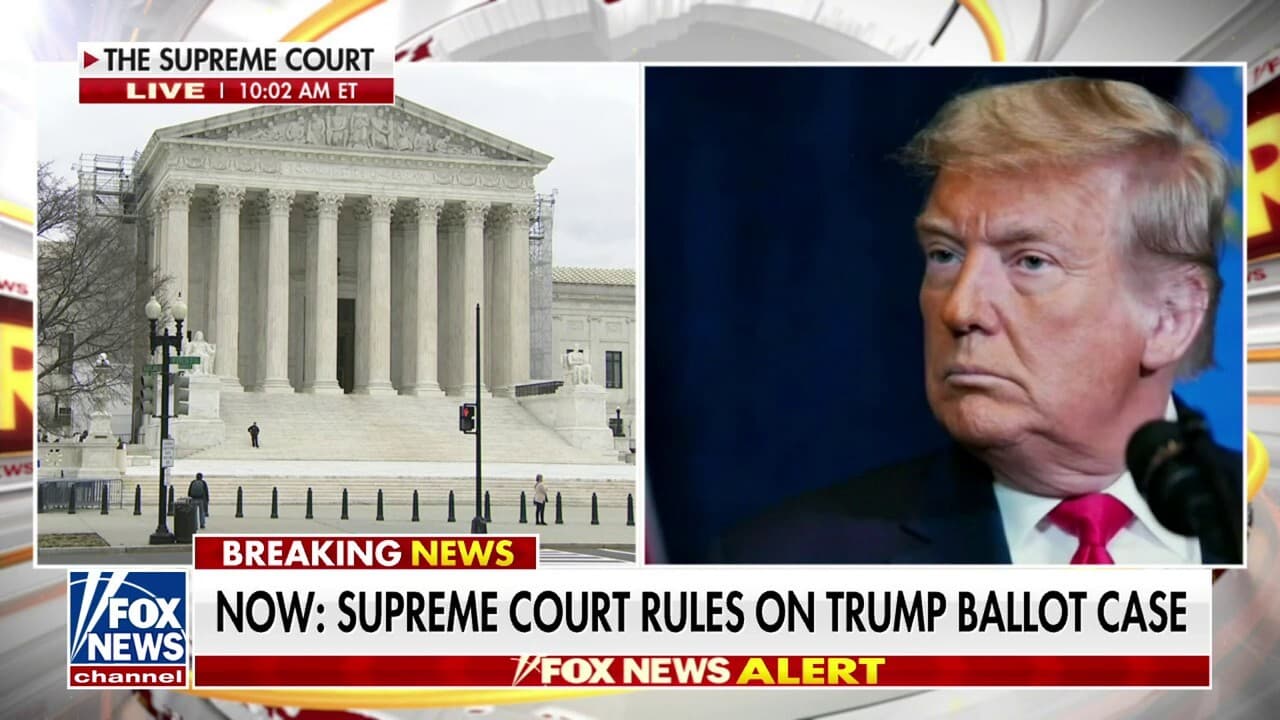
The Supreme Court agreed to hear a high stakes election law case that asks whether states may exclude mailed ballots that arrive after Election Day, a question propelled by a challenge supported by former President Trump. The decision will test the balance between state authority over election procedures and efforts to preserve access for voters who rely on the postal system, including overseas military personnel and their families.
A filing from Democratic led states accompanying the case notes that an additional 14 states currently permit the counting of late arriving ballots for some eligible voters, specifically citing overseas U.S. service members and their families. Those states urged the justices to reverse an appellate court ruling that narrowed the circumstances under which ballots received after Election Day may be counted.
The timetable for the case is compressed by the election calendar. The justices are expected to hear oral arguments in late winter or early spring, and experts say a final opinion is almost certain by late June. That schedule would allow the Court to set a precedent in time to govern counting rules for the 2026 midterm congressional elections, making the decision immediately consequential to campaign strategies and election administration across the country.
The dispute comes amid a widening patchwork of state responses to the problem of late mailed ballots. Some Republican led states, including Kansas and North Dakota, have taken steps to end the practice of counting ballots that arrive after Election Day. In Ohio, Republican lawmakers have advanced legislation that would require ballots to be received by Election Day, closing the window for mailed ballots. That measure passed the state Senate and remains under consideration in the legislature.
Legal analysts say the case raises fundamental questions about federalism and uniformity in federal elections. Courts will be asked to weigh whether federal protections for military and overseas voters overcome state rules that impose strict receipt deadlines. The outcome could either entrench a more uniform national standard protecting late arriving ballots in certain circumstances, or reinforce state discretion to impose hard deadlines that prioritize punctuality and administrative clarity.
Beyond the legal doctrines, the contest has immediate practical implications for election officials and voters. Election administrators who rely on a small buffer to process ballots postmarked by Election Day but delayed in transit could face operational crises if the Court curtails that practice. Conversely, states that have moved to eliminate post election Day receipt windows argue that such measures reduce litigation, shorten the period of uncertainty after elections, and guard against the risk of ballots being counted after results are announced.
For military personnel stationed overseas, postal delays are a persistent reality. The outcome of this case will determine whether those delays translate into disenfranchisement in some jurisdictions or continue to be accommodated under existing rules. With the Court poised to issue a decision before the next major national elections, the ruling will be a pivotal moment in how the United States balances access, integrity, and the logistical realities of absentee voting.
This article was produced by Prism’s automated news system from verified source data, official records, and press releases, then run through automated quality and moderation checks before publishing. The system is built and supervised by the people who set the standards it runs under. Read our full AI policy.
Did this article answer your question?

