Supreme Court Denies Bail to Two Student Activists Held Five Years
India’s Supreme Court refused bail to Umar Khalid and Sharjeel Imam on Jan. 5, keeping two high‑profile student activists in custody roughly five years after their arrests in the February 2020 Delhi riots. The decision, which granted bail to five other co‑accused, intensifies debate over the use of the Unlawful Activities (Prevention) Act and raises fresh questions about delays in trials that carry heavy political and economic implications.
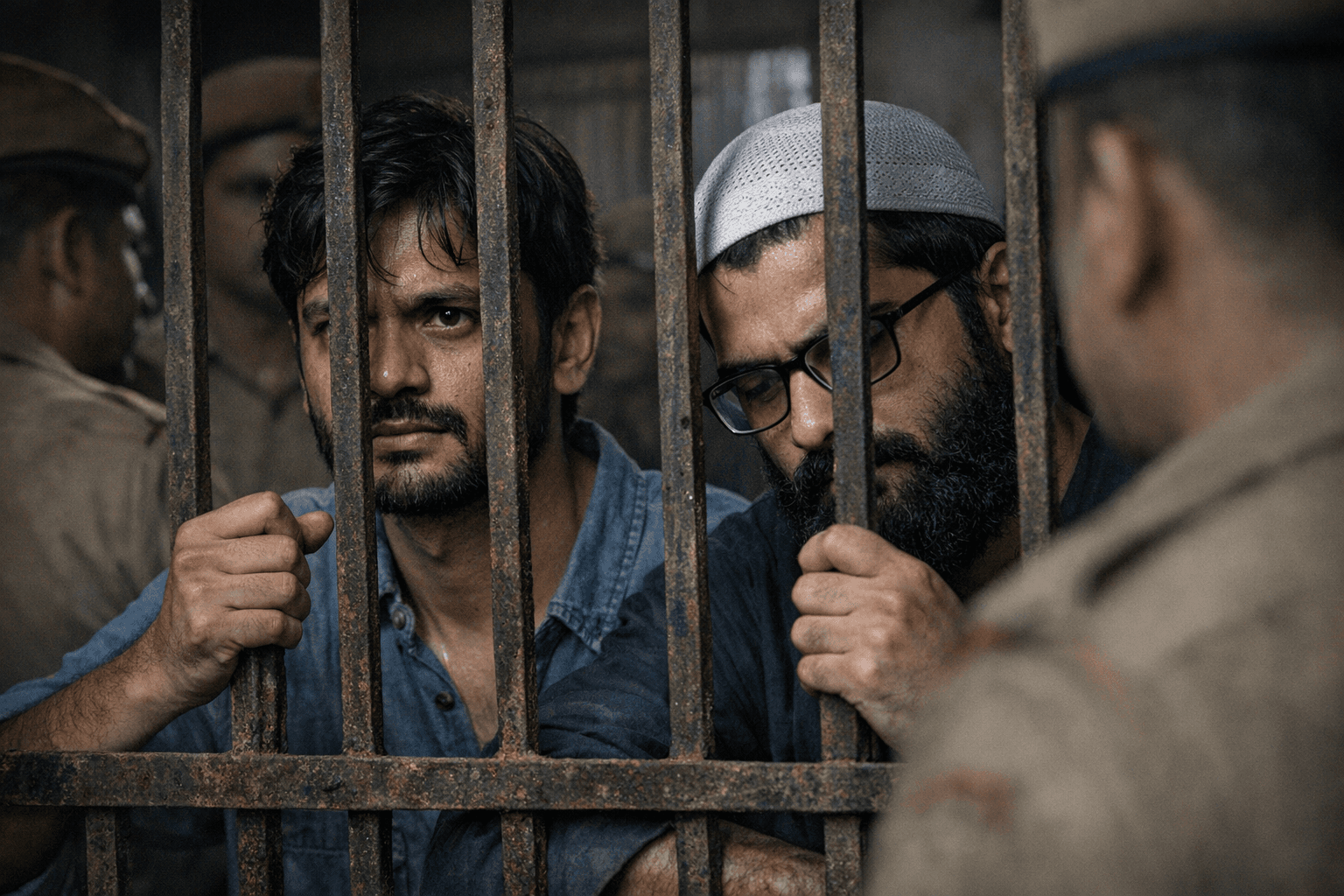
The Supreme Court of India on Jan. 5 rejected bail applications from Umar Khalid and Sharjeel Imam, who have been detained for roughly five years without trial in a conspiracy case tied to the deadly communal violence in parts of north‑east Delhi in February 2020. The justices simultaneously ordered the release on bail of five other co‑accused in the same Unlawful Activities (Prevention) Act case, producing a mixed outcome that leaves Khalid and Imam in custody while others walk free.
The bench said it was satisfied that the prosecution material disclosed prima facie allegations against Khalid and Imam and recorded that the gravity and statutory nature of the offences alleged did not warrant bail at this stage. The court added that it had "consciously avoided adopting a collective or unified approach" in adjudicating the multiple pleas. The order is interlocutory and does not resolve the merits of the prosecution's claim of a "larger conspiracy" behind the 2020 riots; trial proceedings will continue.
Prosecutors have framed the Delhi Police case as a terror‑linked conspiracy under the UAPA, arguing the violence was not spontaneous but part of a deliberate plot intended to tarnish India’s global image. Authorities cited speeches they described as provocative as evidence that the activists instigated or contributed to the unrest. Defense counsel challenged that account, insisting there is no direct evidence linking Khalid and Imam to the violence and arguing that prolonged pre‑trial detention violates Article 21 of the Constitution, which guarantees the right to life and personal liberty.
The case has highlighted procedural delays in India’s criminal justice system. Coverage of earlier stages shows multiple postponements of hearings at the Supreme Court and the Delhi High Court, which at one point denied bail to nine individuals accused in connection with the riots. Rights groups and opposition parties have criticized the extended custody of suspects under a law that carries stringent restrictions on bail. The Communist Party of India (Marxist) denounced the decision and described prolonged incarceration under the UAPA as a violation of natural justice. Following the ruling, Khalid was quoted as saying, "Jail is my life now."
Beyond the individual liberty questions, the case has broader political and economic consequences. The use of anti‑terror legislation against student activists feeds concerns about the scope of state power and the protection of dissent, issues that foreign investors and rating agencies monitor when assessing political risk. Legal uncertainty and perceptions of shrinking civic space can raise the country risk premium and influence investor sentiment, particularly for sectors sensitive to regulatory and reputational risks.
The Supreme Court’s order leaves open the prospect of further litigation and underlines the authority of trial courts to enforce bail conditions for those released. For Khalid and Imam, the denial of bail means continued detention while the state pursues prosecution under the UAPA and related charges, and for Indian democracy the case remains a flashpoint in debates over civil liberties, the pace of justice, and the balance between security and dissent.
This article was produced by Prism’s automated news system from verified source data, official records, and press releases, then run through automated quality and moderation checks before publishing. The system is built and supervised by the people who set the standards it runs under. Read our full AI policy.
Did this article answer your question?