Supreme Court limits geofence warrants in major privacy ruling
The justices said geofence warrants are searches under the Fourth Amendment, narrowing a tool that can sweep up bystanders’ location data near a crime scene.
The Supreme Court on June 29, 2026, ruled 6-3 in Chatrie v. United States that geofence warrants are Fourth Amendment searches, placing constitutional limits on a device-location tool that can pull in data from people who are not suspects. Justice Elena Kagan wrote the majority opinion, joined by Chief Justice John Roberts and Justices Sonia Sotomayor, Brett Kavanaugh and Ketanji Brown Jackson, and Justice Neil Gorsuch concurred in the judgment. The case was sent back for further proceedings in the lower courts.
The dispute grew out of a May 20, 2019 robbery at a federal credit union in Midlothian, Virginia, in the Richmond suburbs. Local investigators used witness interviews and surveillance video to narrow the field, but they could not identify the robber until they sought a geofence warrant from Google for cellphone data tied to phones near the scene. Okello Chatrie became the defendant in a case that pushed a once-niche investigative tactic into the center of constitutional law.
Geofence warrants work in reverse. Instead of starting with a named suspect, police define a place and time, then ask for location data from devices that were nearby and work backward to identify users. That method has made them attractive to investigators in fast-moving cases, but critics have long warned that the sweep can capture innocent bystanders, delivery drivers, commuters and anyone else whose phone happened to be in range.
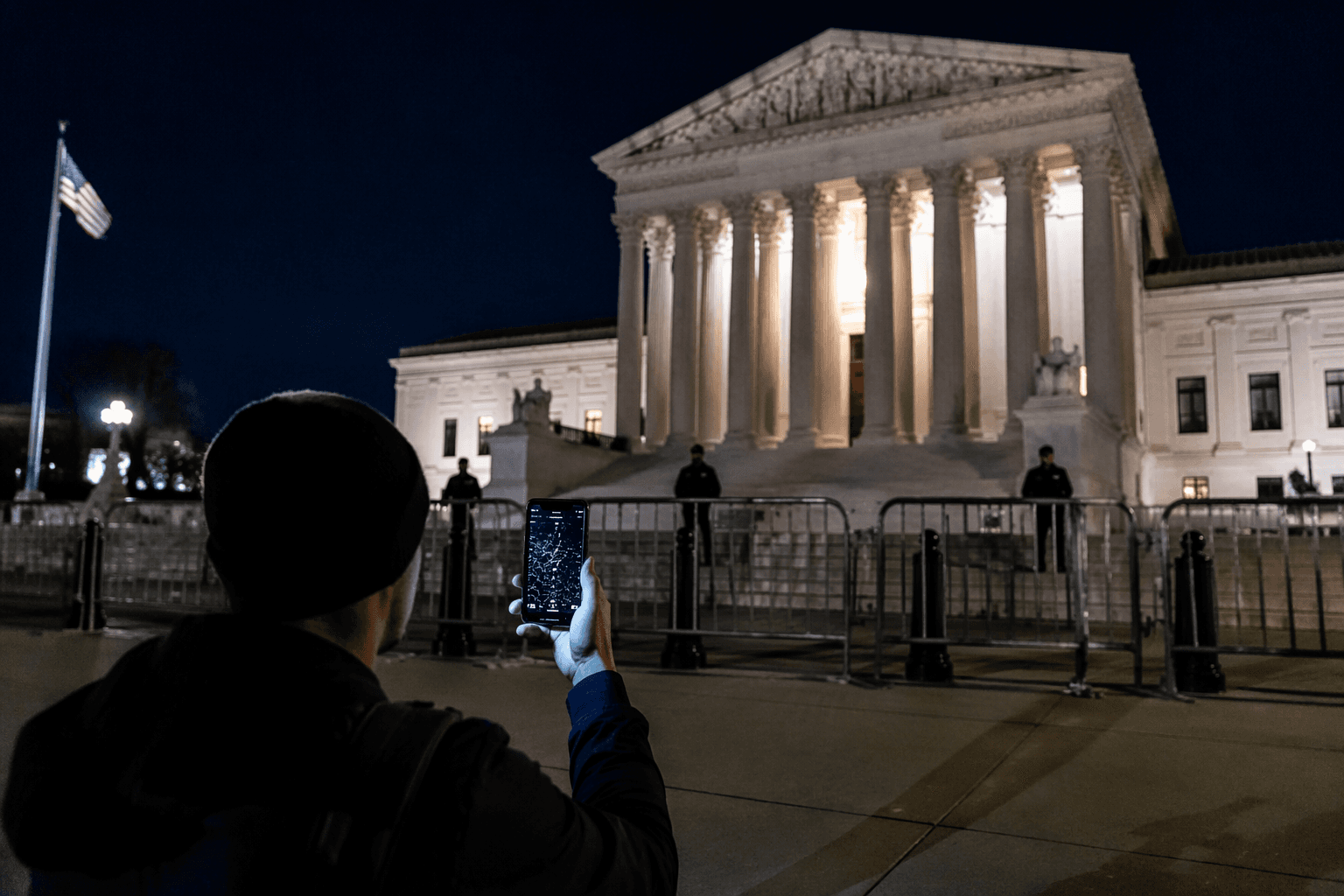
The ruling builds on Carpenter v. United States, the Court’s 2018 decision that generally requires a warrant for historical cell-site location information. By extending Fourth Amendment scrutiny to geofence searches, the justices drew a sharper line around digital surveillance and the third-party doctrine, the legal theory that has often reduced privacy protection once data is held by a company. The government had argued that the technique was a lawful, targeted investigative tool.
Privacy groups called the decision a major win for location-data privacy. The American Civil Liberties Union said the Court treated a dragnet search using Google’s location history data as covered by the Fourth Amendment, while the Electronic Frontier Foundation said the ruling protects people’s location data and treats short-term surveillance of movements as a constitutional search. For police departments, the decision means geofence requests can no longer be treated as unrestricted fishing expeditions. For tech companies that store location records, it raises the bar for handing over data. For ordinary Americans, it narrows the odds that a phone can be swept into an investigation simply for being near the wrong place at the wrong time.
This article was produced by Prism’s automated news system from verified source data, official records, and press releases, then run through automated quality and moderation checks before publishing. The system is built and supervised by the people who set the standards it runs under. Read our full AI policy.
Did this article answer your question?