Supreme Court ruling fuels fears of presidents becoming kings
The immunity ruling did not crown a president, but it widened the argument for one. Old warnings about kings now sound newly relevant.
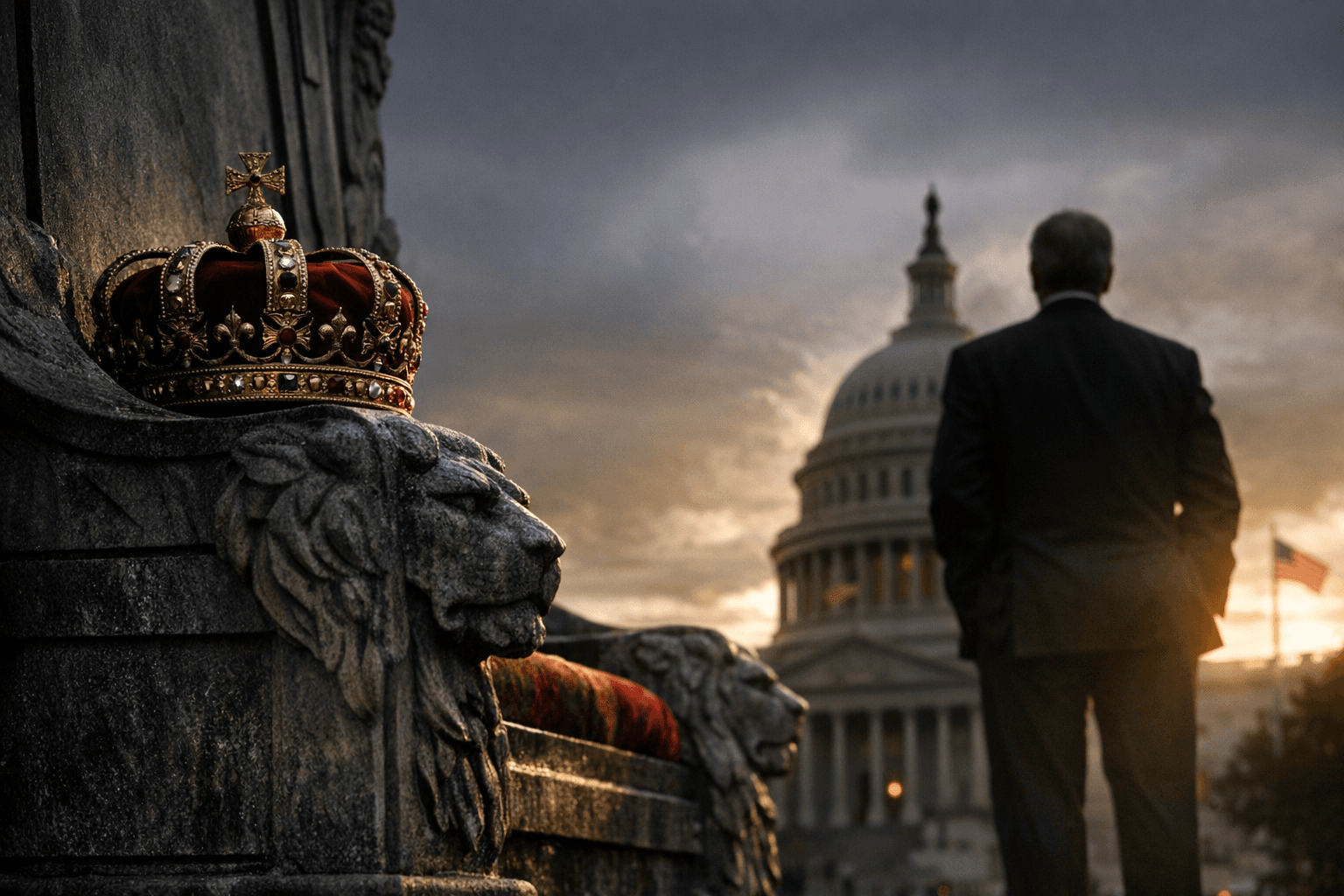
The constitutional line is getting harder to see
The Supreme Court’s July 1, 2024 ruling in Trump v. United States did not create a kingly presidency, but it gave new legal weight to an old fear that presidents can accumulate power faster than the Constitution can restrain it. By holding that a former president has absolute immunity for core constitutional powers, presumptive immunity for official acts, and no immunity for unofficial acts, the Court redrew the boundary between accountability and authority in a way that now shapes how people talk about the office itself.
That matters because the American presidency was designed to be strong, but not sovereign. Article II says, “The executive Power shall be vested in a President of the United States of America,” yet the framers did not intend that sentence to license personal rule. They built a system meant to concentrate enough power to govern, while still keeping the executive inside a web of legal and political checks.
Why the founders feared a crown in all but name
The phrase “divine right of kings” once defended monarchical absolutism in Europe. It meant the ruler derived authority from God and was therefore beyond earthly accountability, beyond parliaments, beyond the normal restraints that bind other officials. Americans rebelled against that logic, and the constitutional order that followed was built to reject it.
That rejection was not abstract. When the Constitutional Convention assembled in Philadelphia on May 25, 1787, delegates were working in the shadow of wartime and postwar instability. They had come to believe a national executive was necessary, but they approached the question warily because they knew too much power in one hand could recreate the very thing the Revolution had opposed. The result was not a ceremonial figure and not a monarch, but a president whose authority was supposed to remain limited by design.
Alexander Hamilton made the case for a vigorous executive in Federalist No. 70, arguing that “energy in the executive” is essential to good government. The National Constitution Center has noted that Hamilton also linked that energy to secrecy and dispatch in later essays, showing that the founders were not allergic to decisive action. The debate was never about whether the executive should act; it was about how to give the office force without letting force become domination.
Tocqueville saw the danger of mistaking an elected president for a ruler
Alexis de Tocqueville, whose Democracy in America appeared in four volumes between 1835 and 1840, warned against concentrated power and treated the American presidency as fundamentally different from monarchy. That distinction still matters because the presidency is elected, temporary, and bounded by law, while monarchy is hereditary and, in its classic form, insulated from ordinary accountability.
Tocqueville’s warning was not that democratic officeholders can never become dangerous. It was that democratic legitimacy can make power feel safer than it is. Once a president is spoken of as if electoral victory itself authorizes broad personal command, the language begins to blur the constitutional distinction between an official who governs under law and a ruler who stands above it.
What Trump v. United States changed
The Court’s immunity ruling has intensified that blur. The decision’s three-part framework, absolute immunity for core constitutional powers, presumptive immunity for official acts, and no immunity for unofficial acts, gives presidents and their allies a new vocabulary for claiming that almost any serious exercise of executive authority belongs inside the shield of office. Historians and legal scholars warned at the time that the ruling threatened accountability and democratic norms, and the reasoning has since been cited in broader arguments for expansive presidential authority.
Chief Justice John Roberts’s opinion did not say presidents are kings. It did something more consequential in practice: it made presidential power look more structurally insulated than many Americans had assumed. In constitutional terms, that can matter as much as any single outcome in court, because doctrines do not remain in legal briefs. They migrate into political speech, campaign rhetoric, and the public understanding of what the office is allowed to do.
Congress has checked presidents before, and those precedents still matter
The Constitution also gave Congress a direct check: impeachment. Andrew Johnson, Bill Clinton, and Donald Trump were impeached by the House of Representatives, and Trump was impeached twice. Those cases are reminders that the political branches were supposed to answer each other, not elevate one of them into a permanently protected executive.
Richard Nixon’s resignation on August 9, 1974, after facing likely impeachment in the Watergate scandal, remains the clearest example of how that check can still force an end to a presidency that has lost legitimacy. Nixon did not claim hereditary authority, of course, but his fall showed that even the most powerful elected office in the country is still supposed to be vulnerable to law, investigation, and removal when necessary.
Why the rhetoric matters now
This is where symbolic language becomes constitutionally dangerous. When people talk about a president as if he can act like a king, even metaphorically, they can make extraordinary power sound normal. That normalization matters because the presidency already has unmatched reach over enforcement, administration, and national security, and the Supreme Court’s immunity framework can make those powers appear even less exposed to challenge.
The deeper issue is not whether the United States has become a monarchy. It has not. The issue is whether language about presidential greatness starts to sound so natural that legal limits begin to feel decorative, when they were meant to be real. The American system was built after Europeans had already learned, the hard way, that divine-right rule corrodes accountability. If the presidency is allowed to drift toward the same logic, even by rhetoric first and doctrine second, the constitutional design begins to hollow out from the inside.
The warning in Trump v. United States is therefore larger than one case. It is a reminder that republics do not lose their restraints all at once. They lose them when the office that was supposed to be powerful but limited starts to be described, defended, and treated as something closer to personal rule.
This article was produced by Prism’s automated news system from verified source data, official records, and press releases, then run through automated quality and moderation checks before publishing. The system is built and supervised by the people who set the standards it runs under. Read our full AI policy.
Did this article answer your question?

