Supreme Court ruling weakens Voting Rights Act, reshapes redistricting battles
If partisan map-drawing were curbed, simulations suggest Black representation in the South could hold even after the Supreme Court weakened Section 2.
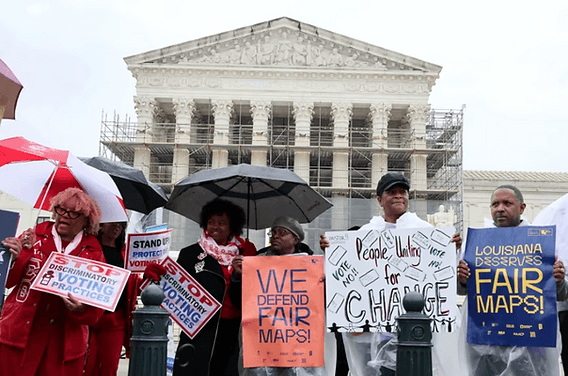
If courts or states can meaningfully restrain partisan gerrymandering, Black representation in the South may be protected even without leaning as heavily on the Voting Rights Act. That is the challenge now facing redistricting lawyers and lawmakers after the Supreme Court’s 6-3 decision in Louisiana v. Callais.
The ruling, issued April 29, 2026, struck down Louisiana’s congressional map and narrowed the legal framework used to require additional majority-Black districts. Justice Samuel Alito wrote the majority opinion. Justice Clarence Thomas concurred, joined by Justice Neil Gorsuch. Justice Elena Kagan dissented with Justices Sonia Sotomayor and Ketanji Brown Jackson. The case grew out of Louisiana’s 2022 map, which a federal court had found likely violated Section 2 of the Voting Rights Act because it included only one majority-Black district in a state where Black residents make up roughly one-third of the population.
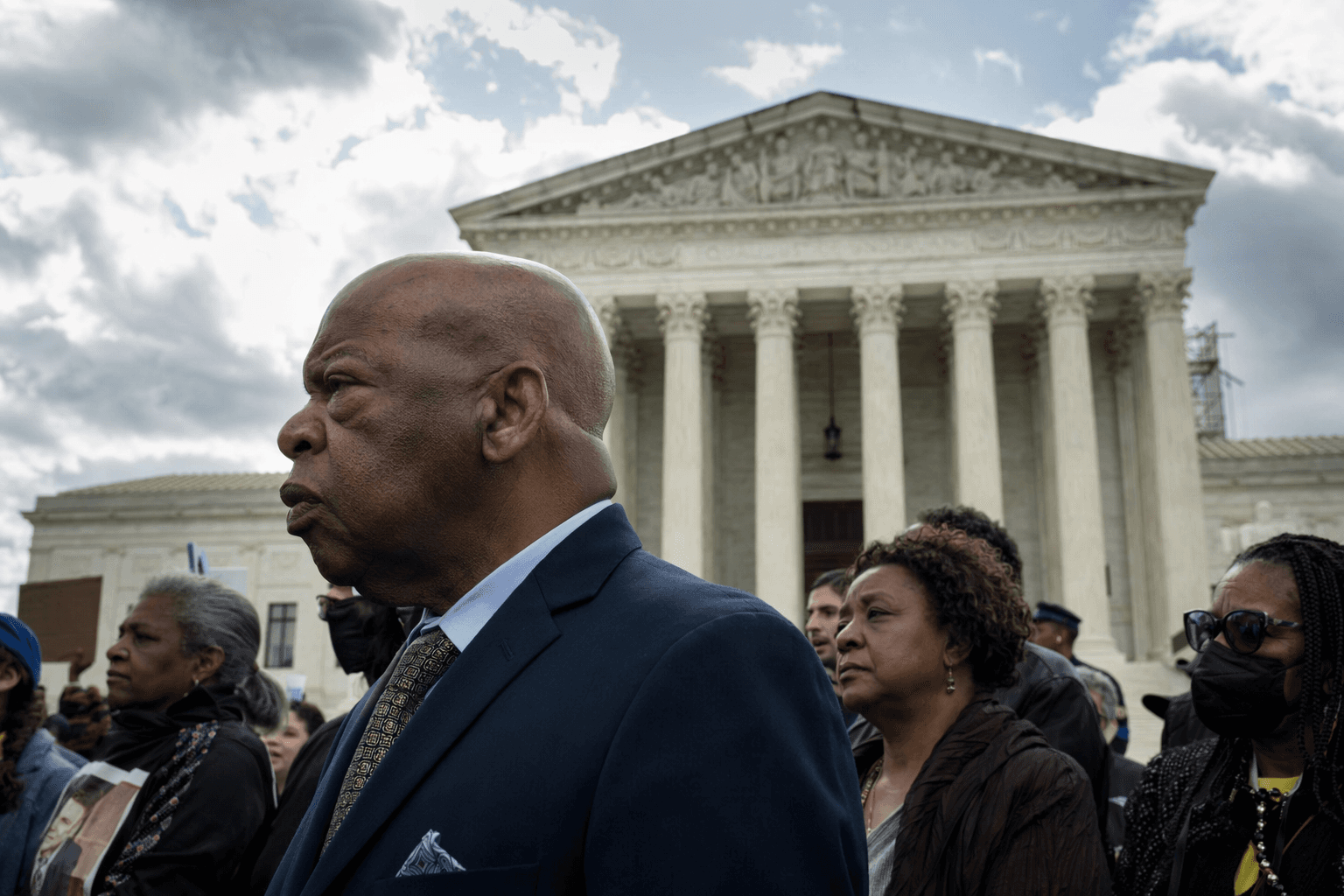
Louisiana then drew a new map with a second majority-Black district, only to see that plan challenged as an unconstitutional racial gerrymander. The Supreme Court’s decision is being read as a major shift in how Section 2 will operate going forward, and civil rights advocates say it gives states more room to defend maps as partisan rather than racial. The Brennan Center has warned that the ruling allows partisan gerrymandering and incumbent protection to justify district lines that dampen minority political power.
That is where the simulations matter. They suggest the central trade-off is not simply race versus no race, but race versus partisanship. If partisan gerrymandering were checked, race-neutral maps could produce as many districts in which candidates preferred by nonwhite voters would win as race-conscious maps do. In practical terms, that means the future of minority representation may depend as much on how aggressively courts police partisan line-drawing as on whether Section 2 remains a strong tool for challenging vote dilution.
The stakes extend well beyond Louisiana. Voting-rights groups say the ruling could hit Black political power in the South, where majority-Black districts have long been the standard remedy for racial vote dilution. Similar fights have already forced new maps in Alabama, Georgia and Louisiana, and the fallout could spread into state legislatures, local courts, school boards and other offices that shape daily political power.
The longer arc is clear. The Voting Rights Act was enacted in 1965 to confront Jim Crow barriers, and for decades Section 2 litigation helped create districts where Black voters could elect candidates of choice. Brennan Center research found that enforcing the law in Alabama, Georgia and Louisiana increased participation among Black registered voters and reduced the racial turnout gap. After Callais, the next redistricting battles will test whether that protection now comes more from the Voting Rights Act itself, or from a new push to curb partisan map-drawing nationwide.
This article was produced by Prism’s automated news system from verified source data, official records, and press releases, then run through automated quality and moderation checks before publishing. The system is built and supervised by the people who set the standards it runs under. Read our full AI policy.
Did this article answer your question?

