Supreme Court sides with Mississippi man in racial bias case
The justices said Mississippi courts got Batson wrong, reviving Terry Pitchford’s death sentence challenge and reopening fights over jury bias in capital cases.

The Supreme Court sharpened the legal path for proving racial bias in jury selection, ruling that a trial judge cannot cut off defense counsel before a meaningful rebuttal to a prosecutor’s race-neutral explanation. By holding that Mississippi courts unreasonably applied Batson v. Kentucky, the justices strengthened a defendant’s right to expose pretext when prosecutors strike Black prospective jurors and then try to justify those strikes after the fact.
The 5-4 decision in Pitchford v. Cain sent Terry Pitchford’s case back for further proceedings and placed fresh pressure on courts that have treated Batson objections as satisfied once a prosecutor offers a facially neutral reason. Justice Brett Kavanaugh wrote for the majority and was joined by Chief Justice John Roberts and Justices Sonia Sotomayor, Elena Kagan and Ketanji Brown Jackson. Justice Neil Gorsuch dissented, joined by Justices Clarence Thomas, Samuel Alito and Amy Coney Barrett. The ruling turned on the Mississippi Supreme Court’s handling of a Batson challenge after Pitchford’s 2006 trial.
Pitchford, a Black Mississippi man sentenced to death, was convicted in connection with a 2004 robbery near Grenada that left white grocery store owner Reuben Britt dead. Pitchford’s co-defendant, Eric Bullins, also Black, pleaded guilty and received a 20-year sentence. During jury selection, prosecutors used peremptory strikes against four of the five Black prospective jurors. The final jury had 11 white jurors and one Black juror. Defense lawyers objected under Batson, but the trial judge accepted the prosecutor’s race-neutral explanations at the second step of the analysis and then did not allow a full rebuttal on whether those explanations were pretextual.
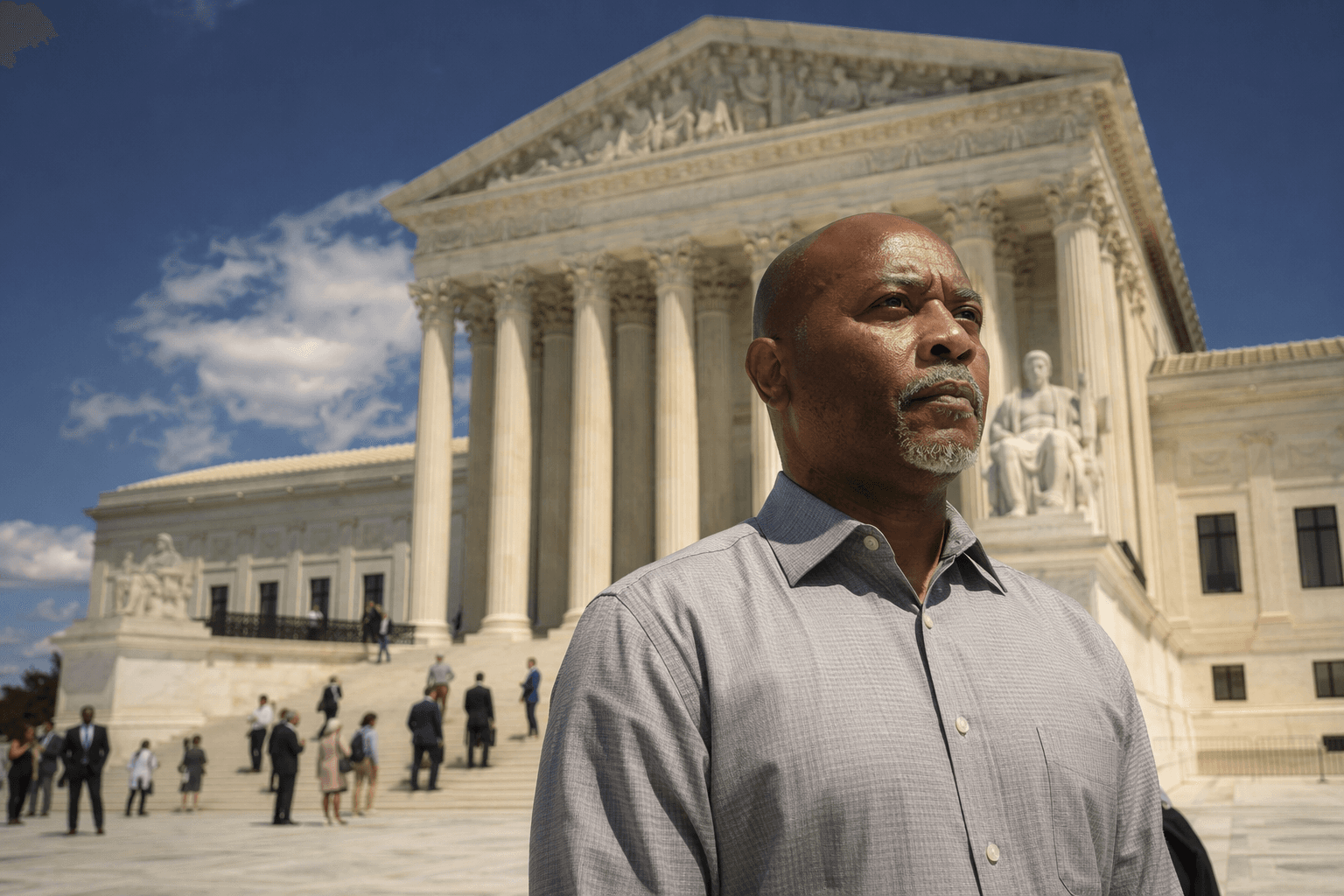
That procedural failure mattered. The Supreme Court said the trial court should have allowed defense counsel to answer the State’s explanations before closing the Batson inquiry, and that the Mississippi Supreme Court erred when it treated Pitchford as having waived the issue. The case had already moved through the U.S. District Court and the U.S. Court of Appeals for the Fifth Circuit before reaching the Supreme Court, which heard argument on March 31, 2026.
The ruling also extends a line of Mississippi jury-discrimination cases that includes Flowers v. Mississippi, the Court’s 2019 decision involving repeated strikes of Black jurors in another capital case. Nationally, the new decision is likely to affect death-row appeals and older convictions where prosecutors struck most Black prospective jurors, where trial judges barred rebuttal at Batson’s third step, or where state courts found waiver too readily. For capital defendants, it gives new force to claims that racial bias was hidden behind supposedly neutral reasons, and it tells lower courts that the right to challenge discriminatory jury selection must be more than a formality.
This article was produced by Prism’s automated news system from verified source data, official records, and press releases, then run through automated quality and moderation checks before publishing. The system is built and supervised by the people who set the standards it runs under. Read our full AI policy.
Did this article answer your question?