Supreme Court signals reluctance to allow immediate ouster of Fed governor
Justices appeared skeptical of the president's emergency bid to remove Federal Reserve Governor Lisa Cook and indicated a likely narrow resolution.
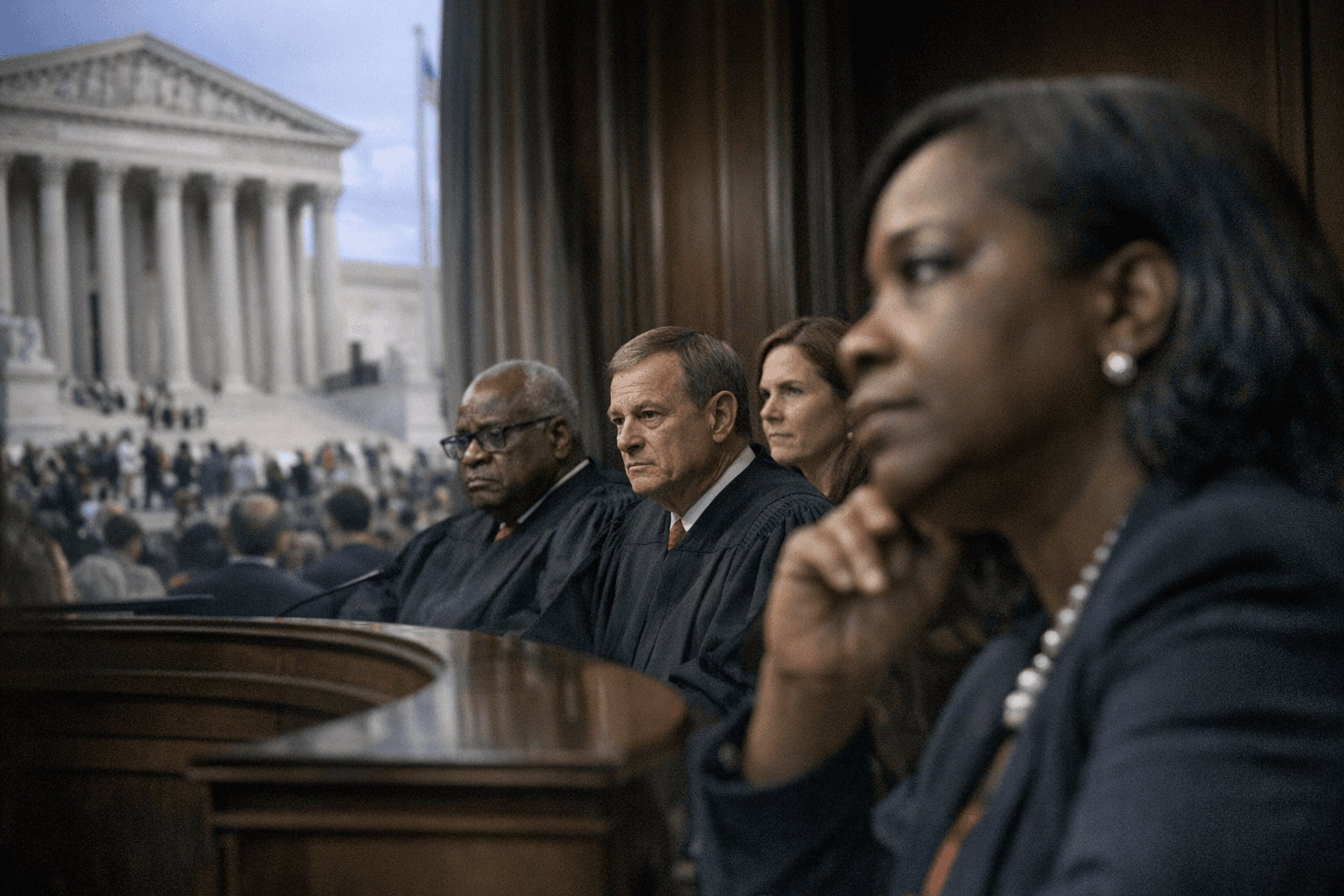
The Supreme Court’s arguments on Jan. 27 suggested justices were unlikely to grant an emergency order allowing President Trump to immediately remove Federal Reserve Governor Lisa Cook. During a hearing that focused on procedural and constitutional boundaries, several justices indicated reluctance to endorse broad emergency relief that would upend the independence of a key economic institution.
The court’s questioning centered on whether an emergency petition was the proper vehicle for resolving disputes about the president’s authority to remove a governor from the Federal Reserve Board, and whether extraordinary interim relief was justified while lower courts’ cases remain pending. The tenor of the arguments indicated a preference for a limited remedy narrowly tailored to the specific procedural posture of the case rather than a sweeping decision on presidential removal power.
Legal observers said the inclination toward a narrow outcome would avoid creating a dramatic new precedent about executive authority over independent financial regulators. A blunt, expansive ruling in favor of immediate removal could have unsettled market expectations about central bank independence, while a refusal to intervene might leave sensitive constitutional questions to the appeals process and the lower courts.
The stakes extend beyond legal doctrine. Federal Reserve governors help set monetary policy that shapes borrowing costs, inflation, employment, and broader economic stability. Sudden political interference in the central bank’s leadership risks eroding confidence in financial markets and could translate into real-world consequences for households, health systems, and state budgets. Economic shocks often hit low-income and marginalized communities first, worsening disparities in housing security, access to care, and chronic disease outcomes.
Public health and social service funding frequently moves in tandem with economic cycles. Higher interest rates and market volatility can constrain state and local revenues, complicating support for Medicaid, community health centers, and public health preparedness. For hospitals that operate on thin margins, a sharp economic disruption can force service reductions that disproportionately affect rural areas and communities of color. Those systemic linkages mean that decisions about central bank governance are far from abstract legal questions; they are intertwined with the material conditions that shape health equity.
The court did not announce a timetable for a decision, and it remains possible the justices could issue a narrowly framed order that addresses only whether emergency relief is appropriate without resolving the broader constitutional claims. Such an outcome would likely send the underlying dispute back to lower courts for a fuller record and more developed consideration.
For advocates and officials concerned about social equity, the Supreme Court’s approach may offer a measure of stability. A restrained ruling could preserve the institutional buffer meant to protect monetary policy from immediate political pressures, buying time for deliberation about long-term governance and statutory reforms. At the same time, leaving unresolved questions about executive removal powers will ensure the controversy continues to influence political debate and could return to the courts.
As the legal process unfolds, policymakers and community leaders will be watching for signs that the court’s decision preserves safeguards against abrupt interference that could reverberate through the economy and the public health systems that rely on it.
This article was produced by Prism’s automated news system from verified source data, official records, and press releases, then run through automated quality and moderation checks before publishing. The system is built and supervised by the people who set the standards it runs under. Read our full AI policy.
Did this article answer your question?