Supreme Court signals split on state bans for transgender girls in sports
Justices appeared divided after three hours of argument over state bans on transgender girls in female sports. The ruling could affect laws in at least 27 states.

The Supreme Court heard more than three hours of argument in consolidated challenges to state laws that categorically bar transgender girls and women from competing on female interscholastic and intercollegiate sports teams, and the session produced signals of a fractured bench. The cases, Little v. Hecox and West Virginia v. BPJ, raise core questions under the 14th Amendment’s equal‑protection guarantee and Title IX, the federal law that bars sex‑based discrimination in education.
One case was brought by Lindsay Hecox, a college student in Idaho who challenges her state's 2020 law requiring public school and collegiate teams to be designated by sex assigned at birth. The other involves Becky Pepper‑Jackson, a West Virginia high‑school sophomore who competes on the girls’ track team and contends the state's prohibition violates Title IX. Lower courts ruled in favor of both plaintiffs, with the Idaho challenge producing the first judicial rebuke of the statutes when U.S. District Judge David Nye blocked enforcement against Hecox. Judge Nye wrote there was a “dearth of evidence in the record to show excluding transgender women from women’s sports supports sex equality, provides opportunities for women, or increases access to college scholarships.” A federal appeals court later affirmed that decision, and similar rulings sent the consolidated matters to the high court.
At issue is whether categorical exclusions based on sex assigned at birth can stand under constitutional and statutory protections that have long shaped access to education and athletics. State defendants and supportive athletes have urged the justices to uphold the bans, arguing they protect equal opportunity for cisgender female athletes. More than 100 athletes, coaches and parents, including nearly three dozen Olympians, filed amici briefs pressing the Court to sustain the statutes as a means of preserving fairness in women's sports.
Civil‑rights organizations brought the challenges and mounted coordinated public advocacy. Lambda Legal, the ACLU and Legal Voice were among the groups arguing the bans unlawfully single out transgender people for exclusion. The ACLU announced a national campaign called “More Than A Game” timed with the argument and featuring public figures associated with sports and advocacy.
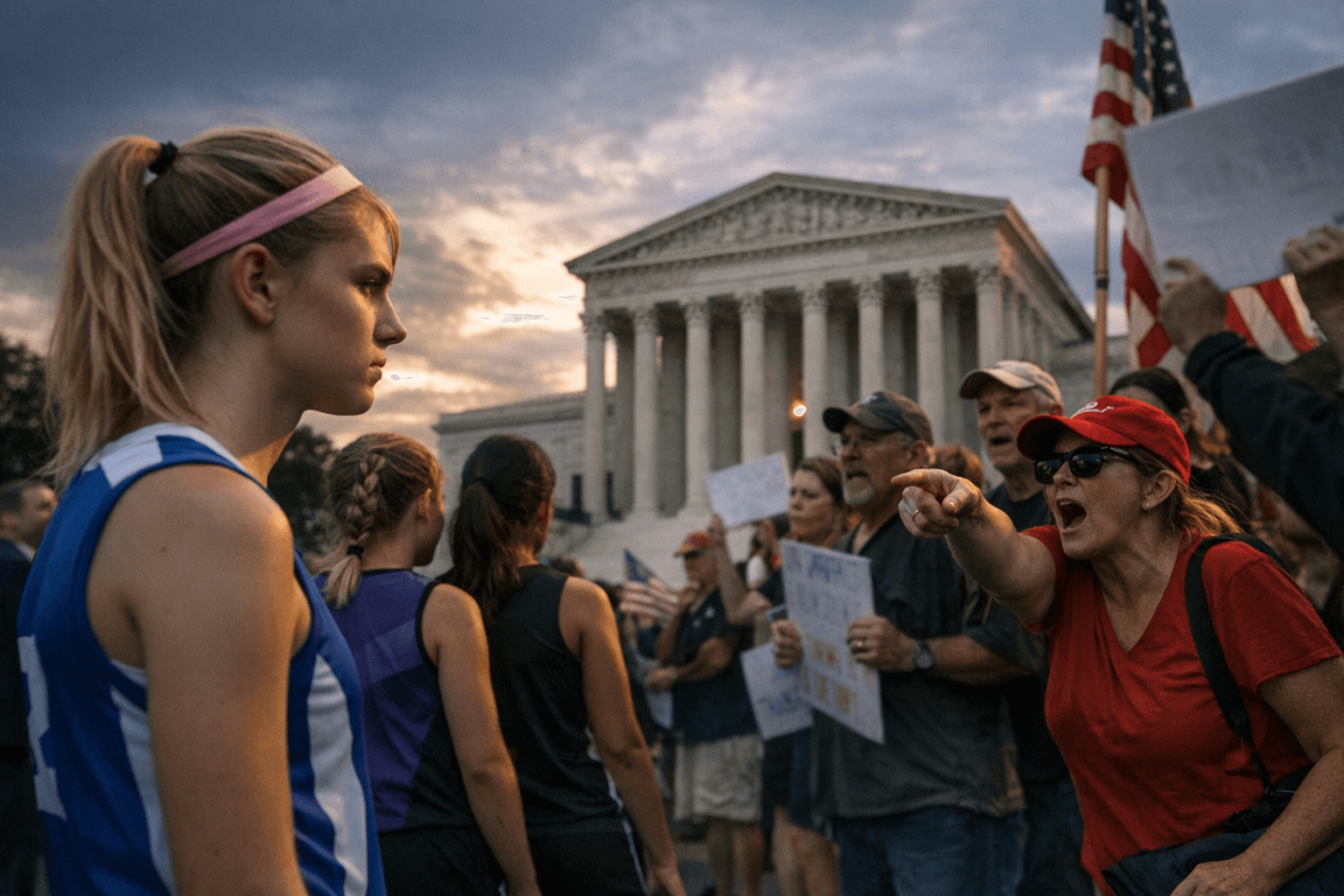
Courtroom exchanges showed a tension between justices focused on perceived competitive advantages and those concerned about the broader civil‑rights implications of a ruling that would permit categorical exclusions. Observers said at least five justices appeared inclined to uphold the restrictions, a posture that aligns with the Court’s 6-3 conservative majority. Several justices, however, expressed reluctance to adopt a sweeping ruling that would reach beyond athletics and reshape other accommodations for transgender students. Justice Sonia Sotomayor pressed counsel on the significance of numbers, noting that "there are 2.8 million transgender people in the United States" and questioning when a numerical minority becomes a meaningful subclass entitled to protection.
A ruling for the states would likely validate similar laws enacted since 2020 in more than two dozen jurisdictions and could constrain school administrators and collegiate programs in determining team eligibility. A decision for the plaintiffs would reinforce lower‑court conclusions that categorical bans violate federal civil‑rights protections and would require legislatures and schools to pursue narrower, evidence‑based policies that balance fairness, safety and inclusion.
The Court took the cases under advisement after argument; a decision is expected later in the term. Whatever the outcome, the ruling will reverberate through state legislatures, school boards and athletic organizations as they weigh policy, compliance and the civic consequences for students across the country.
This article was produced by Prism’s automated news system from verified source data, official records, and press releases, then run through automated quality and moderation checks before publishing. The system is built and supervised by the people who set the standards it runs under. Read our full AI policy.
Did this article answer your question?

