Supreme Court Strikes Down State Conversion Therapy Bans in 8-1 Ruling
Justice Jackson stood alone in dissent as the Court's 8-1 ruling in Chiles v. Salazar voided Colorado's ban on conversion therapy for minors on First Amendment grounds.
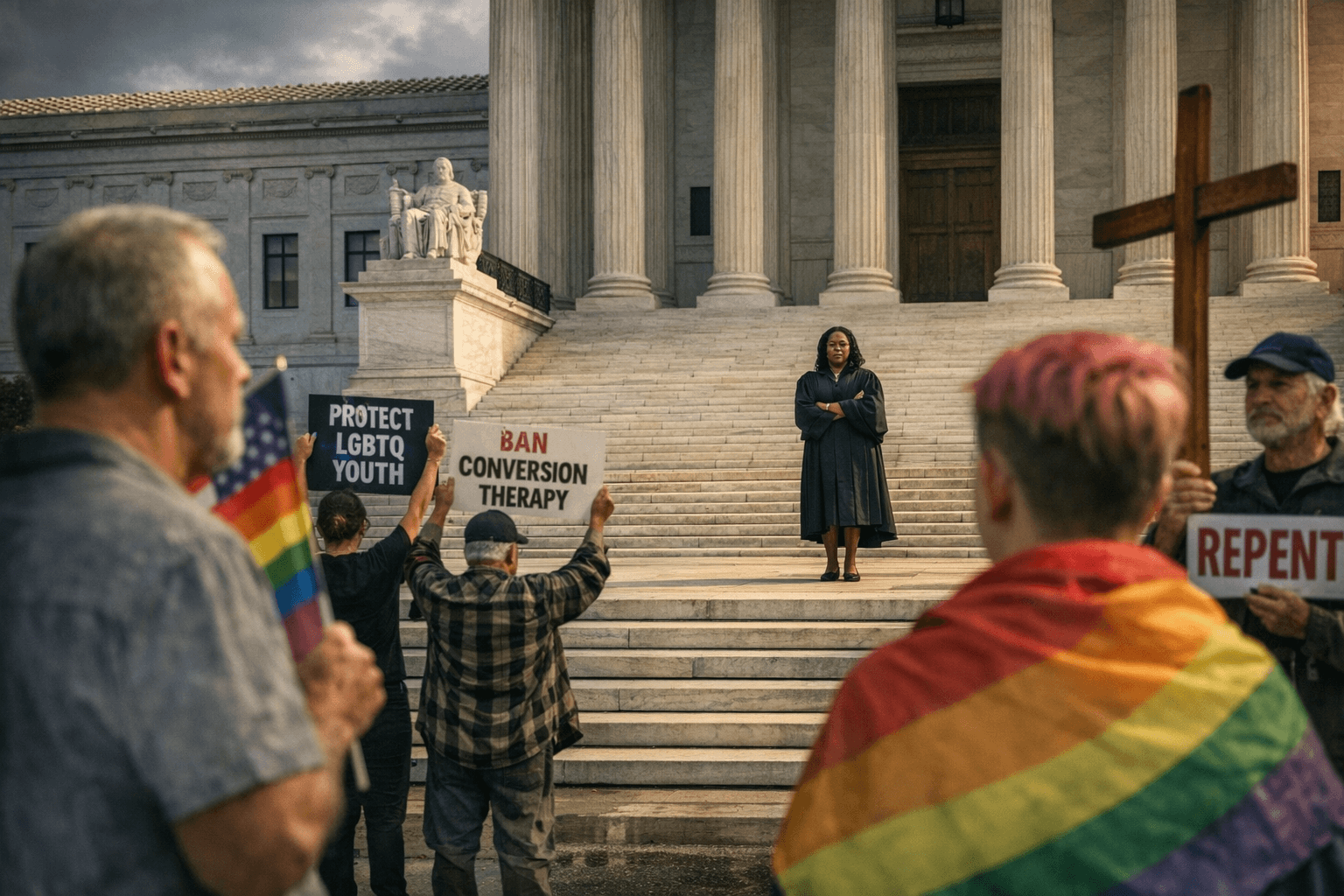
The Supreme Court struck down Colorado's ban on conversion therapy for minors in an 8-1 ruling issued March 31, holding that the state's use of its professional licensing authority to restrict counseling about sexual orientation and gender identity violated the First Amendment. The decision in Chiles v. Salazar carries immediate consequences for roughly two dozen states that have enacted similar prohibitions.
Justice Neil Gorsuch authored the majority opinion, framing the constitutional question in expansive terms. "The First Amendment stands as a shield against any effort to enforce orthodoxy in thought or speech in this country," he wrote, arguing that the Constitution protects controversial or medically disfavored viewpoints when expressed by licensed professionals. The Trump administration, which had filed a brief urging the Court to invalidate Colorado's law, welcomed the outcome.
Colorado's statute barred licensed mental-health professionals from providing talk therapy aimed at changing a minor's sexual orientation or gender identity, while permitting other forms of counseling that made comparable claims. That structural inconsistency became a fault line in the Court's analysis. Justice Elena Kagan, joined by Justice Sonia Sotomayor, concurred in the judgment but wrote separately to signal that a truly comprehensive, neutrally applied ban covering all attempts to alter a patient's orientation or identity might survive First Amendment scrutiny. That caveat opens a narrow legislative pathway for states looking to preserve some form of prohibition.
Justice Ketanji Brown Jackson issued the lone dissent, delivering her critique from the bench. She warned that the majority was encroaching on long-established state authority to regulate health professions and that the ruling "opens a dangerous can of worms" that "ultimately risks grave harm to Americans' health and wellbeing." Jackson characterized conversion therapy as dangerous, aligning her position with the standing consensus of major medical and psychiatric organizations, which have for years condemned the practice as both ineffective and potentially harmful to minors.
The majority acknowledged that medical consensus directly but declined to treat it as dispositive. Gorsuch's opinion noted that consensus has shifted over time and that licensing-based speech restrictions could entrench prevailing medical orthodoxy while suppressing minority viewpoints, a rationale that critics called an overreach into clinical regulation.
The ruling leaves the legal landscape unsettled. States with existing bans will now need to reassess whether their statutes can withstand constitutional challenge, and legislative drafters are already examining whether narrower laws targeting professional misconduct, fraud, or coercion, rather than speech content, could survive scrutiny under the framework the Court established. Advocacy groups on both sides announced plans to press their positions in state legislatures and lower federal courts in the weeks ahead.
The decision lands squarely in the 2026 political calendar, where it is expected to intensify debates over professional licensing authority, religious expression in clinical settings, and the limits of state power to protect minors from contested therapeutic practices.
Sources:
Know something we missed? Have a correction or additional information?
Submit a Tip