Trump to Address Nation on Iran Withdrawal as Birthright Citizenship Reaches Supreme Court
Trump addressed the nation at 9 p.m. ET Wednesday on Iran's war as the Supreme Court heard landmark arguments over birthright citizenship in Trump v. Barbara.
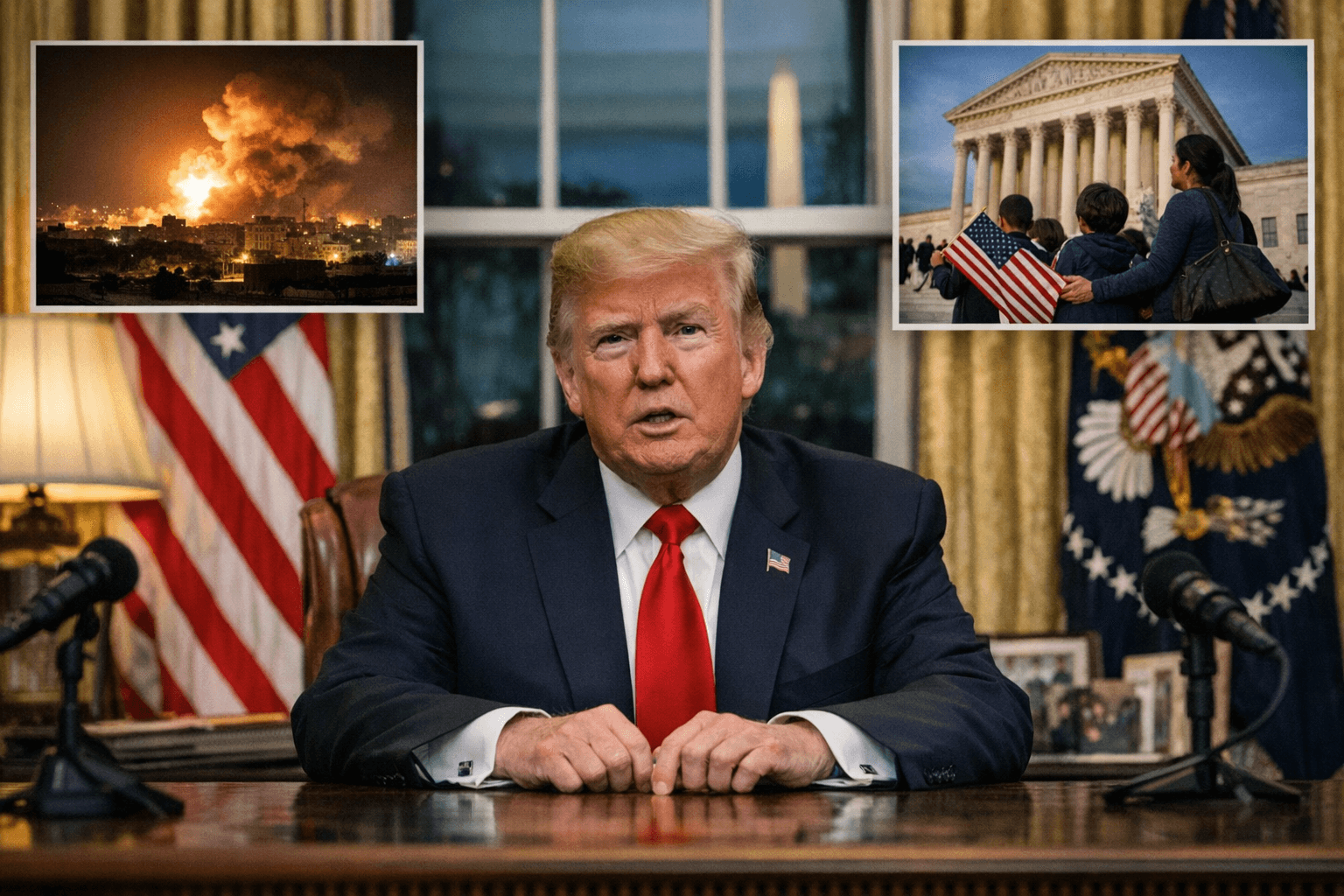
The Supreme Court convened Wednesday morning to hear oral arguments in Trump v. Barbara, the most consequential constitutional challenge of Trump's second term, while the White House announced a prime-time presidential address on the U.S. military campaign in Iran, scheduled for 9 p.m. ET the same night.
At the podium before the justices, Solicitor General D. John Sauer argued that Executive Order 14,160, signed on Trump's first day back in office on January 20, 2025, correctly interprets the 14th Amendment's citizenship clause. The administration holds that the amendment, ratified in 1868 to grant citizenship to freed slaves and their children, does not automatically extend to children born to parents who are undocumented or present in the United States on a temporary basis. Sauer argued that parts of the executive branch have "misread" the 14th Amendment since the mid-1900s.
Opposing counsel Cecilia Wang of the ACLU countered that the amendment's text, which guarantees citizenship to "all persons born... in the United States, and subject to the jurisdiction thereof," applies without regard to parental status. The ACLU has maintained that "no president has the power to rewrite the Constitution." The representative plaintiff is a Honduran woman identified only as Barbara, who withheld her last name over safety concerns for herself and her family. Trump's order, if upheld, would limit birthright citizenship to children who have at least one parent who is a U.S. citizen or lawful permanent resident.
On Iran, Trump told reporters at the White House that American forces could leave the Middle East within "two or three weeks." "Iran doesn't have to make a deal," Trump said. "It's a new regime. They are much more accessible." White House press secretary Karoline Leavitt announced the prime-time address, saying Trump would "give an Address to the Nation to provide an important update on Iran."
The address came against a backdrop of economic and military pressure. Gas prices reached a national average of $4 per gallon on Tuesday, the highest since 2022, driven by Iran's continued restrictions on the Strait of Hormuz. Oil prices dipped briefly Wednesday after Trump's remarks signaling a possible exit. On the same day, one of three missiles launched from Iran struck an oil tanker off the coast of Qatar, with no injuries reported. Ebrahim Azizi, the head of the Iranian Parliament's National Security Committee, posted on X that the Strait of Hormuz would reopen, adding a pointed message directed at Trump: "but not for you."
With the Supreme Court now positioned to deliver a ruling that could reshape the citizenship status of thousands of American-born children, and a presidential address framing the end of an active military campaign, Wednesday marked one of the most legally and geopolitically charged single days of Trump's second term.
Know something we missed? Have a correction or additional information?
Submit a Tip