Supreme Court Takes Up Trump's Challenge to Birthright Citizenship This Week
The Supreme Court hears arguments Wednesday in Trump v. Barbara, a case that could strip automatic citizenship from roughly 250,000 U.S.-born babies each year.

The Supreme Court hears oral arguments Wednesday in Trump v. Barbara, a case that could strip automatic citizenship from roughly 250,000 babies born on U.S. soil each year, approximately 7 percent of all births recorded in 2024. What happens in that courtroom will cascade almost immediately into maternity wards, state vital records offices, and passport processing centers across the country.
The case turns on President Donald Trump's Inauguration Day executive order directing federal agencies to stop issuing citizenship documents to children born in the United States to parents who entered the country unlawfully or were present on temporary visas. Federal judges in Maryland, Massachusetts, New Hampshire, and Washington state blocked the order through injunctions. The Supreme Court placed Trump v. Barbara on a rare fast track, a signal of how urgently the justices view the need to resolve the question.
The constitutional text at the center of the dispute is the Fourteenth Amendment's Citizenship Clause, ratified in 1868 to reverse Dred Scott v. Sandford, the 1857 ruling that denied African Americans any rights under American law, and to guarantee citizenship for formerly enslaved people and their descendants. The clause reads: "All persons born or naturalized in the United States, and subject to the jurisdiction thereof, are citizens of the United States."
Solicitor General D. John Sauer, arguing for the administration, contends that "subject to the jurisdiction thereof" requires full political allegiance, not mere legal presence, and that children born to noncitizen parents are "not completely subject to the United States' political jurisdiction." Opponents counter that the clause's plain meaning and 128 years of judicial precedent, anchored by United States v. Wong Kim Ark in 1898, extend birthright citizenship to nearly all children born on American soil regardless of their parents' immigration status.
The American Bar Association, one of many groups filing friend-of-the-court briefs, called the Citizenship Clause "a clear, simple, easily administered rule on which the legal system has relied for more than a century," warning that upholding the executive order "would sow chaos throughout the legal system."
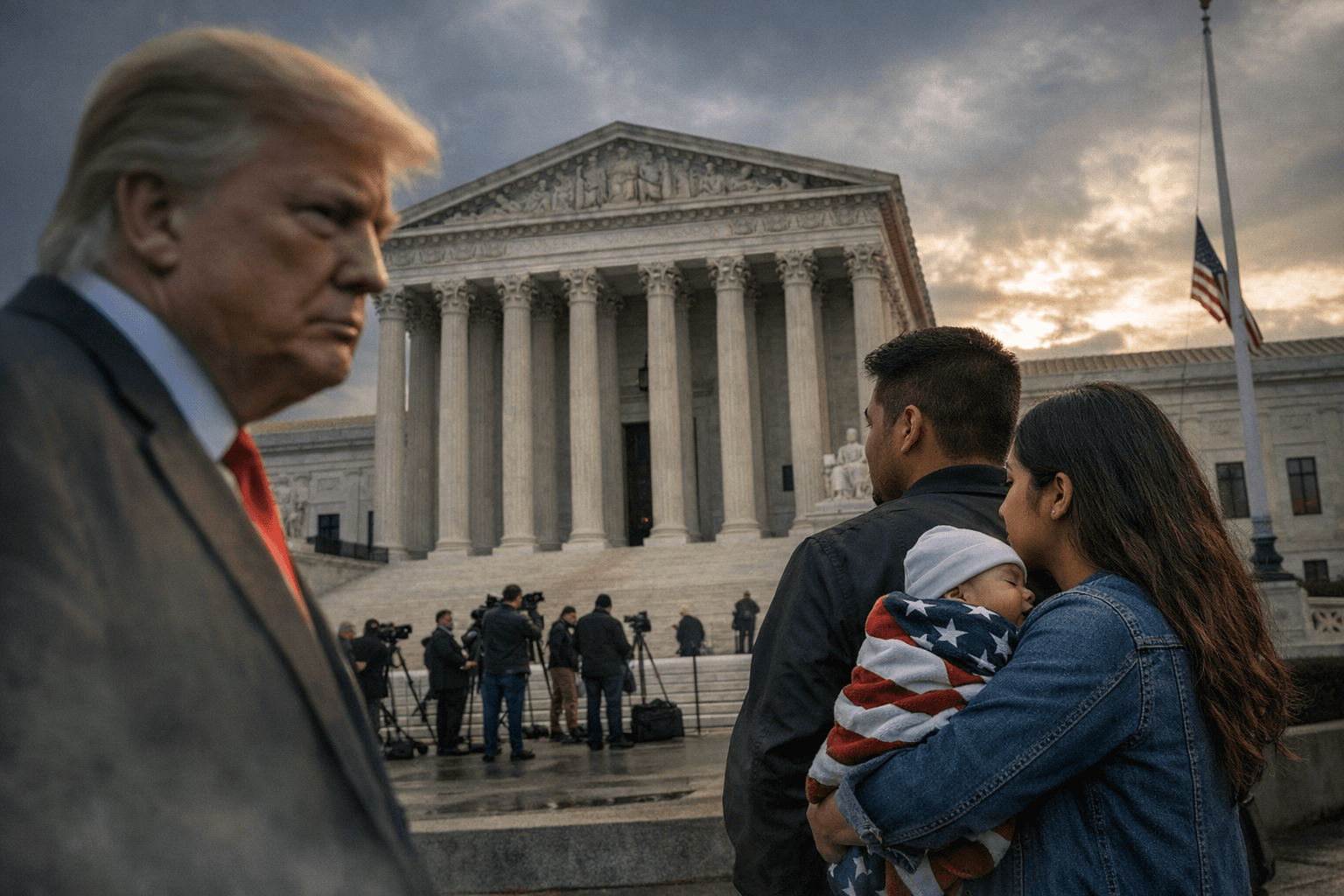
That chaos carries a concrete operational dimension. If the Court sides with the administration, hospitals would face immediate pressure to verify and record parents' immigration status at birth, information they do not currently collect, before a newborn's citizenship can be confirmed. State vital records offices, which issue birth certificates that underpin every subsequent identity document, would need new procedures. Passport offices would face a surge of contested applications, and immigration courts already strained by record backlogs would absorb an entirely new category of claimants: U.S.-born individuals whose citizenship is suddenly in dispute.
The path of the ruling matters enormously. A narrow decision might address only the injunctions or a discrete constitutional point, limiting immediate disruption. A sweeping ruling for the administration would force Congress, federal agencies, and states to rebuild from scratch the bureaucratic infrastructure that has processed citizenship at birth for more than a century.
This is not the administration's first appearance before the justices on the birthright question. Last year, the Court ruled 6-3 along ideological lines to curtail the use of universal injunctions that had blocked the executive order, but stopped short of deciding the constitutional merits. Wednesday's arguments force that reckoning directly, with a ruling expected before the Court's summer recess begins in late June or early July.
Sources:
Know something we missed? Have a correction or additional information?
Submit a Tip