Georgia Bill Would Require DNA Swabs From Immigrants Held on Misdemeanor Charges
A Georgia bill would collect DNA from immigrants charged with misdemeanors if ICE has issued a detainer but not yet made an arrest, raising Fourth Amendment concerns.

Legislation advancing in the Georgia legislature would require authorities to collect DNA swabs from immigrants charged with misdemeanors or felonies when U.S. Immigration and Customs Enforcement has issued a detainer but has not taken the person into custody within 48 hours, a measure its sponsor framed as a crime-solving tool but critics warned poses serious constitutional risks.
The bill, sponsored by state Sen. Tim Bearden, a Republican, moved toward a final vote. If enacted, Georgia would become the third state in the country to single out immigrants suspected of being in the country illegally for DNA collection that would not be required of other residents. Florida passed a comparable law in 2023, and Oklahoma authorized a similar practice in 2009, though that measure remains subject to funding.
Bearden described the proposal in terms of public safety and justice at a March hearing. "Technology is changing quickly, and DNA is one of those things that help us tremendously when we're trying to make sure to bring justice to victims in this state and across this country," he said.
The Department of Homeland Security, in a statement, said "partnerships with law enforcement are critical to having the resources we need to arrest criminal illegal aliens across the country."
The bill would expand DNA collection to people charged with less serious offenses, including those not ultimately convicted and those not deported. That breadth drew concern from legal advocates. Mazie Lynn Guertin, executive director and policy advocate with the Georgia Association of Criminal Defense Lawyers, noted that traffic offenses penalized as civil violations in some states are classified as misdemeanors in Georgia, meaning a routine traffic stop could trigger detention and a DNA swab under the proposed law.
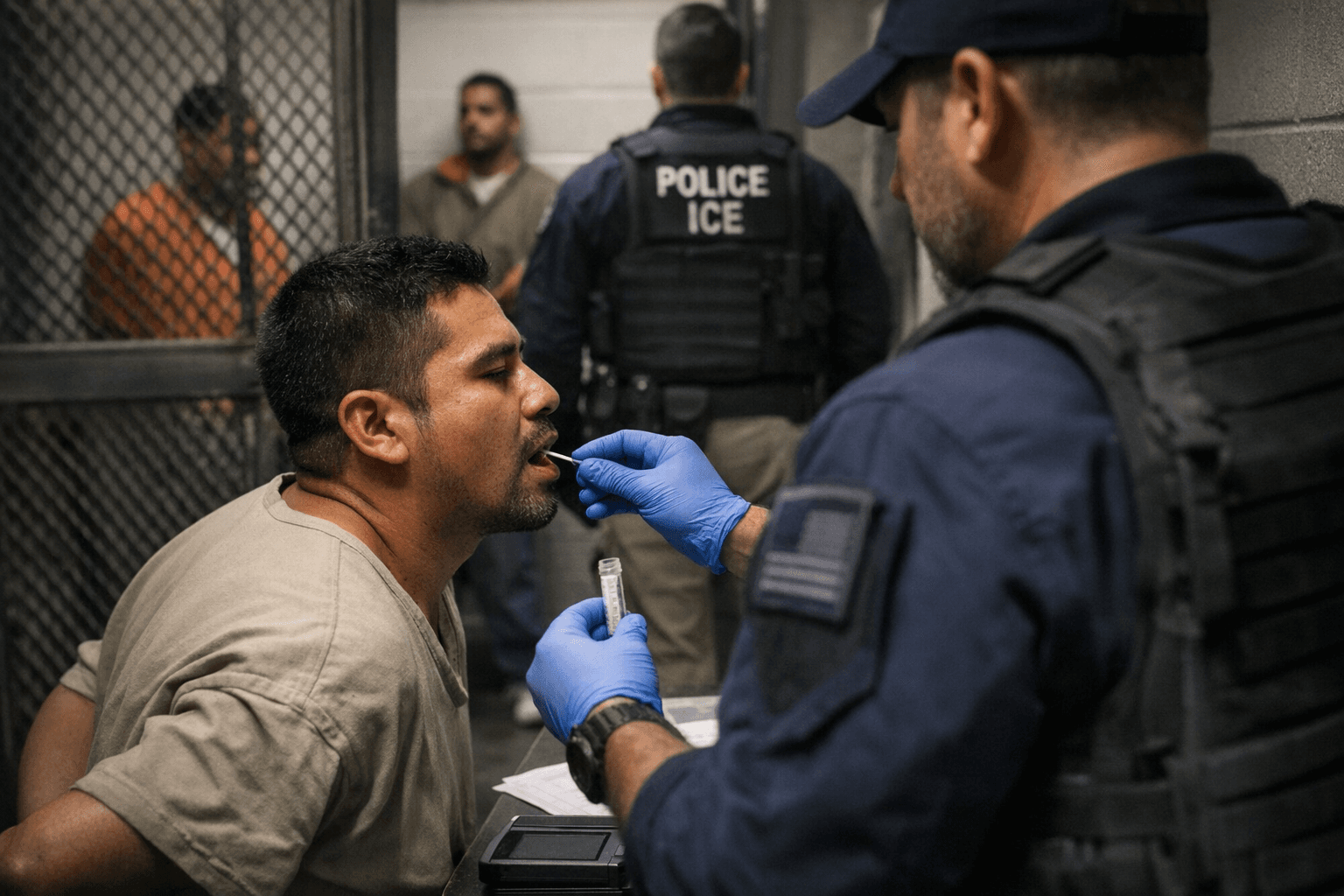
The measure would build on a 2024 Georgia law that already requires local law enforcement to cooperate with federal authorities to identify and detain immigrants in the country illegally or risk losing state funding. The 2026 legislation would extend that framework into genetic data collection.
Civil liberties advocates warned that the bill could lead to the creation of databases targeting a specific population. The issue is legally fraught when DNA collection is tied to arrests rather than convictions, particularly when it applies to a category of people that other residents do not face. Fourth Amendment challenges, treating involuntary genetic sampling as a potential unreasonable search, are widely expected if the bill becomes law.
Over three decades, many states expanded DNA collection from convicted offenders, a practice considered legally settled. Extending that collection to people charged with minor offenses, and doing so selectively based on immigration status, represents a significant departure from that baseline.
Critics also raised concerns about a chilling effect on immigrant communities, warning that residents who fear a routine police encounter could result in DNA collection may be less likely to report crimes or cooperate with local law enforcement investigations.
Know something we missed? Have a correction or additional information?
Submit a Tip

