Supreme Court to decide presidential power over Fed governor removal
The Supreme Court will hear whether the president can remove a Federal Reserve governor with statutory protections. The ruling could reshape agency independence and global market confidence.
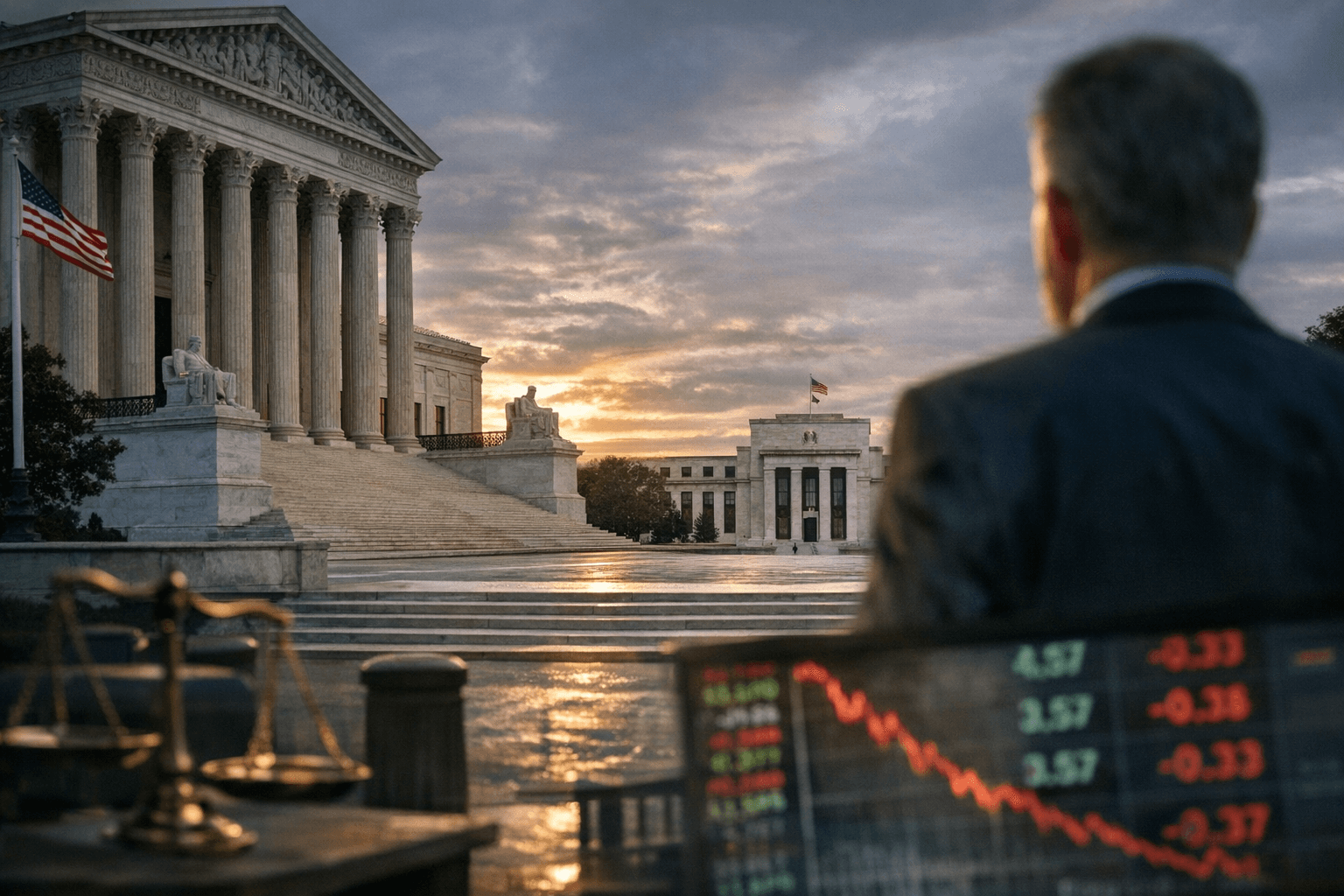
The Supreme Court has agreed to consider President Donald J. Trump’s attempt to remove Federal Reserve Governor Lisa Cook, immediately framing a constitutional test over the reach of presidential authority and the future of statutory protections that shield officials from at-will dismissal. The court has temporarily blocked Cook’s removal while the case proceeds and is set to hear argument during its January session.
At the heart of the dispute is whether officers of independent, multi-member bodies who are protected by statute from removal except "for cause" can nonetheless be dismissed by the president when they exercise what the executive branch calls executive functions. The question reaches back to the Court’s 1935 decision in Humphrey’s Executor v. United States, which long has been read to allow Congress to insulate certain regulatory agencies from direct presidential control. The Trump administration contends that Humphrey’s should be narrowed or overruled, invoking precedents such as Myers and Seila Law to press a broader view of Article II removal powers.
A ruling that permits policy-based removal would have immediate institutional consequences. Many federal commissions and boards were deliberately designed as bipartisan, multi-member entities with for-cause removal protections to ensure continuity and protect technical or quasi-judicial functions from short-term political shifts. Narrowing those protections could allow the president to replace key agency members for policy reasons, shifting the balance of independence toward political control and altering regulatory outcomes across financial stability, labor, competition and other fields.
The case involving Cook sits alongside a slate of related disputes the Court is considering this term. One directly tied matter concerns whether the Humphrey’s rule should protect an FTC commissioner, named in litigation as Rebecca Slaughter, where the justices debated the same constitutional framework. During that earlier argument, Chief Justice John Roberts observed, "Humphrey's Executor is just a dried husk of whatever people used to think it was," a remark that signaled the court’s conservative majority may be open to rethinking long-standing doctrine. Lower court orders in several removal cases were stayed by the Supreme Court last year, reflecting the justices’ readiness to entertain broad separation-of-powers claims brought by the executive branch.
The implications extend beyond domestic institutional design. Central bank independence is a cornerstone of global market confidence; an erosion of statutory safeguards for a Federal Reserve governor could unsettle investors and foreign counterparts who look to the United States for signals about monetary policy stability. Regulatory agencies shape trade, competition and enforcement regimes that ripple through international supply chains. The court’s decision will therefore matter to governments, multinational firms and investors assessing the predictability of U.S. policy.
Procedurally, the court’s January argument calendar will include the Cook removal alongside other high-profile disputes, with full briefing and oral argument to follow before a decision is reached. The outcome will determine whether Humphrey’s remains a durable constraint on presidential removal power, and if not, how the Court will carve exceptions for particular offices such as the Federal Reserve or other multi-member agencies.
For now, the temporary halt to Cook’s dismissal preserves the status quo, but the stakes are clear: the justices will decide whether statutory for-cause protections remain a meaningful bulwark of agency independence or whether presidential authority over personnel will substantially expand, reshaping the administrative state and its international reverberations.
This article was produced by Prism’s automated news system from verified source data, official records, and press releases, then run through automated quality and moderation checks before publishing. The system is built and supervised by the people who set the standards it runs under. Read our full AI policy.
Did this article answer your question?

