Supreme Court weighs Trump challenge to birthright citizenship
The justices weighed a challenge to birthright citizenship that could affect children born in the United States to noncitizen parents. The case tested Trump’s push to narrow the 14th Amendment.

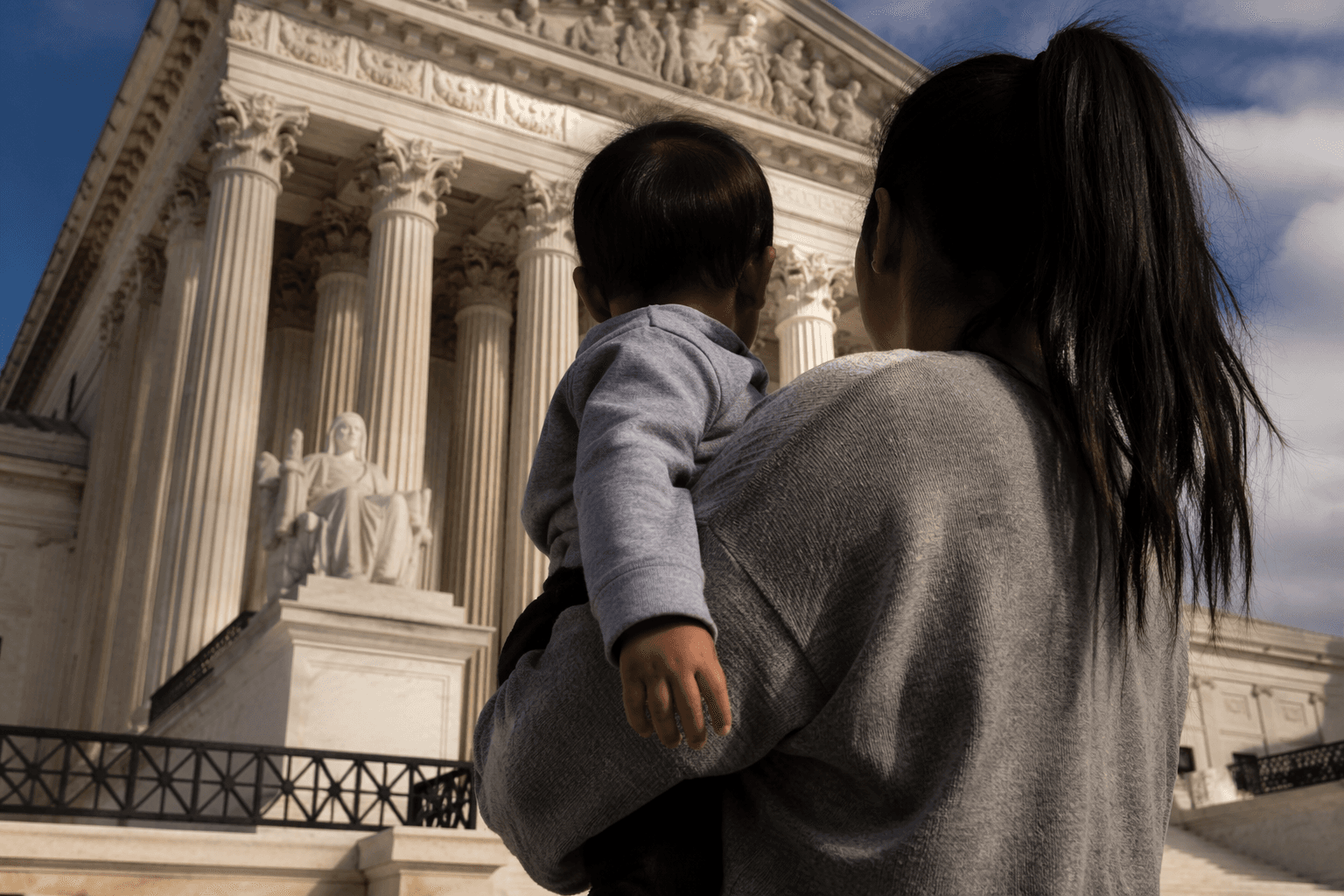
The Supreme Court weighed a Trump-backed challenge to birthright citizenship that could change who is recognized as American at birth for children born in the United States to noncitizen parents. The dispute reached the justices as one of the year’s most closely watched constitutional fights, pitting President Donald Trump’s effort to narrow the 14th Amendment’s citizenship clause against a long-settled reading tied to the 1898 decision in United States v. Wong Kim Ark.
Birthright citizenship has long meant that any child born in the United States becomes an American at birth, regardless of the parents’ origins. That principle sits at the center of the current case, and any move by the court to narrow it would immediately affect families across the country, especially children born on U.S. soil to parents without citizenship status. A ruling to uphold the traditional interpretation would leave that constitutional guarantee in place and preserve the long-standing rule that has guided immigration and nationality law for more than a century.
The case also reflected a broader clash over presidential power and the courts. AP has tracked hundreds of lawsuits filed against actions taken in Trump’s second administration, and courts have blocked the president in a number of those cases. That backdrop has made the birthright citizenship fight more than an immigration dispute. It has become a test of how far a president can press executive authority before the judiciary draws a line.
Trump made immigration a major theme of his 2024 campaign, and AP’s election coverage showed it remained a central issue with voters. That political context helped explain why the citizenship case carried such weight beyond the courtroom. The issue touched not only constitutional interpretation but also the practical reach of federal immigration policy, the status of newborn children, and the limits of an administration determined to reshape long-standing rules.
For the court, the stakes were stark. The justices were being asked to revisit a principle rooted in the 14th Amendment and reinforced by United States v. Wong Kim Ark, while deciding how much room a president has to alter it through executive action. The outcome could reshape the legal definition of citizenship at birth and set a durable marker in the broader struggle between the White House and the judiciary.
This article was produced by Prism’s automated news system from verified source data, official records, and press releases, then run through automated quality and moderation checks before publishing. The system is built and supervised by the people who set the standards it runs under. Read our full AI policy.
Know something we missed? Have a correction or additional information?
Submit a Tip