Supreme Court will decide whether owners can bar guns from public-facing private property
The high court will hear a challenge to Hawaii’s rule that requires property-owner permission to carry on private places open to the public, a case that could reshape public-carry law nationwide.

The U.S. Supreme Court on Monday agreed to hear a high-stakes Second Amendment challenge to Hawaii’s requirement that individuals obtain a private property owner’s affirmative permission before carrying a firearm onto privately owned places that are open to the public, including beaches, parks, stores and hotels. The court limited its review to that owner-permission question, leaving broader aspects of Hawaii’s firearm regulations outside this case.
Plaintiffs in the challenge are three Maui gun owners and the Hawaii Firearms Coalition. They contend that the owner-permission rule effectively prevents public carry in many everyday spaces and thus infringes the Second Amendment under the court’s 2022 framework established in New York State Rifle & Pistol Association v. Bruen. The state, through Attorney General Anne Lopez, defends the statutes and has argued in briefs that Hawai‘i’s history and public-safety needs justify a gun-free default for establishments, and that property owners who want to permit firearms can do so by posting a sign.
The litigation centers on provisions of the Hawaii Revised Statutes, including HRS § 134-25(a) and § 134-27(a), with the record noting statutory exceptions in other sections such as §§ 134-5 and 134-9. Courts below have grappled with how Bruen’s history-and-tradition test applies to modern regulations that govern private property open to the public. The Ninth Circuit, in 2021 and again in 2024, upheld most of Hawaii’s licensing and location restrictions, including bans on carrying in parks and beaches and the owner-permission requirement. After the 2024 decision, the challengers sought Supreme Court review; an earlier federal court at one stage entered an order enjoining parts of the law from enforcement, though reports do not specify which provisions were blocked.
Hawaii’s regulatory regime has deep roots. Court materials and briefs trace a lineage of aggressive weapons regulation to the Hawaiian Kingdom, where an 1833 prohibition under King Kamehameha III is cited, and through territorial and state licensing practices that historically limited public carrying of firearms. Before Bruen, licensing was issued only in “exceptional case[s]” when applicants showed a reason to fear injury, a standard that effectively restricted public carry.
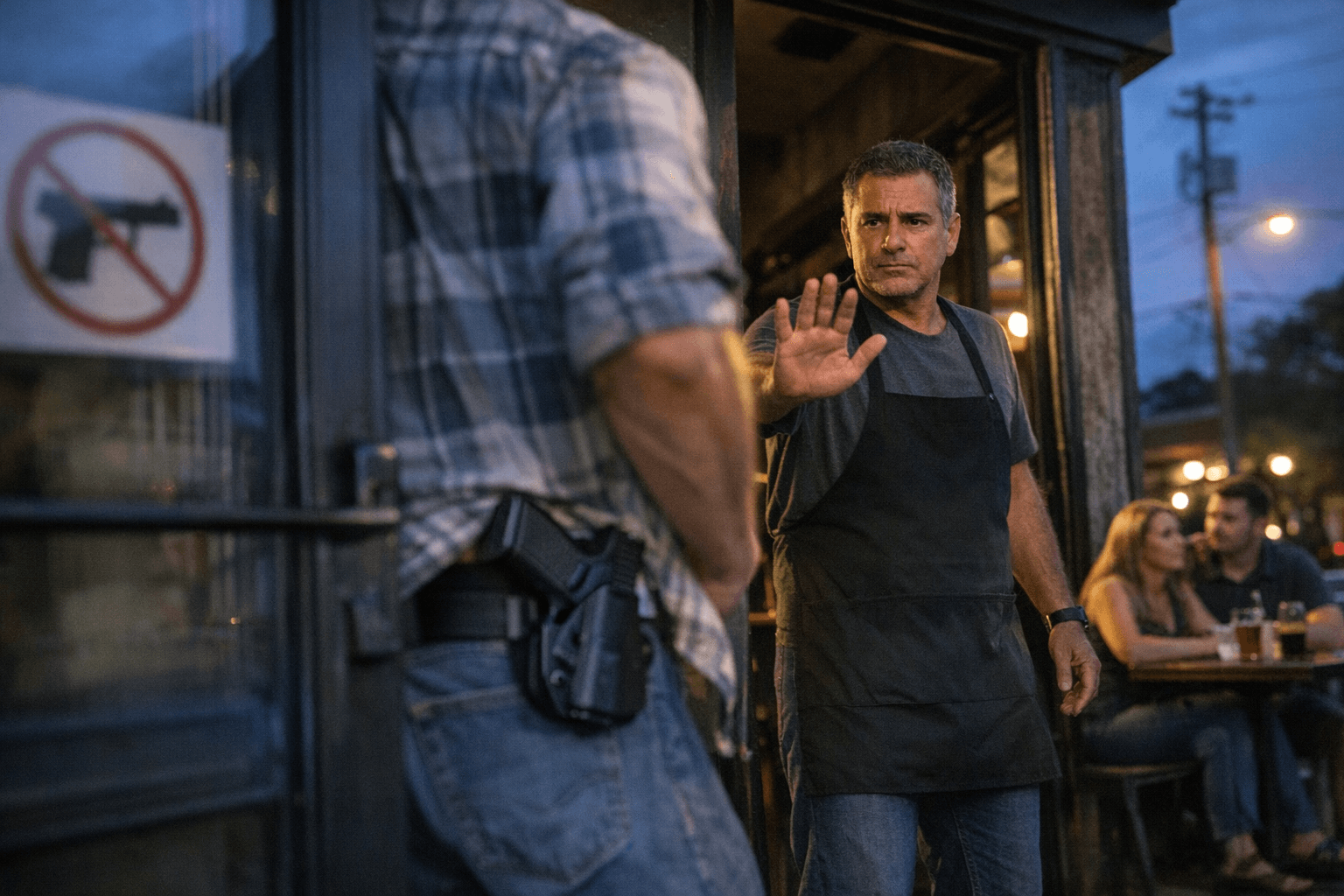
The case raises three central questions for the Justices: how Bruen’s historical inquiry should apply to owner rules governing private property open to the public; whether an affirmative-consent requirement imposed on would-be carriers can survive constitutional scrutiny; and how states may balance public-safety goals, property owners’ preferences and individual gun rights. Because the court narrowed its review, its ruling will not resolve every aspect of Hawaii’s extensive gun code, but it could set a precedent that affects similar owner-consent regimes across the country.
Beyond legal doctrine, the decision carries practical and economic implications. Hawaii cites among its defenses the state’s relatively low rates of gun violence, an outcome officials link to strict regulation. A Supreme Court decision limiting states’ ability to require owner permission could change risk calculations for the hospitality and retail sectors, prompting businesses to decide whether to allow firearms on premises and potentially affecting insurance costs, staffing and visitor perceptions in a state where tourism underpins a large share of economic activity.
The case will test the Supreme Court’s direction on Bruen and signal how much deference states retain to craft location-based rules that reflect local history, public-safety data and property rights. The court’s ruling will be watched closely by state legislatures, retailers and the hospitality industry seeking clarity on how to balance safety, commerce and constitutional protections.
This article was produced by Prism’s automated news system from verified source data, official records, and press releases, then run through automated quality and moderation checks before publishing. The system is built and supervised by the people who set the standards it runs under. Read our full AI policy.
Did this article answer your question?