Surging Bird Flu in 2026 Heightens Risk for Pet Parrots and Owners
Bird flu detections have surged in early 2026, increasing spillover risk to domestic birds and raising practical concerns for parrot owners.

Multiple sources and a recent scientific paper describe a sharp rise in H5 avian influenza detections in early 2026, a development that matters to anyone keeping parrots at home. The virus has been reported in dozens of jurisdictions and officials have taken emergency actions, while health agencies say human risk is low but are watching closely.
RealClearScience and Associated Press coverage states that “Bird flu is back with a vengeance, after subsiding temporarily in the summer and fall,” and that “the virus has been detected in 28 U.S. states since the beginning of 2026.” Sentient Media’s summary of USDA and international data includes the fragment “Sentient summarizes USDA and international data showing millions of birds affected in Ja” and also notes that “By contrast, less than 1.4 million birds nationwide were affected by avian flu over the three months of September, October and November of 2025.” Those statements point to a resurgence but also contain an unresolved discrepancy in counts and geographic scope that will require clarification from the underlying datasets.
The agricultural and veterinary angle is a particular concern for parrot owners. University of Saskatchewan virologist Angela Rasmussen put the pathway plainly: “Farm animals are contracting bird flu most often from wild birds… as they can migrate and move into poultry and dairy farms with ease. Consequently, the virus has spilled over to other poultry and mammals and, in turn, spread to some humans.” A peer-reviewed modeling study in Communications Earth & Environment warned that an H5N1 outbreak “could impact the dairy cattle sector and the broader economy in the United States,” and cautioned that “Each time an infection occurs, the virus could mutate into one that excels in transmitting between humans4.”
Human infections have been rare but notable. Los Angeles Times reporting summarizes that “The human cases earlier in 2025 tended to be the H5N1 strain of the virus. But November’s case was the first recorded incident of a person contracting the H5N5 strain.” One severe Louisiana case resulted in a death in January 2025; that patient “was older than 65, had preexisting health conditions and had had contact with sick and dead birds.” After federal confirmation of the Louisiana case, Gov. Gavin Newsom declared a state of emergency in California, and another state governor declared a disaster in Colorado. The CDC says it is “utilizing its ‘flu surveillance systems to monitor for H5 bird flu activity in people’” and that the “current public health risk is low.”
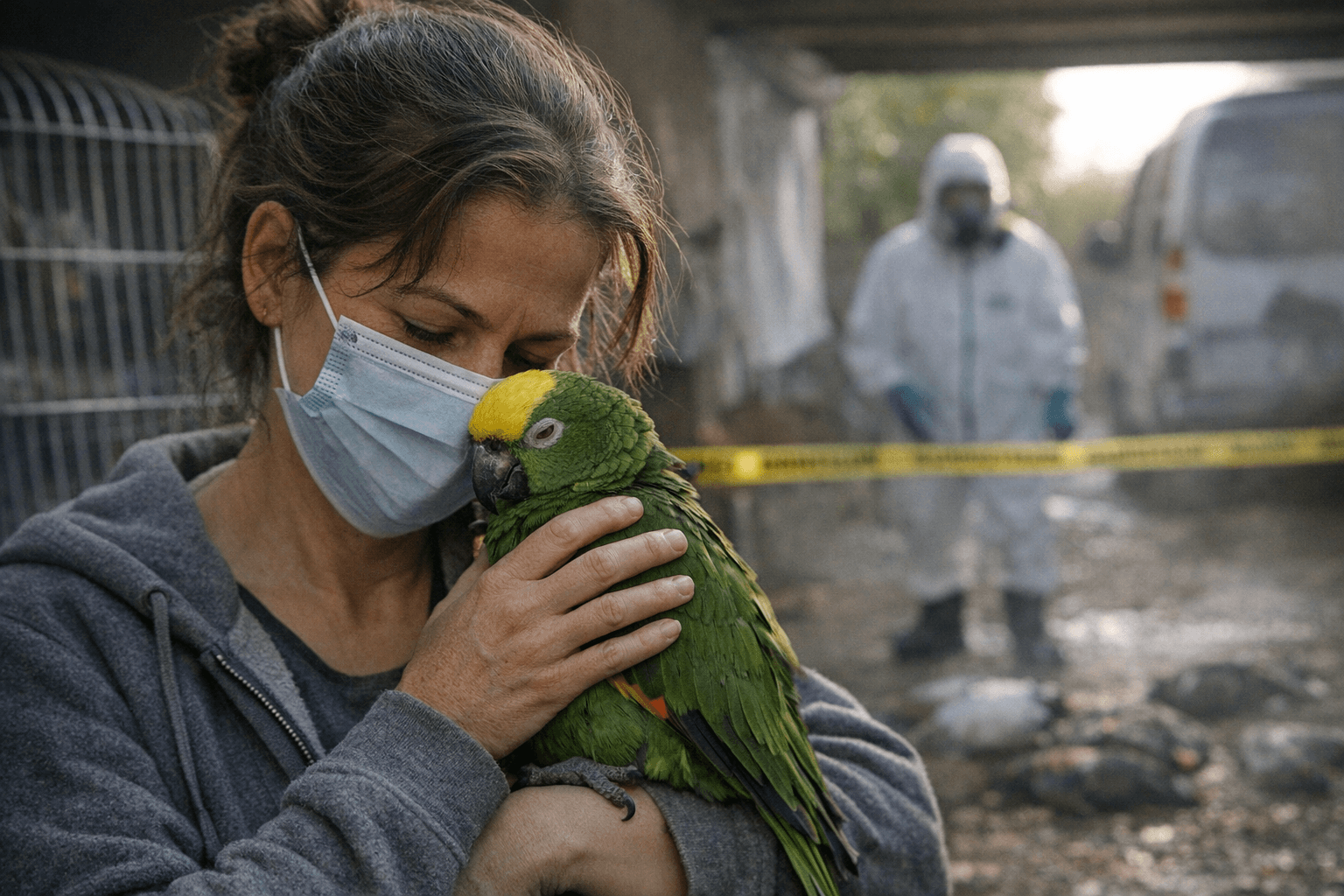
What this means for parrots and owners is practical and immediate. Minimize exposure to wild birds and avoid handling sick or dead wild birds. Keep outdoor aviaries secured, maintain strong hygiene when handling birds, and contact an avian veterinarian promptly if you see respiratory signs, lethargy, or sudden deaths. Watch for local advisories from state agriculture and health departments and for updated CDC guidance.
Scientists emphasize that the situation can change: one Institut Pasteur official warned that if bird flu gained human-to-human transmission it “could cause a pandemic ‘potentially even more severe than the [COVID-19] pandemic we experienced.’” For now, monitor official surveillance, reinforce biosecurity around your birds, and stay in touch with your avian vet as authorities continue to track outbreaks and genetic changes.
Know something we missed? Have a correction or additional information?
Submit a Tip