Survey finds 3 in 10 Americans say they shoplifted this year
Three in 10 Americans said they shoplifted this year, a jump that points to more than crime, it signals household strain as inflation still shapes daily spending.
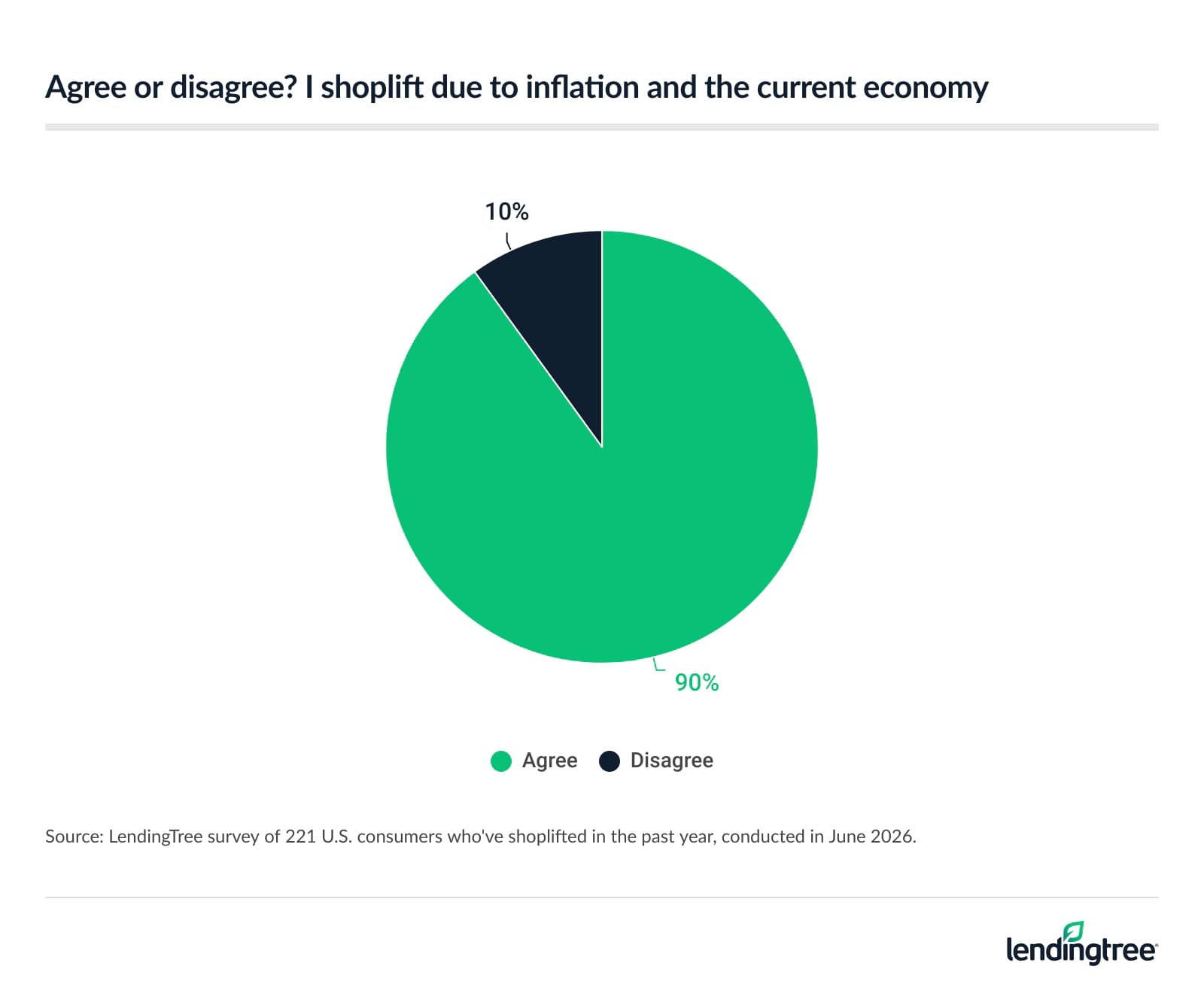
Three in 10 Americans said they shoplifted this year, up from 23% in LendingTree’s earlier survey, as affordability pressures and financial hardship pushed the issue into the cost-of-living conversation. The later poll also found that 37% of respondents who admitted shoplifting said they did so within the past year, compared with 23% in the 2024 survey.
The figures come from LendingTree’s surveys of U.S. consumers and should be read as self-reported behavior, not a count of police cases or store losses. That distinction matters because the numbers capture how many people were willing to admit stealing, while leaving open how often the conduct occurred, what was taken and whether respondents were referring to impulse theft, necessity-driven behavior or something else entirely.
Still, the response pattern points to economic pressure. In the earlier survey, 90% of recent offenders blamed inflation and the struggling economy, and NewsNation said inflation was the key reason many respondents gave in the newer results. The shift is notable because it ties petty theft to the same household budget squeeze that has kept grocery bills, rent and other essentials under scrutiny across the country.
The broader crime picture has also worsened. The Council on Criminal Justice said in its November 2024 report, Between the Aisles: A Closer Look at Shoplifting Trends, that shoplifting incidents in the first half of 2024 were 24% higher than in the same period in 2023. That makes the survey results more than a snapshot of consumer attitudes; they sit alongside evidence that retail theft has been rising in measurable ways.
Federal agencies have taken notice. The Federal Bureau of Investigation maintains an Organized Retail Theft page, and the Congressional Research Service said in a May 2, 2024 report that retailers and industry groups have raised concern about increases in retail crime and organized retail crime. The concern extends beyond lone shoplifters to flash-mob-style thefts and assaults on employees, which add security costs for stores already dealing with thin margins.
That mix of self-reported theft, inflation pressure and documented shoplifting growth suggests a risk that petty theft is becoming more normalized as a coping mechanism. For retailers, it means higher security expenses and more pressure to protect inventory; for households, it is another sign that financial stress is spilling into behavior that carries legal and economic costs.
This article was produced by Prism’s automated news system from verified source data, official records, and press releases, then run through automated quality and moderation checks before publishing. The system is built and supervised by the people who set the standards it runs under. Read our full AI policy.
Did this article answer your question?