Survivor of Ebola warns healthcare workers face greatest risk in Congo outbreak
Dr. Craig Spencer says Ebola’s sharpest danger is at the bedside, where health workers face the sickest patients and the highest risk.
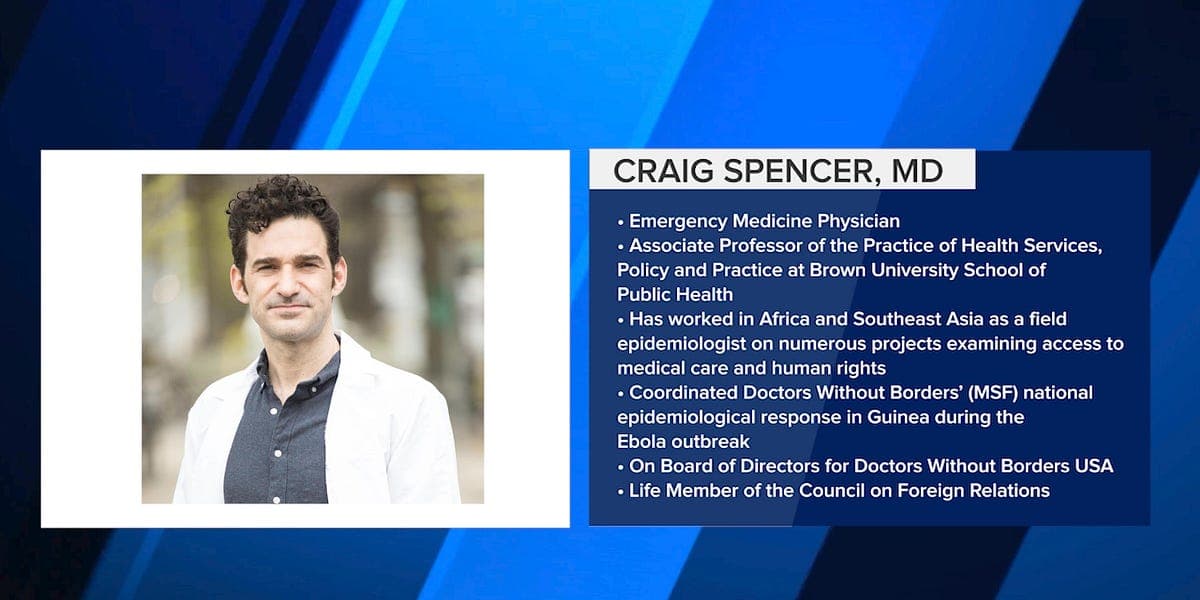
Dr. Craig Spencer, the New York emergency physician who survived Ebola, says the people most exposed in Congo’s newest outbreak are the clinicians trying to stop it. In eastern Congo’s Ituri province, the Africa Centres for Disease Control and Prevention said the outbreak involved at least 246 suspected cases and 65 deaths, a toll that again puts doctors, nurses and aides in the path of the virus.
Spencer knows that danger from experience. He contracted Ebola in Guinea in September 2014 while working with Doctors Without Borders, returned to New York City on Oct. 17, 2014, developed a fever six days later and was rushed to Bellevue Hospital. He spent 19 days there after being treated as an Ebola patient, while health officials decontaminated his apartment and quarantined his fiancée and two friends. Spencer later said he was infected with the Zaire strain, which he described as the deadliest form, and recounted symptoms that included fatigue, vomiting, diarrhea, incredible weakness and weight loss.
His case became a stress test for the U.S. health system, exposing how much depended on rapid isolation, careful monitoring and a hospital prepared to handle a highly contagious patient. Bellevue later said it built protocols and a dedicated clinical space after the 2014 crisis, and in October 2024 the hospital held a reunion for Spencer and the team that cared for him. Spencer said then that he wished similar resources had existed for the patients he treated in West Africa.
The broader picture in Congo remains fragile. World Health Organization official Abdi Rahman Mahamud said the region is highly volatile because of the humanitarian situation and movement between South Sudan, Uganda and other areas. Officials have said the outbreak is Congo’s 17th since 1976, a reminder that Ebola keeps finding places where conflict, displacement and weak health systems give it room to spread.
The concern is not only the number of cases, but who gets hit first. In September 2025, New York State and New York City health departments warned providers to keep screening febrile patients for recent international travel after Congo declared another Zaire-strain outbreak in Kasai Province. That outbreak later included 35 confirmed cases, 19 suspected cases and 16 deaths, among them four healthcare workers. For Spencer, the lesson is blunt: when Ebola flares, frontline workers are still the system’s most vulnerable line.
This article was produced by Prism’s automated news system from verified source data, official records, and press releases, then run through automated quality and moderation checks before publishing. The system is built and supervised by the people who set the standards it runs under. Read our full AI policy.
Did this article answer your question?