Sweden says it jammed suspected Russian drone seven nautical miles from Charles de Gaulle
Swedish forces say they used electronic countermeasures to jam a suspected Russian drone near the French carrier in Malmö, raising fresh NATO tensions.
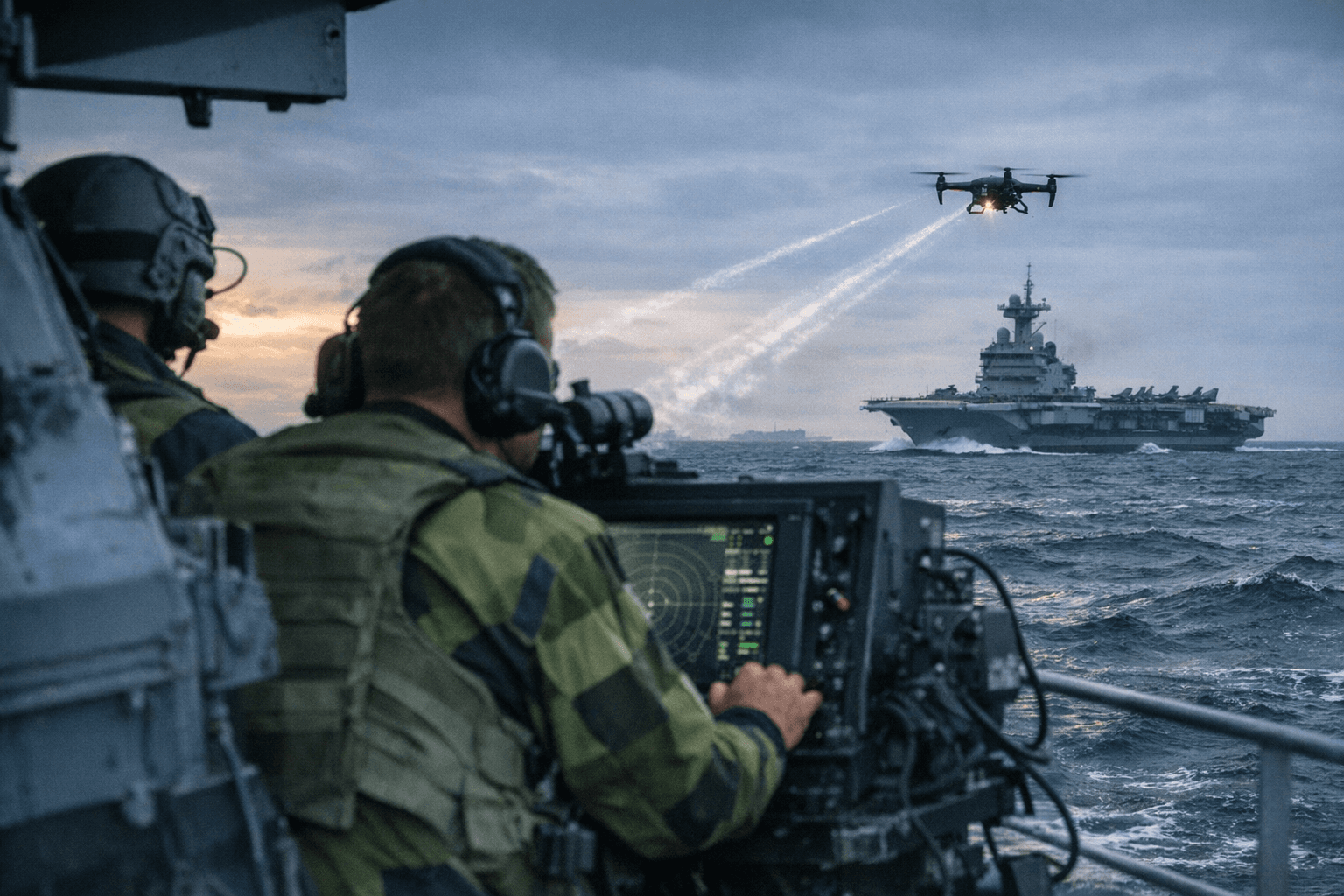
The Swedish Armed Forces jammed a suspected Russian unmanned aerial vehicle as it approached the French nuclear-powered aircraft carrier Charles de Gaulle while the ship was docked in Malmö, Swedish and French officials said. The French general staff put the intercept at about seven nautical miles from the carrier and said shipboard operations were not disrupted.
"A vessel from the Swedish Navy observed a suspected drone during an ongoing maritime patrol," the Swedish Armed Forces said, and "The Swedish Armed Forces took countermeasures to disrupt the suspected drone." Colonel Guillaume Vernet, a spokesman for the French general staff, said, "A drone was jammed yesterday by a Swedish system at about seven nautical miles from the Charles de Gaulle. The Swedish system worked perfectly and this did not disrupt operations on board."
Swedish Defence Minister Pål Jonson gave a more pointed assessment of likely origin, saying the drone was "probably from Russia, as there was a Russian military vessel in the immediate vicinity at the time of the facts." Swedish officials also said the vessel linked to the incident moved into the Baltic Sea afterward, though authorities have not publicly identified the ship.
Accounts differ about the precise timing and the name of the exercise the carrier was supporting. The Charles de Gaulle arrived in Malmö earlier in the week; several sources reported the jamming took place on Feb. 25 and was publicly described the following day. Officials and military statements agree only that the carrier was in the region for NATO and multinational drills variously described as Orion-26, Lafayette 26 or Operation Baltic Sentry.
After Swedish countermeasures were applied, contact with the UAV was lost and the device "disappeared," officials said. It remains unclear whether the drone returned to a nearby ship, crashed into the sea, or was otherwise recovered. Stockholm has launched an investigation, Swedish authorities said, but have not released technical details of the jamming system used or imagery and sensor logs that would clarify the UAV's flight path and fate.
The episode adds to a growing pattern of contested air and maritime encounters in Northern Europe that security officials view as testing or pressure tactics. NATO governments have reported a rise in suspected Russian drone activity near military and civilian infrastructure across the continent, and allied commanders see such incidents as part of hybrid operations that probe defenses while falling below thresholds that would trigger a larger response.
France emphasized that carrier operations continued without interruption, while Sweden framed the action as defensive countermeasures in national and allied waters. No official Russian response has been released publicly. Key unanswered questions include definitive attribution for the UAV, identification of the nearby vessel, the final disposition of the drone and whether NATO commands will change patrol or air-defense postures in the area as the investigation proceeds.
Journalists seeking confirmation should consult official statements from the Swedish Armed Forces, the Swedish Defence Ministry and the French general staff for further detail and any released sensor data or imagery.
This article was produced by Prism’s automated news system from verified source data, official records, and press releases, then run through automated quality and moderation checks before publishing. The system is built and supervised by the people who set the standards it runs under. Read our full AI policy.
Did this article answer your question?