Swedish Customs boards Russian freighter Adler, cargo inspection underway
Swedish Customs boarded the Russian flagged freighter Adler after the vessel anchored in Swedish waters following engine trouble, and a customs inspection of its cargo remains under way. The move is raising questions about enforcement of EU sanctions and regional maritime security as Swedish authorities work with the coast guard and local police.

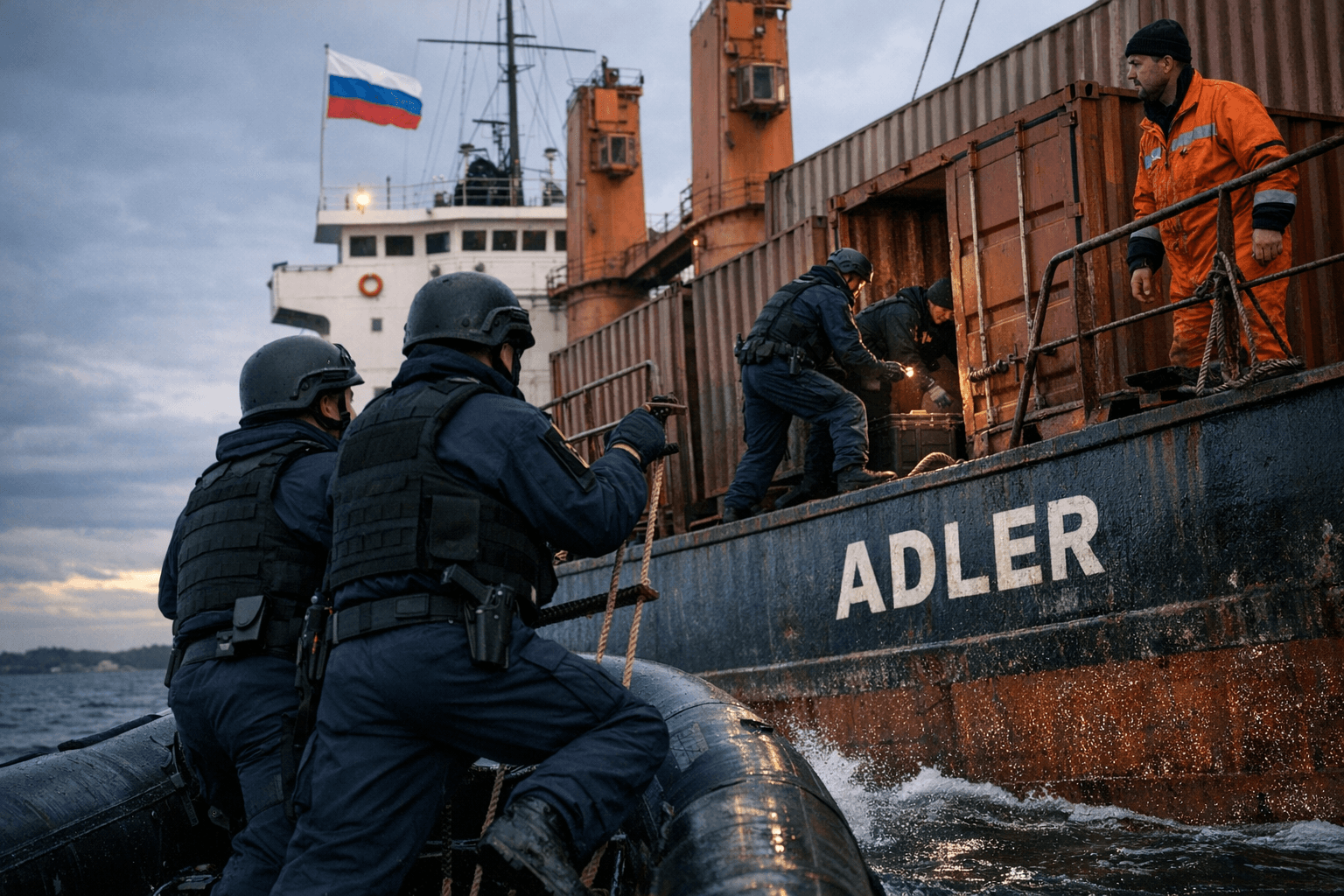
Swedish Customs said it boarded the Russian flagged freighter Adler in Swedish waters on Sunday to conduct a customs inspection of the ship’s cargo, after the vessel anchored off Nyhamnsläge north of Höganäs following engine problems. The boarding took place in the early hours, a customs spokesman said, with support from the Swedish Coast Guard and local police, and the inspection remained ongoing at the time of the statement.
The Adler is a roll on roll off container carrier about 126 metres in length according to vessel tracking data, and is registered under the Russian flag. Authorities identified the owner as M Leasing, also referenced as M Leasing LLC. Sweden’s customs spokesman Martin Höglund told reporters the boarding occurred “shortly after 0100 last night” and confirmed that the vessel’s owners are on the European Union sanctions list. Independent databases such as OpenSanctions also list the Adler and its owners as subject to United States sanctions and flag them as suspected of involvement in weapons transport, a designation that Swedish authorities have not confirmed.
Swedish officials say the ship developed engine problems while transiting north through the Øresund on Friday and anchored in Swedish waters on December 19. The Coast Guard vessel KBV001 was reported to have been at the scene as officers from customs and police carried out the inspection. Customs declined to disclose any findings or to say whether anything irregular was located during the search, and the operation appears to be continuing into Sunday.
The boarding and inspection are taking place against a fraught geopolitical backdrop. Enforcement of sanctions by EU members forms a central pillar of the bloc’s pressure strategy, and the presence of a sanctioned owner complicates routine port and maritime procedures. For Sweden the operation is a test of its customs and maritime enforcement capacity in a busy international waterway, where legal jurisdiction under the United Nations Convention on the Law of the Sea gives coastal states authority to enforce customs rules in their territorial waters.
The case also carries diplomatic implications. Sweden has been navigating a heightened relationship with Russia since shifting security alignments in recent years, and actions that touch on sanctioned entities can prompt formal protest or demand explanations. At the same time, rigorous enforcement of sanctions is likely to be welcomed by Sweden’s EU partners and NATO allies, which have pushed for tighter controls on maritime routes used to move sanctioned goods.
Shipping through the Øresund is vital to trade in the Baltic region, and incidents involving vessels linked to sanctions lists can reverberate through logistics chains. The outcome of the inspection will determine whether the Adler is detained, allowed to proceed after repairs, or subject to further legal measures. For now Swedish Customs is managing an operational response that balances enforcement, maritime safety, and the diplomatic sensitivities inherent in policing sanctioned shipping in national waters.
This article was produced by Prism’s automated news system from verified source data, official records, and press releases, then run through automated quality and moderation checks before publishing. The system is built and supervised by the people who set the standards it runs under. Read our full AI policy.
Did this article answer your question?


