Switzerland rejects US forced-labor claims as tariff talks continue
Washington accused Switzerland of failing to stop forced-labor imports as tariff talks continued, with 12.5% duties on the table.
Washington has put Switzerland on notice over forced-labor enforcement just as tariff talks continue, accusing the country of failing to do enough to stop imports of goods made with forced labor. Bern rejected the charge outright, saying it “strongly rejects” the allegations and will restate its position in writing while defending a system built on regulation, mandatory private-sector risk assessments and international cooperation.
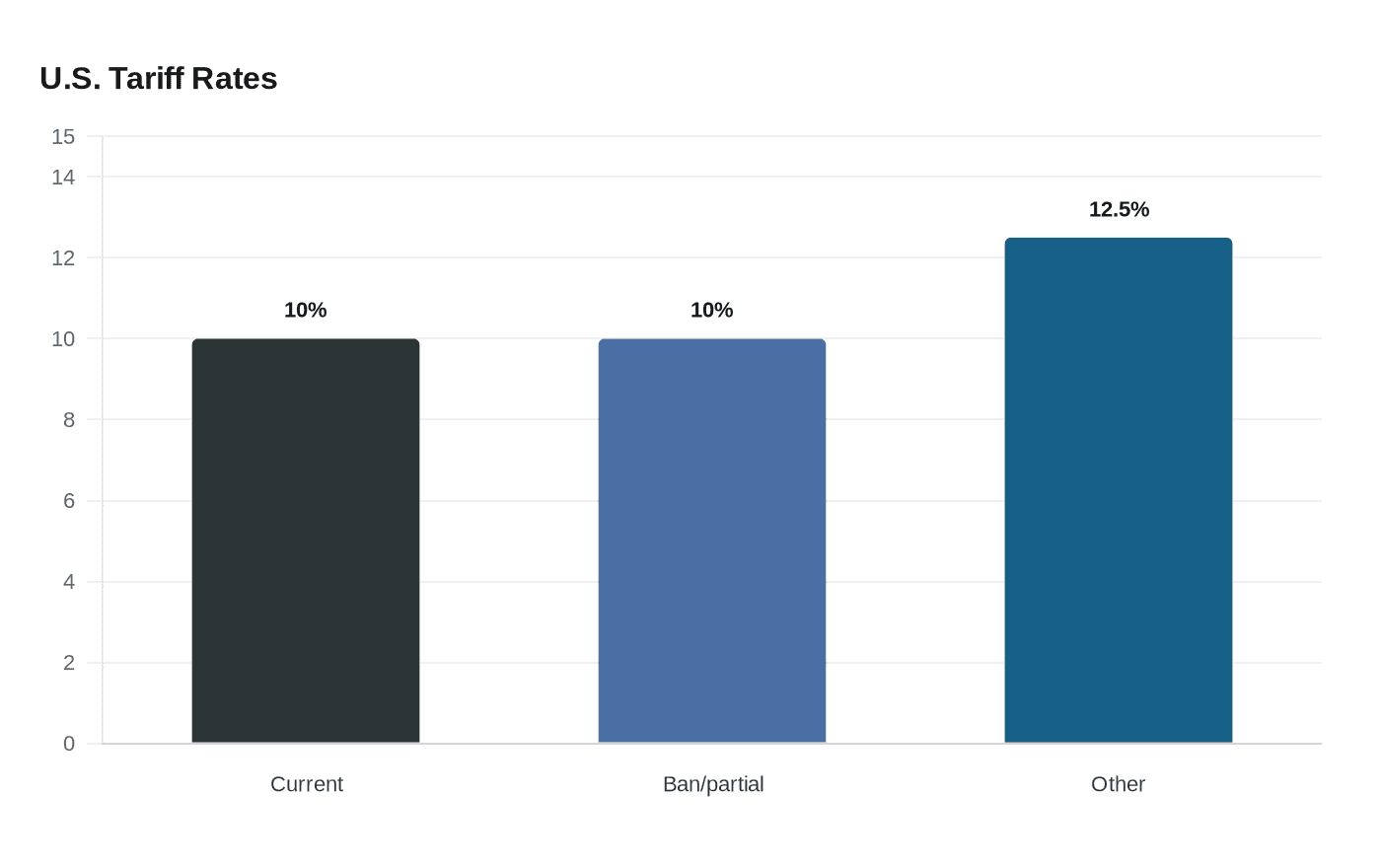
The dispute matters well beyond the Alpine state. The United States Trade Representative has said the alleged failures to prohibit and effectively enforce bans on forced-labor goods are “unreasonable” and actionable under Section 301, part of a broader trade push that now covers 60 investigations. Washington proposed additional duties of 10% for economies with a forced-labor import prohibition or partial regime and 12.5% for all others, with testimony summaries due by June 22 and a public hearing set for July 7.

For Switzerland, the tariff threat lands in high-value sectors where even a modest levy can alter pricing and sourcing decisions. Swiss manufacturers, luxury brands and precision exporters face a new layer of uncertainty while the current 10% additional U.S. tariffs remain in force until July 24. The proposed new duties may replace those existing tariffs, but a separate U.S. investigation into industrial overcapacity could also lead to additional penalties.
Swiss officials are resisting the premise that stronger U.S. action is needed. The government argues that its current framework already addresses the risk of forced-labor imports and that fresh tariffs would punish a country that is already cooperating. Economiesuisse, Switzerland’s main business federation, took a sharper line, calling the U.S. claims “completely unfounded,” saying Swiss law clearly prohibits forced labor and insisting the country had “done its homework.”
The standoff underscores how labor-rights enforcement is becoming part of trade bargaining with close U.S. partners. It also raises a larger question for the Trump administration’s tariff strategy: whether forced-labor claims are being used chiefly as a compliance tool or as a mechanism to rebuild leverage across trading relationships. For Switzerland, the issue is not only the immediate tariff risk but the precedent it could set for other countries and sectors if Washington’s approach hardens into a wider template.
This article was produced by Prism’s automated news system from verified source data, official records, and press releases, then run through automated quality and moderation checks before publishing. The system is built and supervised by the people who set the standards it runs under. Read our full AI policy.
Did this article answer your question?