Switzerland Threatens to Cancel Patriot Missile Order Over U.S. Delivery Delays
Switzerland put cancellation of its five-battery Patriot order on the table, withholding payments until Washington commits to firm delivery dates.
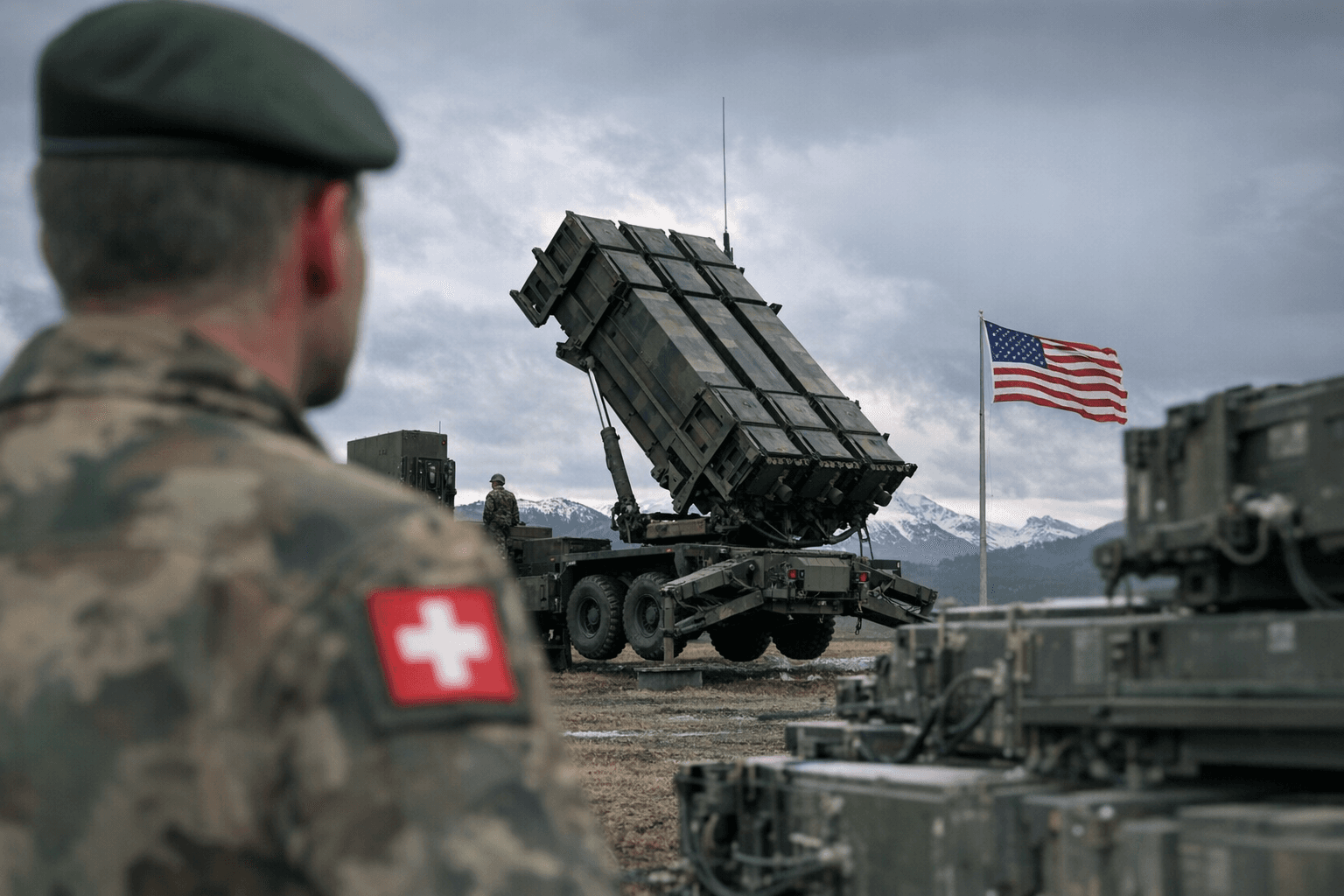
Switzerland's government put a five-year-old defence contract with the United States at risk, announcing it will keep payments for its ordered Patriot surface-to-air missile batteries frozen until Washington provides binding delivery schedules, and that walking away from the deal altogether remains a live possibility.
Defence Minister Martin Pfister, speaking to reporters Wednesday in Bern, left little ambiguity about how far Bern is prepared to go. "We are currently negotiating all possible options with the United States, and that includes a potential termination," Pfister said, adding that Switzerland still hopes to complete the acquisition but will not accept open-ended delays.
The Swiss defence ministry's formal statement said payment milestones and delivery dates for the Patriot batteries remain unresolved and that officials will present the Federal Council with a full set of recommendations by the end of June 2026. Those options could include renegotiating pricing and timetables, pursuing European-made alternatives, or formally terminating the order.
Switzerland signed a contract for five Patriot batteries in 2021 as part of a broader modernisation of its air-defence capabilities. The trouble began in earnest in 2025, when U.S. officials informed multiple foreign customers that Patriot deliveries would be pushed back as production capacity was reallocated to support other global priorities. Under the Foreign Military Sales framework, which pools advance payments from multiple buyers across programmes, Swiss funds earmarked for different defence contracts were reportedly redirected to facilitate ongoing U.S. procurement actions. Swiss officials described that move as "highly unsatisfactory," and Bern halted further advance payments last autumn in direct response.
The dispute has also touched Switzerland's separate F-35A fighter jet order. To protect that purchase from being caught in the same payment impasse, Swiss authorities moved a scheduled F-35A payment forward to late March, deliberately decoupling it from the frozen Patriot funds. The manoeuvre underscores how carefully Bern is managing the fallout: it is trying to preserve one major American defence acquisition while holding the other hostage to accountability.
The financial and legal consequences of a full cancellation would be significant. FMS contracts are controlled by the U.S. government, and prior advance payments already made by Switzerland complicate any exit, making the cost of termination difficult to calculate and potentially steep. Analysts note that no clear mechanism exists for buyers to compel delivery or recoup funds quickly under the FMS structure, a vulnerability that this standoff is now exposing in stark terms.
The diplomatic stakes extend beyond hardware. Switzerland's reputation for careful neutrality and meticulous procurement means its public challenge to the U.S. supply chain carries weight beyond Bern, potentially encouraging other FMS customers navigating similar delays to demand stronger contractual protections. In Bern, there is reportedly growing discussion about pivoting to European suppliers if U.S. delivery schedules and pricing remain unresolved, a shift that would represent a notable strategic reorientation for a country that signed on to an American system just four years ago.
The Swiss defence ministry's June deadline is now the clearest marker of how much patience Bern has left.
This article was produced by Prism’s automated news system from verified source data, official records, and press releases, then run through automated quality and moderation checks before publishing. The system is built and supervised by the people who set the standards it runs under. Read our full AI policy.
Did this article answer your question?


