Switzerland’s economy grows faster as U.S. tariffs ease
Swiss GDP rose 0.4% in early 2026 as manufacturing jumped 1.5%, a sign that eased U.S. tariffs may be lifting export economies.
Switzerland’s economy accelerated in the first quarter of 2026, with gross domestic product rising 0.4%, up from 0.2% in the final quarter of 2025 and back in line with the country’s long-run pace. The clearest driver was manufacturing, which expanded 1.5% after several quarters of weak or flat performance, a sign that pressure from U.S. trade policy is easing for one of Europe’s most export-sensitive economies.
That rebound matters well beyond Bern. Switzerland depends heavily on high-value exports, investment and industrial production, so even a modest improvement in factory output can lift broader growth. The State Secretariat for Economic Affairs said sentiment improved early in the year after U.S. tariffs on Swiss exports were cut to 10% from 15% in January, a shift that helped firms in precision manufacturing and industrial inputs adjust to a less punishing trade environment.
The growth figures still pointed to a fragile recovery rather than a surge. SECO said services rose only 0.2% in the quarter, domestic final demand increased just 0.1%, private consumption was flat at 0.0% and retail sales fell 1.3%. Goods exports dropped 2.2%, chemical and pharmaceutical output declined 3.4%, accommodation and food services slipped 0.6%, and both equipment investment and construction investment fell 0.2%. Imports also declined 2.4%.
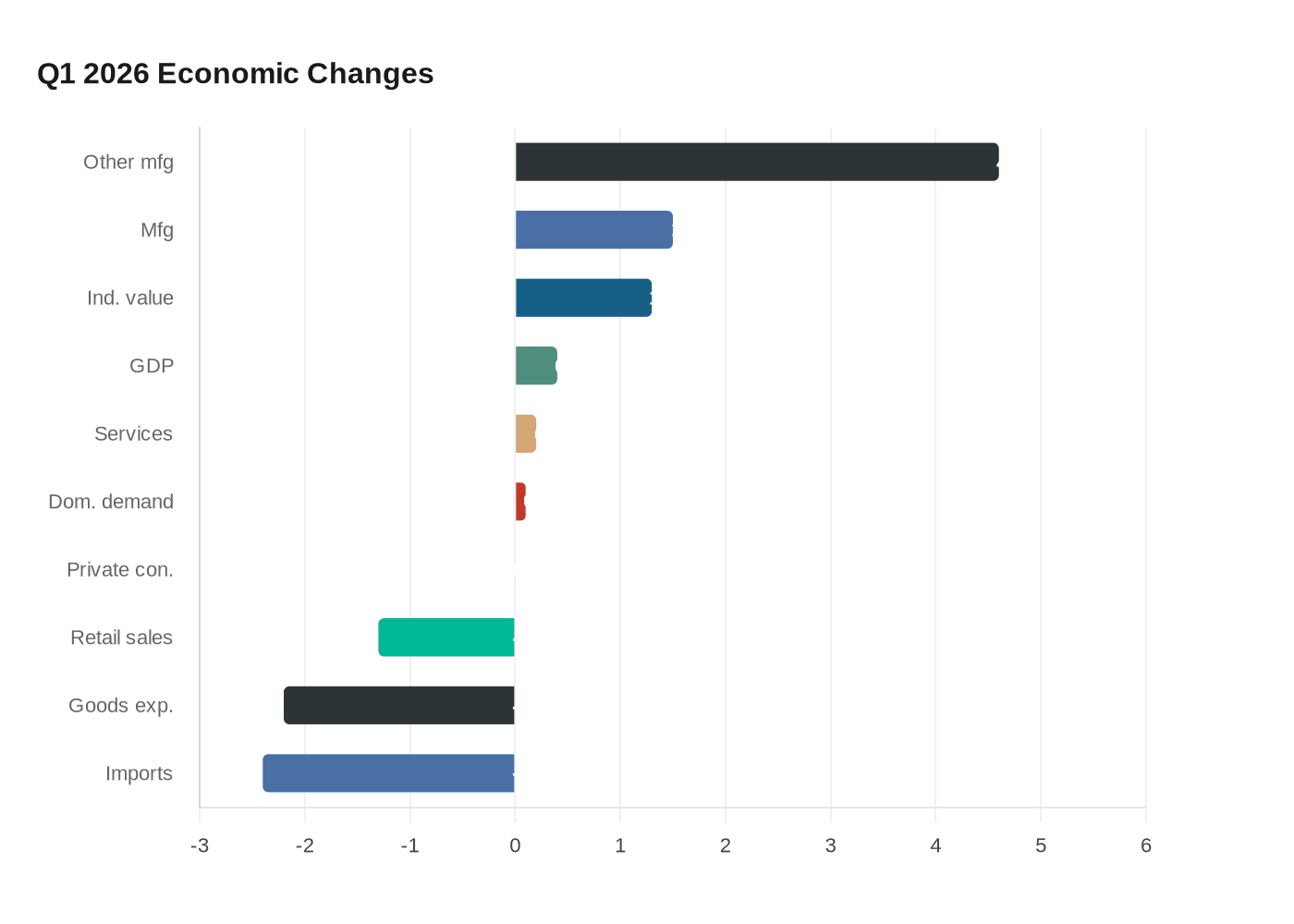
Even the headline number was trimmed slightly from the first reading. SECO’s flash estimate on May 18 had pointed to 0.5% growth, but updated data pulled the final figure down to 0.4%. Still, industrial value added climbed 1.3%, with other manufacturing up 4.6%, showing that the recovery was concentrated in the parts of the economy most exposed to global trade flows.
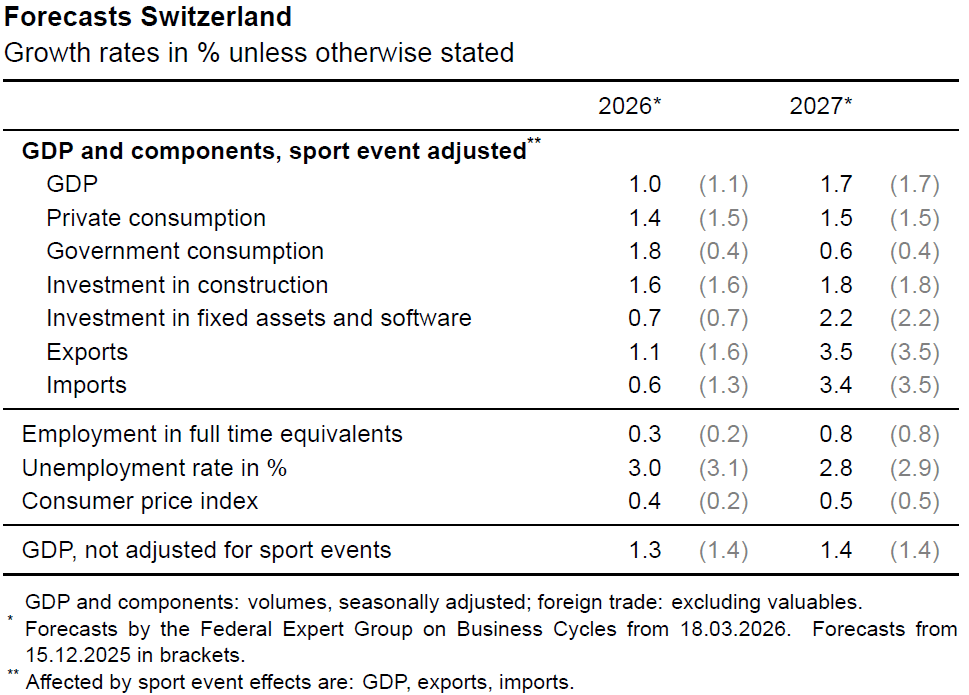
The latest Swiss data comes as policymakers try to judge whether easier tariff conditions can last long enough to support output and jobs. SECO’s March forecast projected growth of 1.0% in 2026 and 1.7% in 2027, both unchanged at the high end for next year from its December outlook, even as it warned that Middle East tensions were pushing up energy prices and uncertainty. Earlier, the Swiss Federal Council said nearly 60% of Swiss exports to the United States faced a 39% surcharge from August 2025, underscoring how sharply tariff policy can hit an export economy.
For Switzerland, the message is broader than one quarterly print. KOF Swiss Economic Institute said a 15% tariff framework could lift Swiss GDP by 0.3% to 0.5% versus a 39% regime and spare thousands of jobs in mechanical engineering, precision instruments, watches and food. If that kind of relief holds, other trade-reliant economies, and U.S. multinationals tied to them, may be seeing the first signs of a more workable global trading climate.
This article was produced by Prism’s automated news system from verified source data, official records, and press releases, then run through automated quality and moderation checks before publishing. The system is built and supervised by the people who set the standards it runs under. Read our full AI policy.
Know something we missed? Have a correction or additional information?
Submit a Tip
