Syrian forces mass near Kurdish towns as talks to integrate Kurds stall
Syrian army units have massed near Kurdish-held towns, raising fears of a limited offensive and wider instability as a stalled March 10 integration deal unravels.
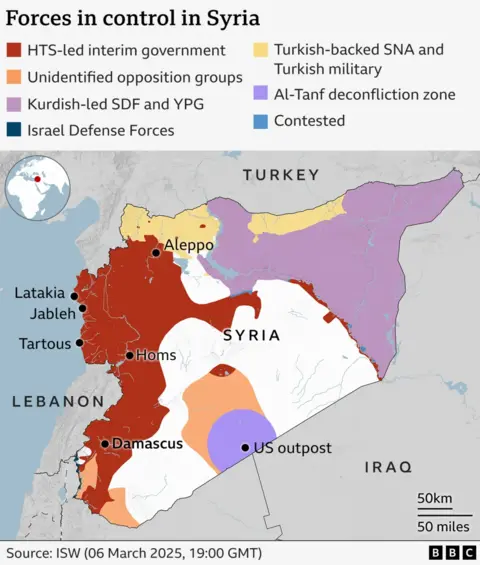
Syrian government forces have massed in northern and eastern provinces and appear poised to launch limited attacks on towns held by the Kurdish-led Syrian Democratic Forces, multiple monitors and diplomats said, heightening the risk of renewed fighting after a stalled push to fold Kurdish administration and forces into Damascus.
Troop movements reported on Jan. 14 and 15 placed Syrian army units in Deir Hafer and nearby villages west of the Euphrates, and deployments around frontline towns in Aleppo province suggest planners may assemble as many as five divisions for an operation targeting Kurdish-held areas. State television excerpts of an unaired interview with an Iraqi Kurdish outlet quoted a figure named Sharaa saying that "protecting the Kurdish population requires integration into the new reality, as the Syrian state represents a significant asset for them," and accusing the SDF of having "a clear and public connection to Qandil," a reference to the PKK headquarters in northern Iraq.
Over the preceding weekend government forces pushed into Aleppo city, seizing the Kurdish-majority neighbourhoods of Sheikh Maqsud and Ashrafiyeh and overseeing the evacuation of fighters to Kurdish-controlled areas in the northeast, officials said. Both sides have traded blame for last week’s violence; a monitor cited in reporting said the clashes left "scores dead." A fragmentary social-media post claimed at least 30 people were wounded and referenced Russia, but that detail has not been independently verified.
The deployments follow a March 10 agreement intended to integrate the Kurds’ de facto autonomous administration and forces into the central state, an accord whose implementation has largely stalled. Elham Ahmad, identified as a senior Kurdish administration official, said government forces were "preparing themselves for another attack" and accused Damascus of breaking the agreement. Independent analysts warn that the breakdown of talks and renewed clashes could trigger wider instability and benefit ISIS by creating security vacuums.

Regional actors already complicate the picture. Over the past two to three days Turkish drone strikes have struck SDF bases in eastern rural Aleppo, and analysts say Ankara appears "primed to get back involved." Charles Lister and others argue that factions are employing a "stall-and-wait-and-see" approach to delay implementation, an approach that risks further conflict and fragmentation. Observers warn that if Turkey intensifies strikes, SDF positions will be highly vulnerable; past large-scale Turkish operations significantly altered frontline dynamics.
The immediate humanitarian and policy implications are stark. Renewed fighting could produce fresh displacement in a region that still hosts millions uprooted by the civil war, complicate reconstruction prospects and deter international donors and private investors. For neighboring states and global markets, the direct economic shock would likely be localized but could raise regional risk premia: instability along key overland routes and uncertainty over border security would increase insurance and security costs for trade and energy logistics while prompting further defense and humanitarian spending by Turkey and Western partners.
For U.S. and European policymakers the developments test commitments to stabilizing northeast Syria and enforcing the March 10 framework. International monitors and Kurdish councils have called for independent investigations into crimes in Aleppo and urged foreign governments to press Damascus to implement the agreement in full. Verification of casualty figures, precise orders for any planned offensive, and the timing of a proposed "humanitarian corridor" remain outstanding and will determine whether the current posture becomes a short flare-up or the start of a wider confrontation with lasting regional consequences.
This article was produced by Prism’s automated news system from verified source data, official records, and press releases, then run through automated quality and moderation checks before publishing. The system is built and supervised by the people who set the standards it runs under. Read our full AI policy.
Did this article answer your question?


