Taiwan central bank says U.S.-Taiwan trade deal currency impact controllable
Taiwan central bank told lawmakers the U.S.-Taiwan deal will affect Taiwan dollar demand but the currency impact is 'controllable'.
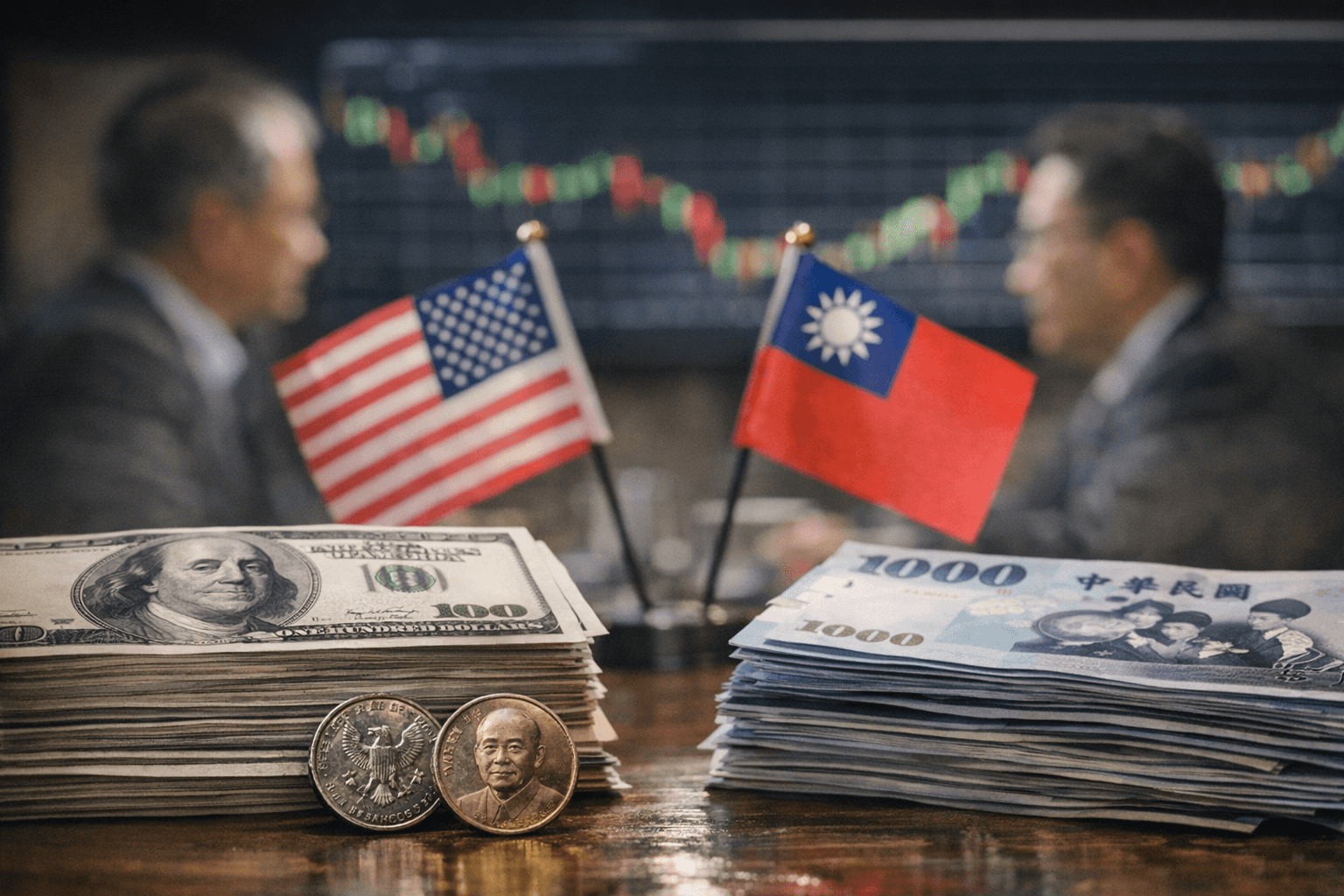
Taiwan’s central bank told lawmakers on Jan. 24 that the U.S.-Taiwan trade and tariff agreement, which includes plans for substantial Taiwanese investment in the United States and adjustments to tariff schedules, is expected to alter demand for the Taiwan dollar but that any currency impact is "controllable." The central bank framed the deal as a material shift in cross-border flows but downplayed risks to financial stability.
Officials emphasized the mechanics that will drive pressure on the currency. Large outbound investment and the conversion of Taiwan dollars into U.S. dollars for capital expenditure in the United States would raise immediate demand for foreign exchange, while tariff changes could modify trade receipts and the current account over time. Those channels, the central bank told lawmakers, could translate into short-term depreciation pressure on the Taiwan dollar if left unchecked.
Market participants are already parsing the balance of forces. Exchange-rate moves typically respond quickly to shifts in capital flows, and the reallocation of corporate cash to U.S. investment could be front-loaded, increasing near-term volatility. For Taiwanese exporters, a weaker currency would cushion overseas revenue in local currency terms but could also complicate import costs for energy and intermediate goods, with implications for corporate margins and headline inflation.
Policy options cited by economists as relevant to Taiwan’s response include foreign-exchange intervention, adjustments to interest-rate policy, and macroprudential measures to manage capital flows. The central bank’s characterization of the impact as "controllable" signals readiness to use its toolkit to smooth disorderly moves, while preserving a market-determined exchange rate in normal conditions. Sterilized intervention and temporary liquidity facilities are standard responses central banks deploy to counter abrupt swings without shifting monetary stance.
The broader economic context helps explain the central bank’s confidence. Taiwan’s external accounts have historically been supported by a strong trade sector and significant foreign-exchange reserves, providing a buffer against episodic outflows. At the same time, the ongoing reconfiguration of global supply chains means that capital-account shifts tied to industrial relocation are more structural than transitory. If Taiwanese firms commit to multiyear investment projects in the United States, the composition of capital flows could change for an extended period, requiring policy calibration beyond short-term interventions.
For financial markets, the key question is the path and pace of capital reallocation. A gradual, predictable flow of investment would be easier to absorb; sudden, concentrated repatriations of cash or accelerated FX conversions would test the central bank’s capacity to temper volatility. Currency traders will watch central bank communications closely for hints about intervention thresholds, while local bond and equity markets will price in the trade-off between exchange-rate stability and domestic monetary conditions.
In the longer term, the deal could reshape Taiwan’s external balance and economic structure by anchoring higher levels of outbound foreign direct investment and altering trade patterns with the United States and other partners. That structural shift may lower exchange-rate elasticity to short-term shocks but increase the importance of coordinated fiscal and industrial policy to manage transitional risks and sustain competitiveness.
This article was produced by Prism’s automated news system from verified source data, official records, and press releases, then run through automated quality and moderation checks before publishing. The system is built and supervised by the people who set the standards it runs under. Read our full AI policy.
Did this article answer your question?
%3Amax_bytes(150000)%3Astrip_icc()%2FCertificate-of-deposit-2301f2164ceb4e91b100cb92aa6f868a.jpg&w=1920&q=75)