Taiwan court fines Tokyo Electron unit, jails five in TSMC case
Taiwan fined Tokyo Electron’s local unit T$150 million and jailed five people, turning a TSMC trade-secrets case into a national-security warning for the global chip industry.
Taiwan hit the local unit of Japan’s Tokyo Electron with a T$150 million fine and sent five people to prison in a case that treats theft of TSMC chip secrets as a national-security breach, not a routine corporate dispute. The ruling lands at the center of the global AI chip race, where Taiwan’s ability to protect advanced manufacturing know-how has become as strategically important as the fabs themselves.
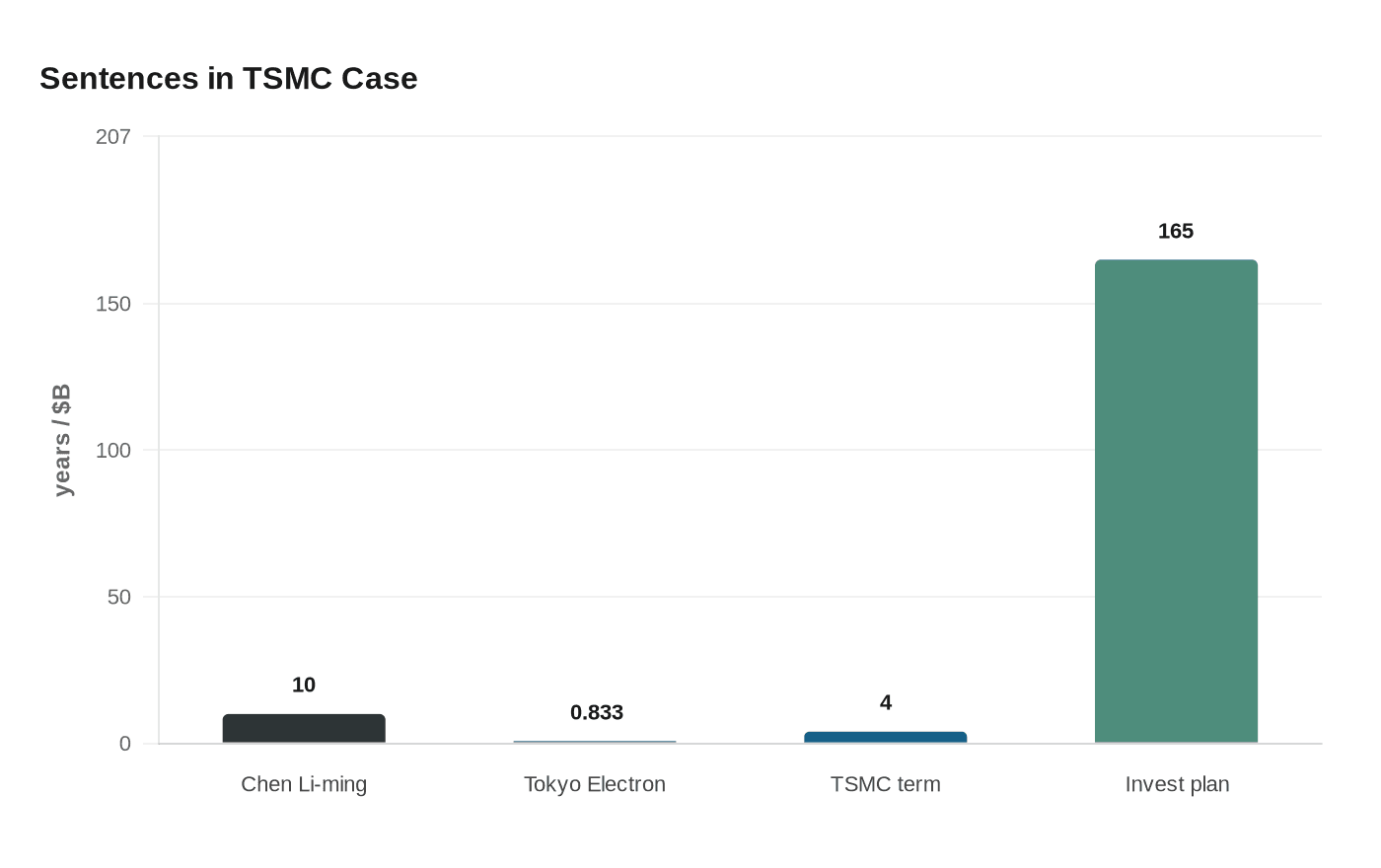
The Taiwan Intellectual Property and Commercial Court gave former TSMC and Tokyo Electron employee Chen Li-ming a 10-year sentence, the harshest penalty in the case. Three other former TSMC employees received prison terms ranging from two to six years, while a former Tokyo Electron employee received a suspended 10-month term for destroying evidence. The defendants can appeal.

The court said images of the confidential material were found on Tokyo Electron’s cloud system, drawing the company’s Taiwan unit into the legal fallout even though Tokyo Electron said it took the ruling with the utmost seriousness. Prosecutors had indicted Chen and others in August 2025, alleging they sought to help Tokyo Electron win more equipment orders from TSMC.
The case carries unusual weight because it involved TSMC’s 2-nanometer process technology, which the company describes as its next major logic-node generation and the industry’s most advanced in density and energy efficiency. TSMC says its 3-nanometer technology entered high-volume production in 2022. Taiwan’s National Security Act treats unlawful acquisition or use of critical national core technology, including sub-14-nanometer semiconductor technology, as a matter of national security, not just intellectual property protection.
That is why the verdict has been described as the first conviction under the amended National Security Act in a semiconductor trade-secrets case. The sentence signals that Taiwan is prepared to use the criminal courts to defend the technology base behind the world’s most advanced chips, a message aimed well beyond the five defendants. It lands squarely in an industry where TSMC manufactures chips for Nvidia, Apple and Google, and where any leakage of process knowledge can ripple through supply chains from Hsinchu to Arizona.
The decision also fits a broader tightening by Taiwan’s Ministry of Justice Investigation Bureau, which says it has been carrying out a long-running crackdown on alleged foreign talent poaching in strategic industries. For foreign suppliers and engineers working around Taiwan’s chip ecosystem, the message is stark: poaching talent and moving trade secrets now carries the weight of a national-security crime. That risk grows more consequential as TSMC expands overseas, including its March 4, 2025 plan to raise U.S. investment to $165 billion.
This article was produced by Prism’s automated news system from verified source data, official records, and press releases, then run through automated quality and moderation checks before publishing. The system is built and supervised by the people who set the standards it runs under. Read our full AI policy.
Did this article answer your question?

