Taiwan indigenous canoe revives centuries-old sea route to Philippines
A 20-seat Tao canoe crossed the Bashi Channel, reviving a sea route dormant for more than 300 years and reconnecting Orchid Island with Batanes.
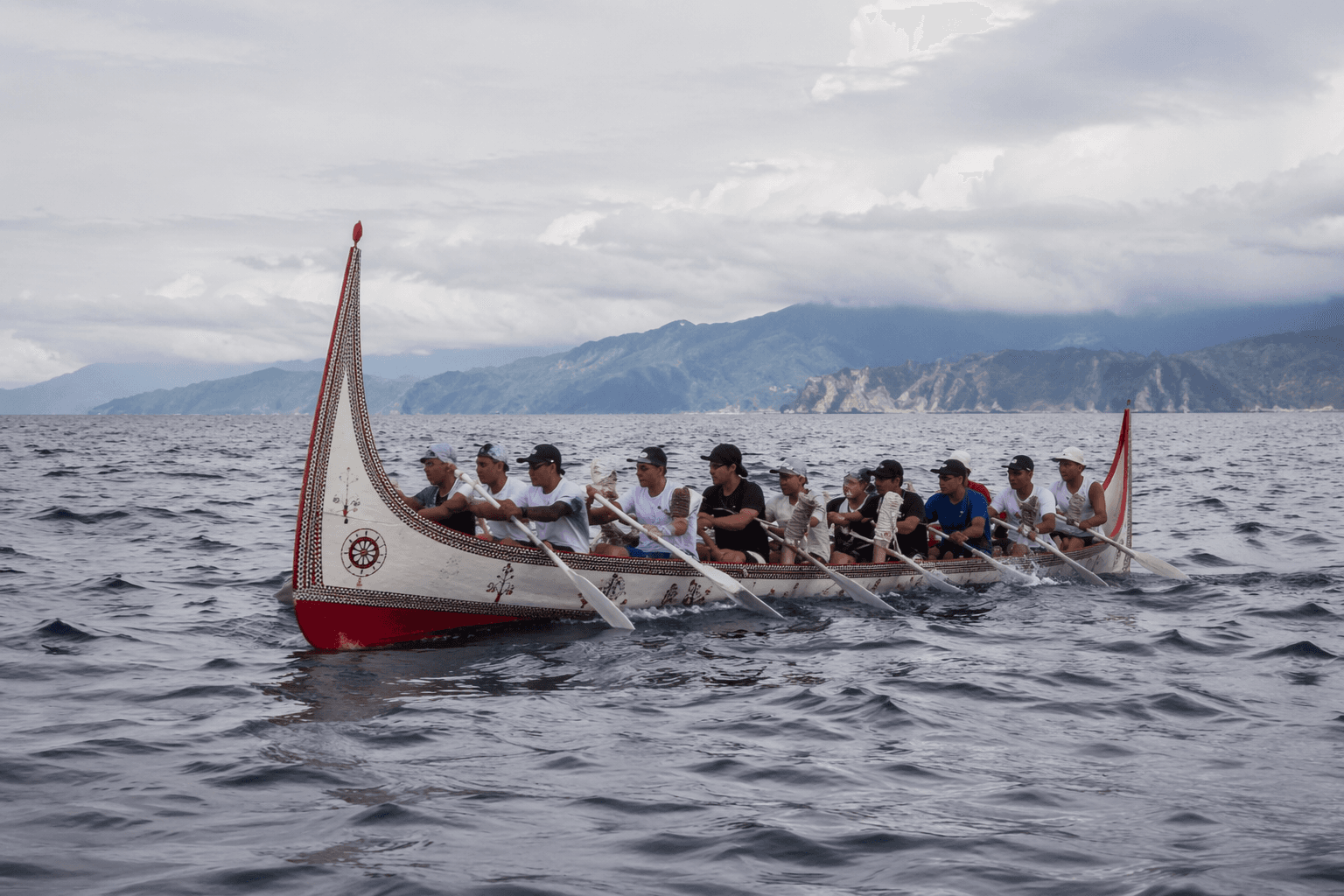
A hand-built Tao canoe left Orchid Island on June 15 and headed for the Philippines on a voyage meant to restore a maritime corridor that colonial borders left dormant for centuries. The 20-seat tatala, named Ovayan or Golden Friendship, set out across the Bashi Channel toward the Batanes Islands, with support ships accompanying a rotation of 60 people who alternated between rowing and backup duties over an estimated 24-hour crossing.
The canoe was built by artisans from six Tao communities on Orchid Island, also known as Lanyu, in a government-backed project that finished in March after construction began as a modern effort to revive an old seafaring tradition. A trial voyage followed in April, and a traditional launch ceremony was held on June 9. The project cost NT$6 million, about US$203,000, and its scale was unusual: the vessel was described as the largest traditional Tao plank canoe made in modern times.
For the Tao, the voyage carried more than ceremonial weight. The community numbers just 4,684 people, according to Taiwan’s Council of Indigenous Peoples, a tiny share of Taiwan’s 23 million residents. That makes cultural transmission fragile, especially in a maritime society where boat-building, fishing and seafaring rituals have long carried spiritual and social meaning. The Tao language is closely related to the Batanic languages spoken in the Batanes Islands, underscoring how the route once connected not only shorelines but families, speech and memory across the water.
The route also exposed how colonial rule redrew the region. Batanes came under Spanish rule in 1783, while Orchid Island was incorporated by Qing China in 1877 before being ceded to Japan in 1895. Tao and Ivatan communities did not resume contact until the 1980s. During the voyage, the Orchid Island township chief and the Batanes governor signed a declaration affirming kinship between the two sides, a gesture that tied the crossing to identity as much as navigation.
The Bashi Channel itself gave the journey a sharper geopolitical edge. The waterway links the South China Sea with the Pacific and is treated as strategically important in military planning, with Chinese warships frequently seen in the area. Yet the crossing was also a quiet assertion of Indigenous continuity: the canoe reached Mahatao, Batanes, reviving a sea route that had been cut off for more than 300 years and reminding both sides that the map did not erase the older geography of kinship.
This article was produced by Prism’s automated news system from verified source data, official records, and press releases, then run through automated quality and moderation checks before publishing. The system is built and supervised by the people who set the standards it runs under. Read our full AI policy.
Know something we missed? Have a correction or additional information?
Submit a Tip

