Taiwan looms over Trump-Xi talks as Beijing seeks leverage
Taiwan is the summit’s sharpest fault line, with Beijing calling it a red line and Washington still defending a decades-old status quo.

Taiwan, the self-governing democracy of 23.5 million people across the Taiwan Strait, is the most dangerous issue hanging over President Donald Trump’s meeting with Xi Jinping. For Xi, the island is not a side topic or a bargaining chip. It is a core interest, and Beijing has made clear that sovereignty over Taiwan is a red line in U.S.-China relations.
Washington’s room to maneuver is narrow. The United States ended diplomatic relations with the Republic of China on January 1, 1979, and has since maintained unofficial ties with Taipei through the American Institute in Taiwan. U.S. policy is guided by the Taiwan Relations Act, the three U.S.-China Joint Communiques and the Six Assurances, and the State Department says Washington does not support unilateral changes to the status quo. That leaves little space for Trump to offer Beijing any shift on Taiwan without undercutting a policy that has held across administrations from Ronald Reagan to Joe Biden.

The stakes are not just military. The State Department describes Taiwan as a partner in trade and investment, health, science and technology, education and, most critically, semiconductor and other supply chains. The Congressional Research Service says Taiwan is the United States’ fifth-largest merchandise trading partner, and U.S. service exports to Taiwan reached $11.9 billion in 2023. Taiwan’s goods exports to the United States also doubled between 2018 and 2022, underscoring how deeply the island is woven into the U.S. economy.
That is why Taiwanese officials and analysts are watching Trump closely. Their fear is not only that he could make an off-script remark about Taiwan, but that he could treat the island as leverage for trade or other concessions with Xi. Beijing would welcome any sign that Washington is softening longstanding language on the status quo, even if only to secure a broader deal. Taipei, by contrast, cannot afford a bargain that makes Taiwan look negotiable.
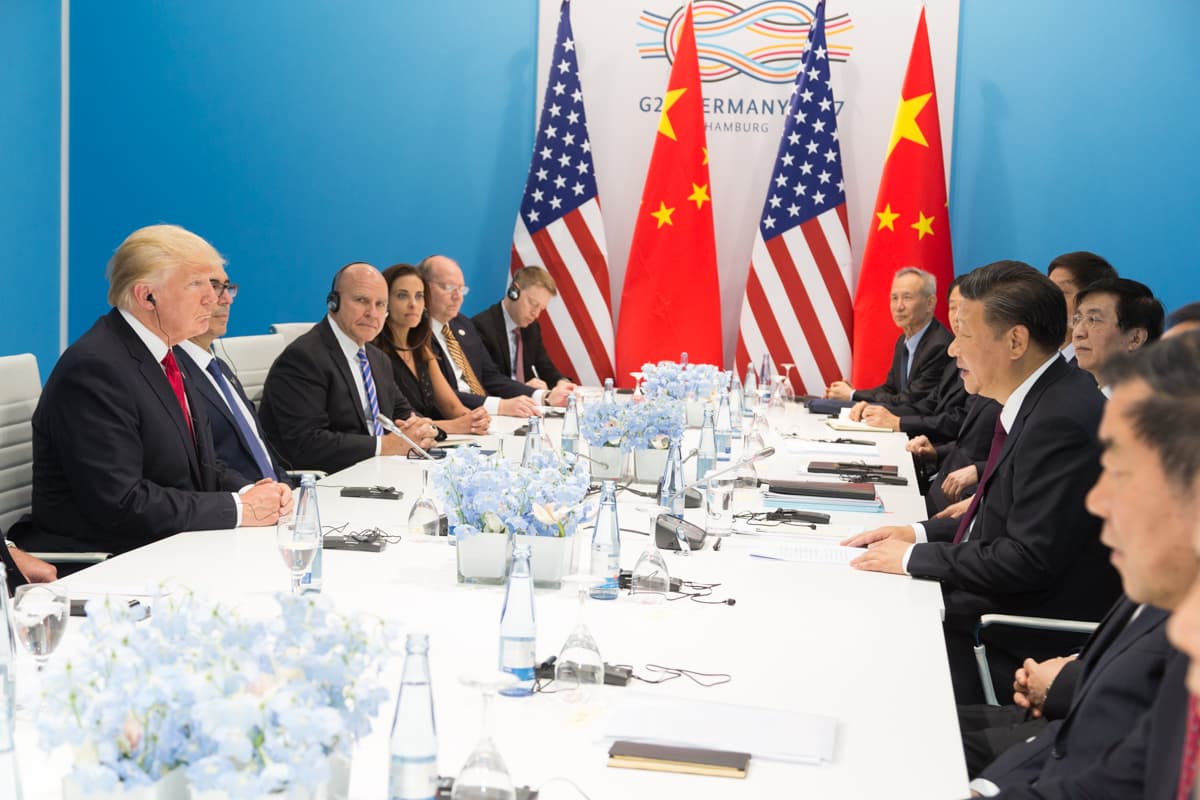
Xi has put Taiwan at the top of his agenda for the summit, making the meeting a test of whether the two leaders can manage strategic rivalry without pushing the cross-strait standoff into crisis. If the talks produce restraint, they may lower the risk of miscalculation. If they merely paper over Taiwan, the most volatile flashpoint in U.S.-China relations will remain exactly where it is.
This article was produced by Prism’s automated news system from verified source data, official records, and press releases, then run through automated quality and moderation checks before publishing. The system is built and supervised by the people who set the standards it runs under. Read our full AI policy.
Did this article answer your question?