Taiwan opposition leader defends China dialogue in Washington visit
Cheng Li-wun told Washington the KMT can talk to Beijing without weakening Taiwan, but her April meeting with Xi and the party's defense cuts kept the trust gap open.
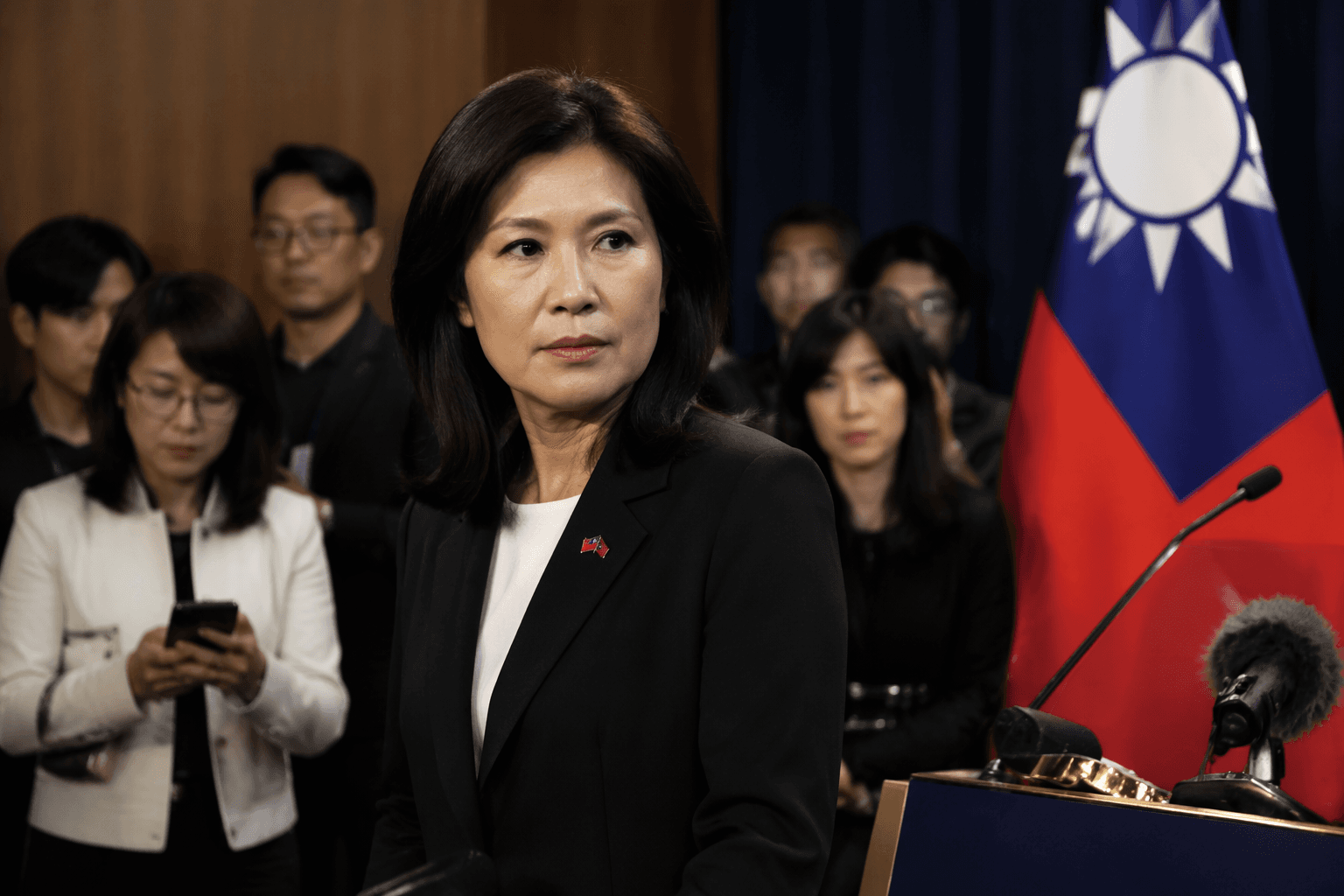
Cheng Li-wun came to Washington with a defense of Taiwan’s main opposition party at the center of her trip: the Kuomintang could talk to Beijing without sacrificing Taiwan’s security or democratic system. The KMT chair said she had met nine members of Congress, along with academics and think tank representatives, during a two-week U.S. tour that began in San Francisco on June 2 after an April visit to China and a meeting with Xi Jinping.
Cheng told reporters she was there to correct “many misunderstandings” about the KMT’s approach to China. She said American interlocutors had seen “the real KMT and the real me,” and she stressed in English that she was being “honest and candid.” In San Francisco, Cheng said the message of the trip was that Beijing and Washington should pursue “reconciliation and cooperation” and avoid war; she also told a Taiwanese-American audience that cross-strait peace could only be realized if the KMT won back power in 2028.
The trust deficit shadowing her visit was rooted in her own record. Cheng went to Beijing from April 7 to 12 after accepting Xi’s invitation, and the two met in the Great Hall of the People on April 10. Xi said Taiwan was “inalienable” and “inseparable” from China and tied future engagement to the “1992 consensus” and opposition to Taiwan independence. Cheng echoed Xi’s language about the “great rejuvenation of the Chinese nation,” drawing sharp criticism from Taiwan’s Democratic Progressive Party and renewed scrutiny in Washington over how far the KMT is willing to go in the name of dialogue.
That skepticism is sharpened by the party’s role at home. The KMT, together with the Taiwan People’s Party, holds a parliamentary majority and has faced intense criticism in Washington for cutting by one-third the government’s plan to spend an additional $40 billion on arms. Republican Senator Dan Sullivan warned that the KMT was “playing with fire,” while Taiwan’s defense minister and DPP figures said the opposition was hamstringing deterrence as Beijing keeps Taiwan under military and political pressure.
Taiwan’s defense fight has only hardened that divide. William Lai Ching-te’s administration proposed a NT$1.25 trillion, about US$40 billion, special defense budget in November 2025 as an eight-year plan meant to lift defense spending to about 3.3% of GDP in 2026. On May 9, the legislature passed a pared-back NT$780 billion, about US$24.8 billion, version in a 59-0 vote, with 48 DPP lawmakers abstaining. The approved bill covers two U.S. arms packages, including US$11 billion in sales cleared by the U.S. State Department in December 2025 and another NT$480 billion for a future package that KMT caucus leader Fu Kun-chi said could include counter-drone systems, Patriot interceptors and Hellfire missiles. It also stripped funding for domestic systems such as the Chiang Kung, or Strong Bow, missile, which Taipei says is meant to anchor a new T-Dome air-defense network.
Cheng also met scholars at Stanford University’s Hoover Institution and Defense Priorities Asia Program director Lyle Goldstein in Boston, where the KMT said they discussed reducing geopolitical risk as the main task for peace in the Taiwan Strait. Cheng said think tank experts had urged the party to be more proactive in proposing its own defense legislation, and she said the KMT was seriously considering that path. The question for Washington is not whether Cheng can say the right words about dialogue, but whether the party she leads can prove that outreach to Beijing will not keep undermining Taiwan’s defenses at home.
This article was produced by Prism’s automated news system from verified source data, official records, and press releases, then run through automated quality and moderation checks before publishing. The system is built and supervised by the people who set the standards it runs under. Read our full AI policy.
Know something we missed? Have a correction or additional information?
Submit a Tip