Taj Mahal releases long-shelved album Time with Phantom Blues Band
Taj Mahal brought a long-unreleased 2010 album back into view, pairing the title track with the Phantom Blues Band and a six-decade career of boundary-crossing music.
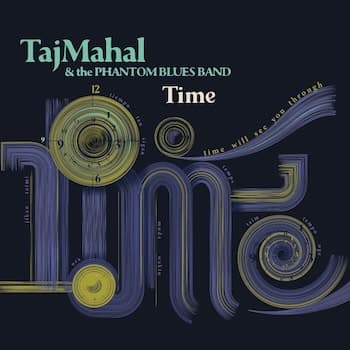
Taj Mahal’s latest album, Time, arrived as both a new release and a recovered piece of his catalog, a reminder of how long he has been shaping American music by moving freely across blues, folk, roots, reggae and soul. Released May 1 through Resonatin’ Records and Thirty Tigers, the album was recorded in 2010 with his longtime Phantom Blues Band before sitting unreleased for years.
The title track carries that history into the present. Described as a previously unissued Bill Withers song, it fits a project that pulls from multiple American traditions without losing the grain of Mahal’s voice or the looseness that has marked his best work. The album includes material rooted in soul, roots, folk, reggae and blues, a range that reflects the way Mahal has built a career out of blending styles rather than treating them as separate lanes.
Born Henry St. Claire Fredericks Jr. on May 17, 1942, in Harlem, Mahal began performing in the 1960s and went on to become one of the most durable figures in modern blues. Over six decades, he has collaborated with the Rolling Stones and Eric Clapton, while also helping bring wider attention to the American roots forms that shaped him. His breakthrough songs, including “Corinna” and “Statesboro Blues,” helped establish him as an artist who could honor the past without sounding trapped by it.

His partnership with the Phantom Blues Band has been just as central to that legacy. Mahal and the group earned back-to-back Grammy Awards for Seńor Blues and Shoutin’ in Key, and their history together stretches back at least to the 1990s. That continuity gives Time the feeling of a long conversation picked back up after an unusually long pause.
The release also reinforces Mahal’s place as a bridge between generations of listeners. At a moment when American roots music is often split into narrow categories, Time showed how Mahal still moves between styles with ease, keeping blues at the center while opening the door to rhythm, harmony and global influence. The album’s arrival after a 16-year delay made that point sharper: Mahal’s current artistry still carries the reach, curiosity and authority that have defined his career since Harlem and the 1960s.
This article was produced by Prism’s automated news system from verified source data, official records, and press releases, then run through automated quality and moderation checks before publishing. The system is built and supervised by the people who set the standards it runs under. Read our full AI policy.
Did this article answer your question?