Tariff uncertainty strains U.S.-Canada trade, manufacturing and supply chains
Tariff threats on autos, steel and food are rattling a trade corridor that moves Can$3.6 billion a day, with factories and prices caught in the middle.

Tariff uncertainty is putting the U.S.-Canada manufacturing corridor through a stress test, with automakers, parts suppliers, food producers and factory workers bracing for policy shifts that could reshape costs and investment plans long before the first bolt is turned. In a relationship that moves Can$3.6 billion in goods and services across the border every day, even a short-lived tariff threat can change where companies source parts, how they price vehicles and whether they delay new plants.
The dispute is sharpening as Washington and Ottawa move toward the first joint review of CUSMA, scheduled for July 1, 2026. The U.S. Trade Representative has opened a public comment process and hearing in advance of the review, while Canada launched its own consultations to help set priorities. Canadian officials said they received 137 written submissions, with businesses and industry groups saying the agreement is generally working but still needs targeted improvements.
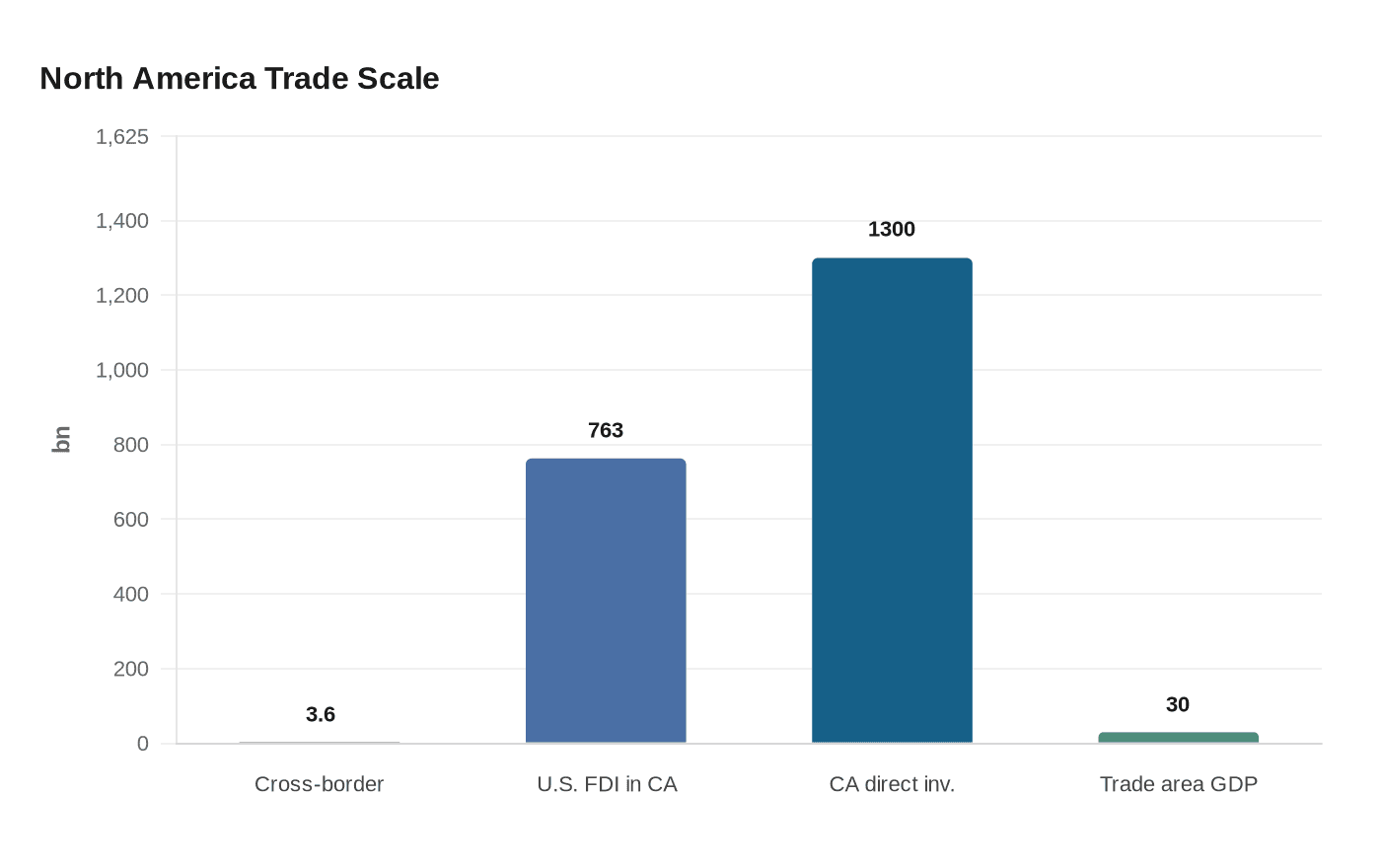
The stakes are large enough to spread well beyond one sector. Canada says CUSMA, which took effect on July 1, 2020 and replaced NAFTA, supports a trade area of about 500 million people and nearly 30% of global GDP. In 2024, U.S. foreign direct investment in Canada stood at $763 billion, while Canadian direct investment in the United States reached $1.3 trillion. That level of interdependence is why tariff threats on a few products can quickly spill into steel, aluminum, food packaging and the long-term debate over whether North America stays integrated or drifts toward more fragmented bilateral deals.
Autos remain the clearest pressure point. Canada’s finance department said the United States imposed a 25% tariff on Canadian automobiles, and Ottawa answered on April 9, 2025 with 25% tariffs on non-CUSMA-compliant vehicles imported from the United States and on the non-Canadian, non-Mexican content of CUSMA-compliant vehicles imported from the United States. On April 15, 2025, Canada added support for businesses hit by U.S. tariffs, including a performance-based remission framework for automakers that rewards continued manufacturing and investment in Canada. In February 2026, Ottawa went further, unveiling an auto strategy that allocated $3 billion from the Strategic Response Fund and up to $100 million from the Regional Tariff Response Initiative to help the sector adapt and build out electric-vehicle manufacturing.
Canada later removed many of its March 2025 counter-tariffs on U.S. goods, effective September 1, 2025, but kept tariffs on steel, aluminum and automobiles. That leaves executives weighing whether to expand production, reroute parts or hold back spending while Mark Carney’s government and the Trump administration decide how hard they want to push. With Jamieson Greer leading the U.S. trade review and Marcelo Ebrard already meeting with U.S. officials in advance of it, the message to manufacturers is clear: the trade system that underpins North American cars, parts and prices is entering a period of political and commercial strain.
This article was produced by Prism’s automated news system from verified source data, official records, and press releases, then run through automated quality and moderation checks before publishing. The system is built and supervised by the people who set the standards it runs under. Read our full AI policy.
Did this article answer your question?